
A modern, secular system for numbering calendar years that matches the traditional AD timeline. It is used by historians as a neutral, globally shared way to track time. For instance, Cahokia's rapid growth around 1050 CE shows that this massive North American metropolis was bustling at the exact same time medieval London was developing in Europe.
Where is the ancient archaeological site of Cahokia located?
The rise of a hidden metropolis
Engineering with earth
Daily life and cosmic games
The mysterious decline and legacy
A modern, secular system for numbering calendar years that matches the traditional AD timeline. It is used by historians as a neutral, globally shared way to track time. For instance, Cahokia's rapid growth around 1050 CE shows that this massive North American metropolis was bustling at the exact same time medieval London was developing in Europe.

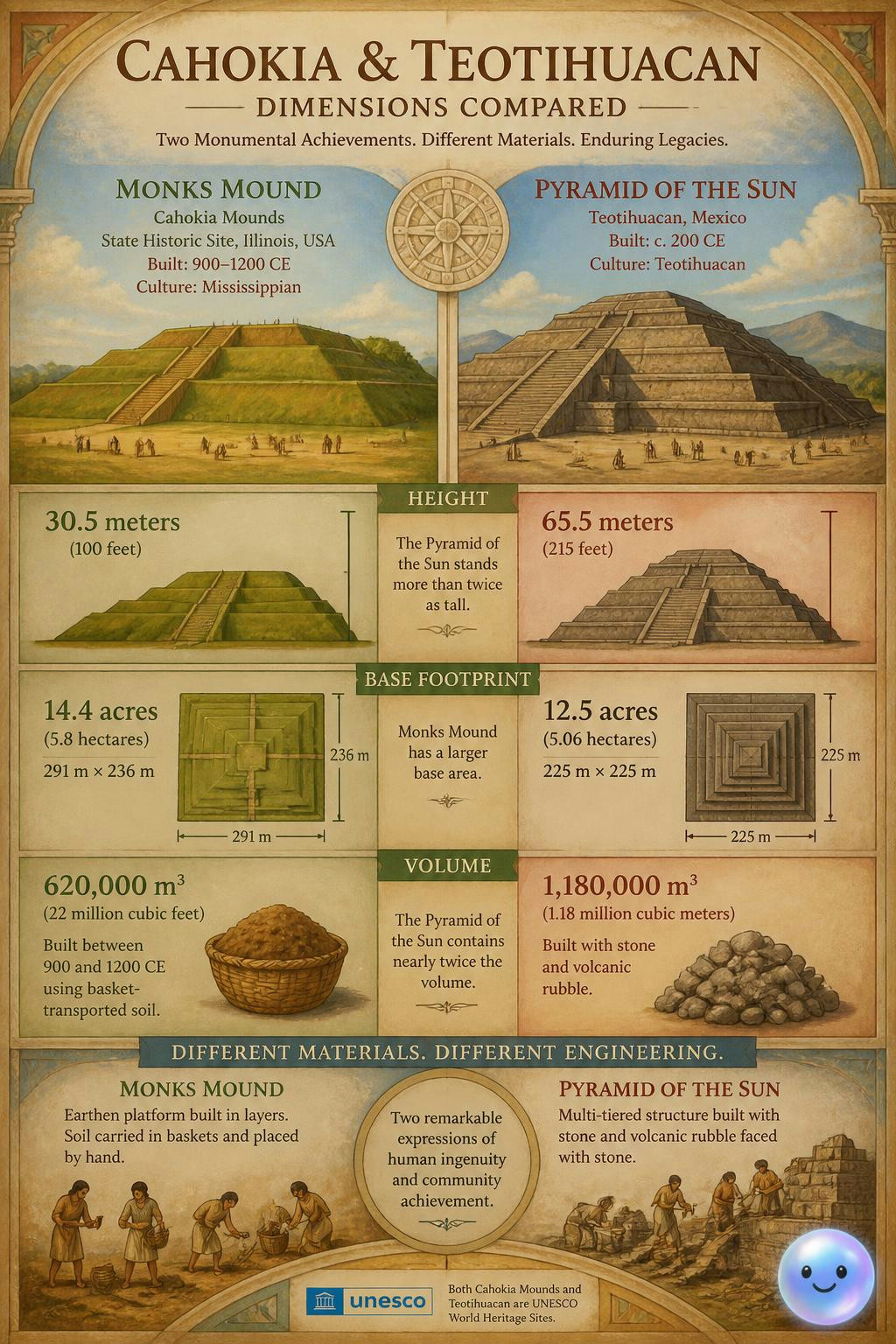
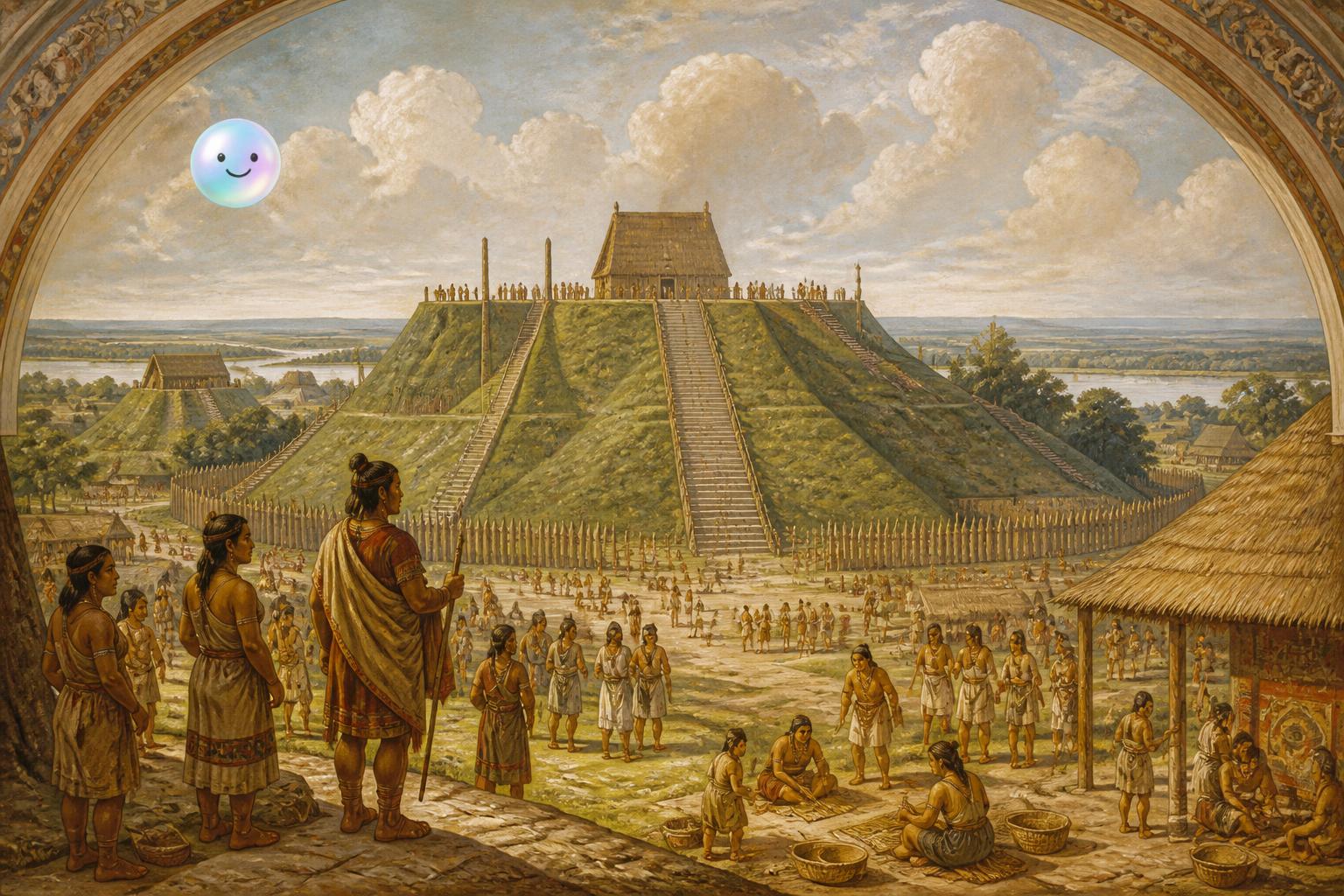
sonia The Metropolis of Cahokia
Under the sky and the midwestern sun, An earthen pyramid outgrew the Giza one.

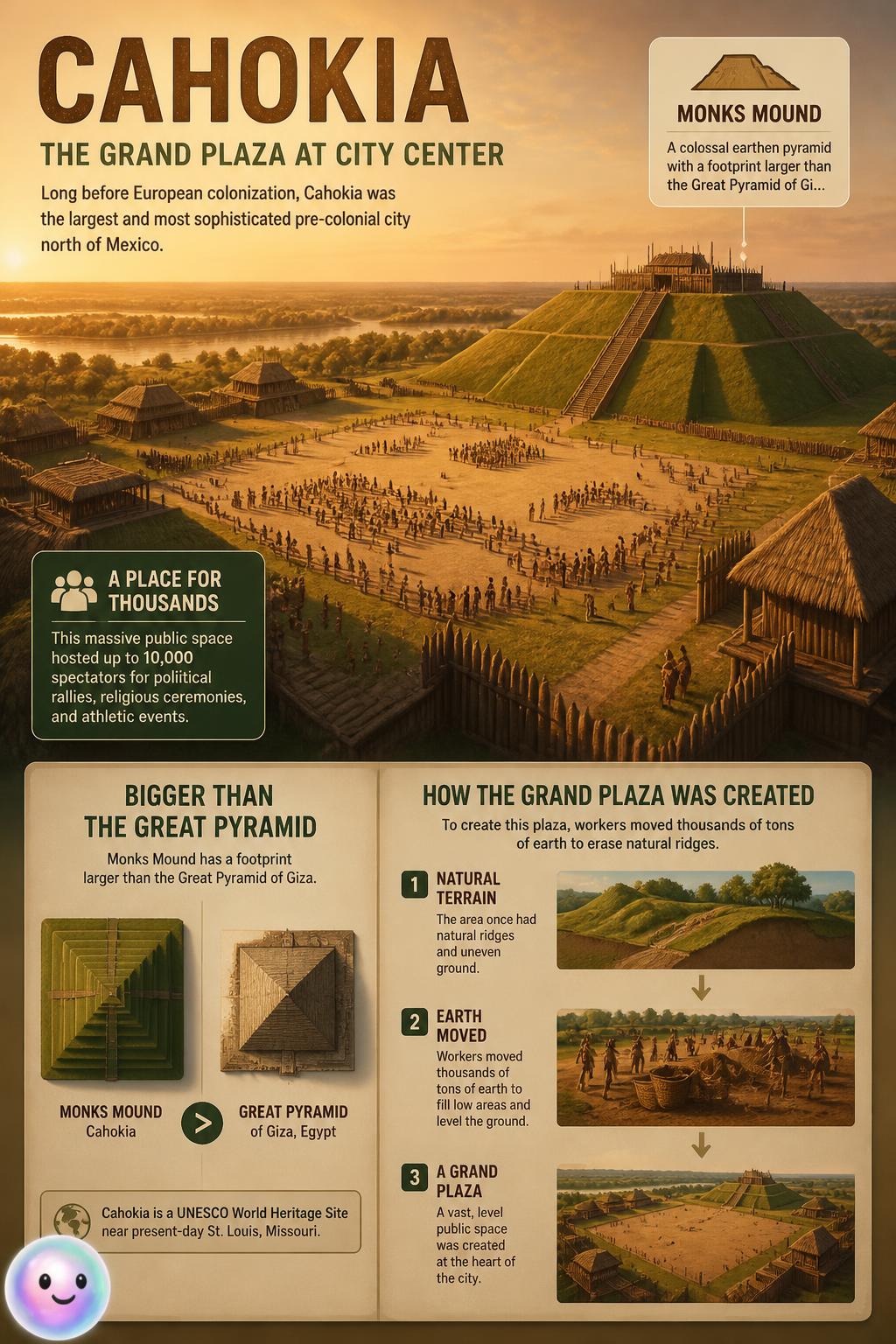
sonia At the center of Cahokia lay a perfectly leveled, 50-acre grand plaza used for public rituals and community games.
Name origins: The city's original name is lost; 'Cahokia' comes from an Illinois tribe that lived nearby centuries after the city was abandoned.

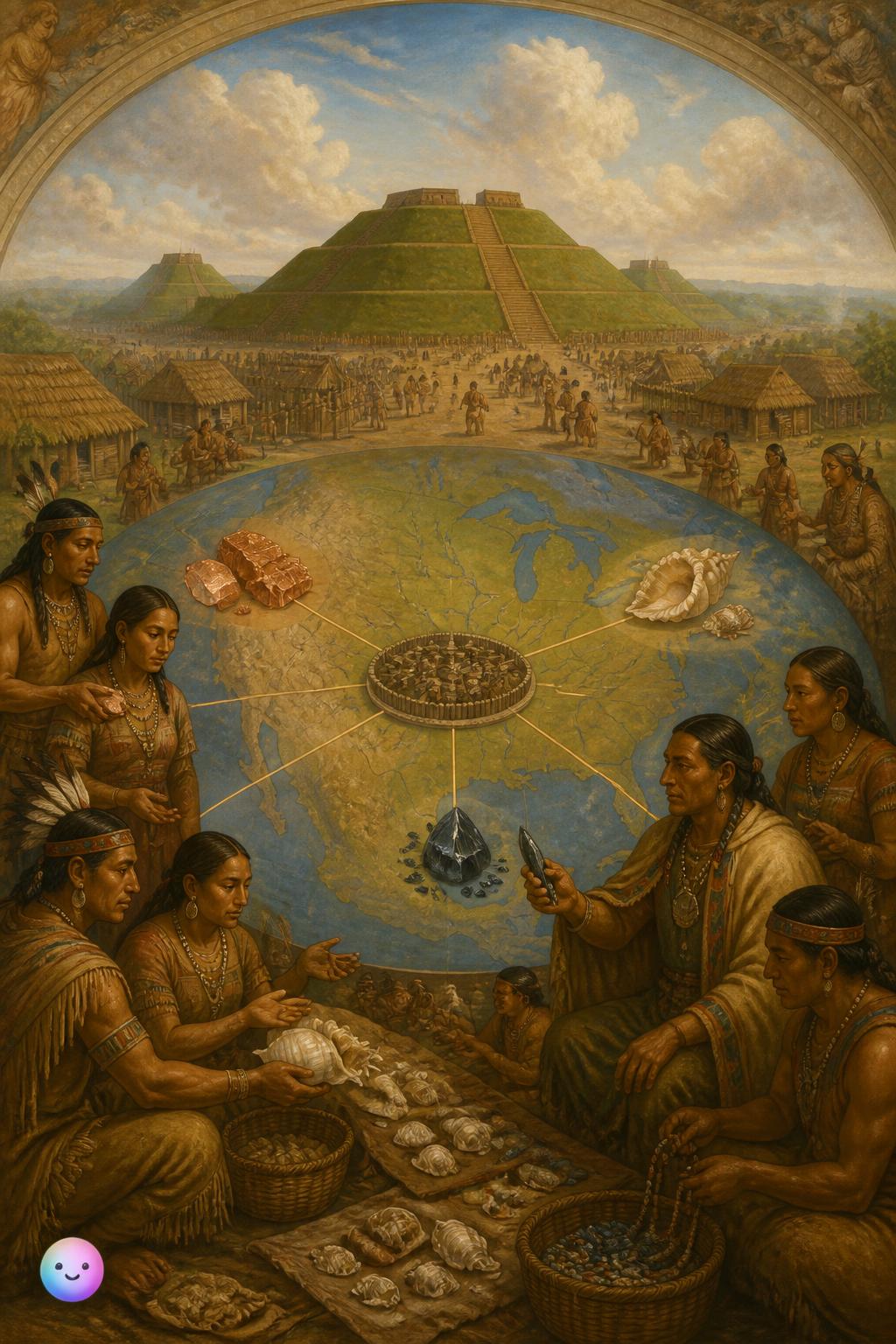
sonia Cahokia was the heart of a massive trade network stretching from the Great Lakes to the Gulf of Mexico.
An artificial hill or bank of earth or stone. The colossal Monks Mound near St. Louis served as the central earthen pyramid of Cahokia.
How large was the central Grand Plaza of Cahokia, which was manually leveled by its builders?

sonia Stack giant earthen mounds to discover how the massive ancient city of Cahokia was built.
What material was primarily used to build Cahokia's massive two-mile-long defensive palisade wall?
From which distant region did Cahokians obtain the ceremonial marine shells found at the site?
Which major river system was most crucial for Cahokia's transport, agriculture, and trade?
How did Cahokia's peak population compare to London, England, during the 12th century?