
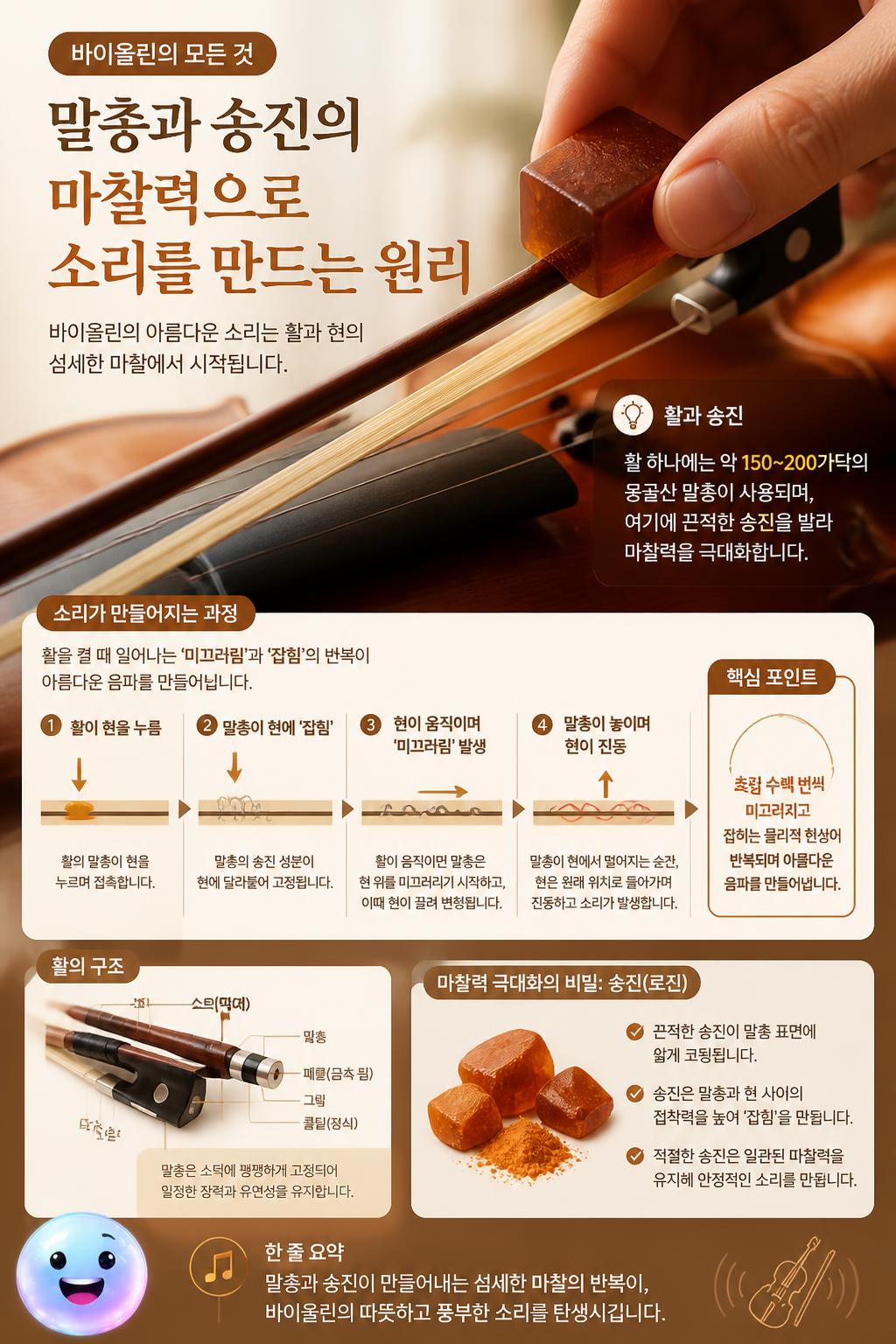
바이올린 활털에 발라 마찰력을 높이고 소리가 매끄럽게 나도록 돕는 끈적한 천연 수지 물질은?
소리를 만드는 과학과 구조
오케스트라를 이끄는 리더십
불멸의 명기와 악마의 거장
국경과 장르를 넘는 바이올린
maestro Wedged without glue under the bridge, this six-millimeter spruce peg withstands forty pounds of pressure. It transfers vibrations to the back plate, acting as the soul of the violin.
maestro Sticky rosin coats two hundred Mongolian horsehairs to maximize grip. The bow repeatedly slips and catches the string hundreds of times per second to create music.
maestro Seventeenth-century Italian luthiers found that f-shaped holes maximize airflow better than round ones. This precise design controls internal air pressure to boost violin volume by three decibels.
maestro A flexible spruce top plate absorbs thousands of vibrations every second. Hard maple back and side plates reflect this sound, combining different wood densities for a warm tone.

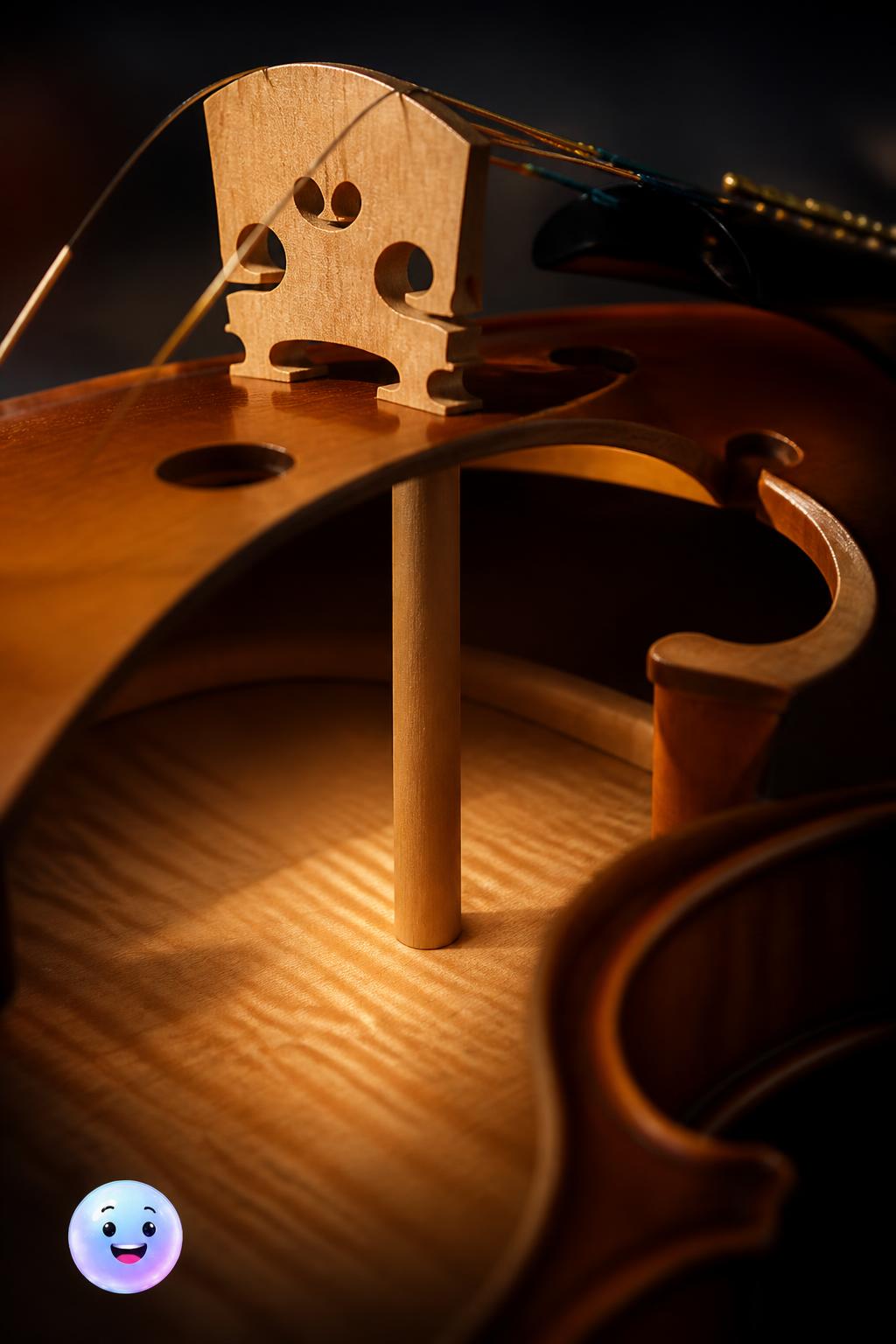
바이올린을 비롯한 현악기의 앞판과 뒷판 사이에 끼워 소리의 진동을 전달하는 작은 나무 기둥. 이탈리아와 프랑스의 제작자들은 바이올린 내부의 이 기둥을 '영혼'이라 부르며 음색의 핵심으로 여겼다.