
전자 장치와 결합하여 무한히 확장된 일렉트릭 바이올린
1930년대 등장한 일렉트릭 바이올린은 울림통이 없는 가벼운 뼈대 구조를 취하는 경우가 많습니다. 현의 진동을 전기 픽업으로 변환한 뒤 디스토션 등의 효과를 더해 일렉트릭 기타 못지않은 강렬한 소리를 냅니다.
소리를 만드는 과학과 구조
오케스트라를 이끄는 리더십
불멸의 명기와 악마의 거장
국경과 장르를 넘는 바이올린
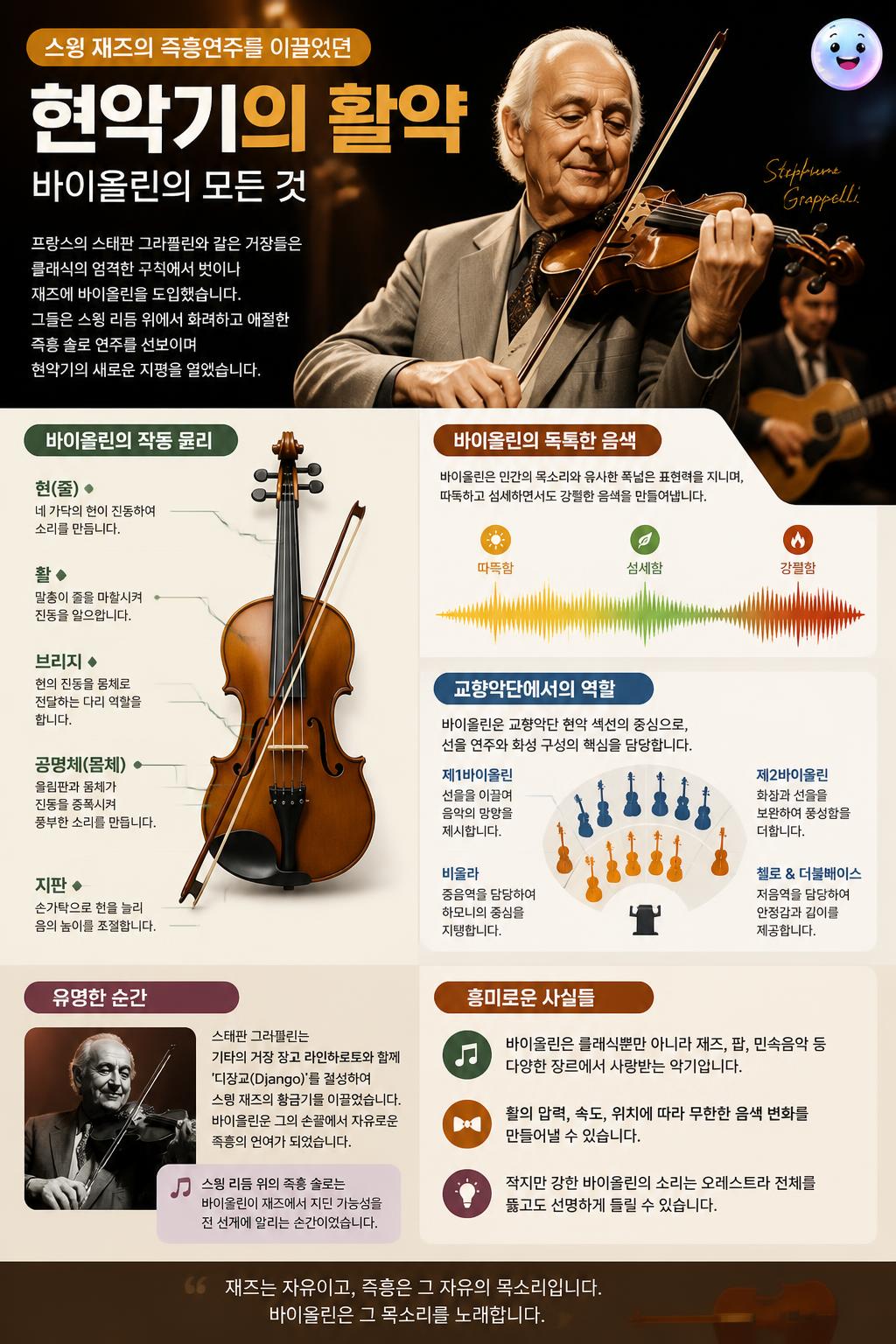
maestro French violinist Stéphane Grappelli broke strict classical rules to bring his instrument into jazz. His brilliant, emotional improvised solos over swing rhythms changed string music forever.
maestro European immigrants brought the violin to America, where players renamed it the fiddle. Musicians flattened the wooden bridge to play multiple strings at once for fast dance tunes.
maestro Eighteenth-century Indian musicians sat cross-legged on the floor to brace the violin against their chest. This posture helped them master gamaka, the microtonal slides of Carnatic music.
maestro Skeletal electric violins first appeared in the 1930s without traditional hollow wooden bodies. They use electronic pickups and distortion effects to create powerful sounds like electric guitars

maestro Tune the strings and place orchestral players to discover how the violin shapes famous symphonies.


활동이나 교류의 영역이 여러 분야에 걸치거나 서로 다른 영역이 결합하는 일. 1960년대 바이올리니스트 예후디 메뉴인과 인도 시타르 연주자 라비 샹카르의 협연이 대표적인 사례다.