비올라의 네 현(C, G, D, A)은 각각 서로 어떤 음정 간격으로 조율되어 있을까요?
비올라의 물리적 비밀과 독특한 음색
오케스트라의 숨은 지배자
바이올린의 그늘을 벗어난 역사적 순간들
현대 음악과 대중문화 속 비올라의 재발견
maestro Tuned a perfect fifth lower than a violin, the viola uses four strings. The thickest string vibrates at 130.8 Hertz to anchor the orchestra's middle register.
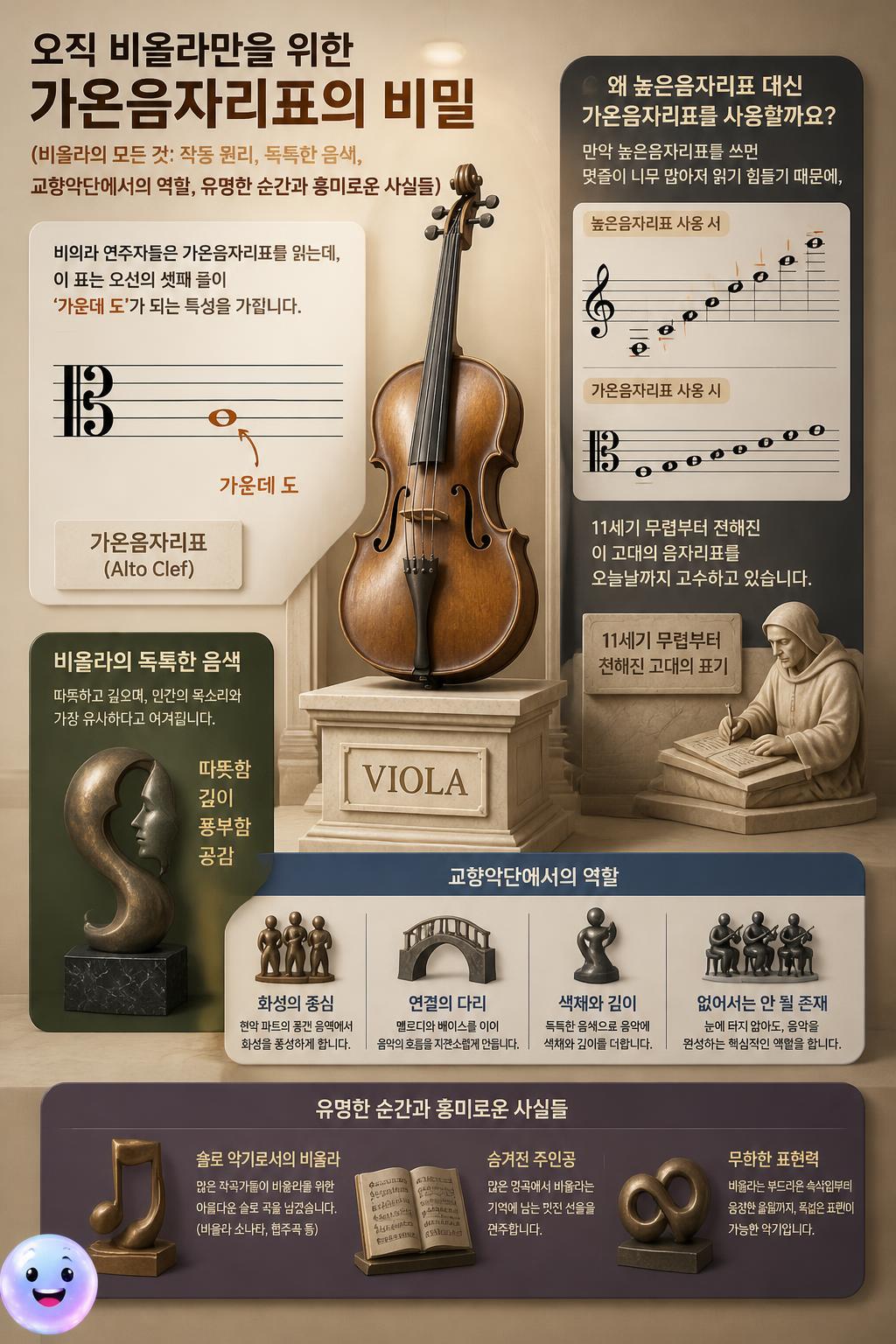
maestro Viola players read an eleventh-century clef where the middle line represents middle C. This ancient system prevents messy ledger lines and keeps sheet music easy to read.
maestro Instrument makers craft violas between 38 and 43 centimeters long. This unique size balances rich acoustic sound with the physical limit of holding it under the chin.

maestro Match the viola's warm tones to discover how its unique voice fits into the orchestra.
maestro A seventy-gram viola bow features wider hair than a violin bow. Friction between this heavy bow and thick strings creates rich overtones, producing a signature warm, nasal sound.

소리의 높낮이와 크기가 같아도 발음체의 종류에 따라 서로 다르게 느껴지는 소리의 고유한 감각적 특성. 비올라는 바이올린보다 5도 낮으나 울림통이 이론보다 작게 제작되어 특유의 따뜻하고 어두운 음색을 낸다.