
여름철 태풍 진로와 한반도에 미치는 영향
매년 7월에서 9월 사이, 따뜻한 열대 해상에서 발달한 태풍이 한반도를 통과하며 강풍과 폭우를 동반합니다. 태풍은 막대한 피해를 주기도 하지만, 가뭄을 해소하고 바닷물을 섞어주어 적조 현상을 완화하는 자연의 정화 역할도 동시에 수행합니다.
꽃샘추위와 벚꽃 전선이 벌이는 봄의 밀당
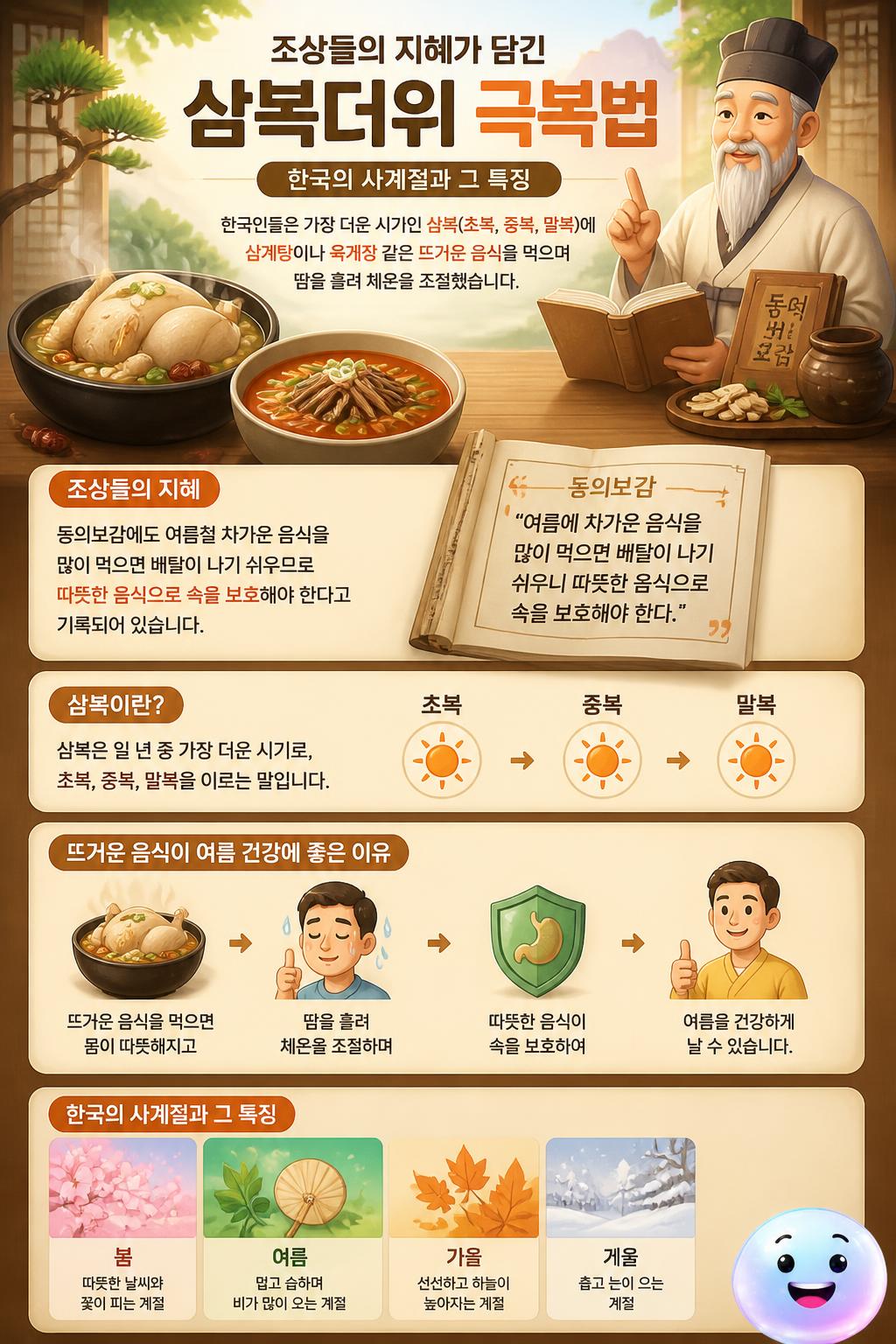
장마와 삼복더위가 쏟아지는 화끈한 여름
파란 하늘과 알록달록 단풍이 그리는 가을 수채화
삼한사온과 뜨끈한 온돌이 만드는 겨울 이야기

spicykimchi Koreans eat boiling Samgyetang chicken soup during the hottest days to sweat and cool down. This practice follows Dongui Bogam medical advice to protect the stomach with warm food.
spicykimchi Cold Okhotsk and warm North Pacific air masses clash over Korea from mid-June to mid-July. This collision dumps thirty percent of the region's annual rain in one month.
spicykimchi Starting in late June, this massive air system pushes daytime temperatures above thirty degrees Celsius. It traps heavy moisture to create muggy nights that stay above twenty-five degrees.

spicykimchi Match seasonal items and weather cards to learn how Korea beats the hot, humid summer.
spicykimchi From July to September, tropical storms strike the Korean Peninsula with destructive winds. While causing damage, these giants also end droughts and clear toxic red tides.

열대야 기준: 한국 기상청 기준, 오후 6시부터 다음 날 오전 9시까지 최저 기온이 25도 이상 유지될 때를 공식적인 열대야라고 부릅니다.

여름철에 여러 날 동안 계속해서 비가 내리는 현상이나 그 비. 한국에서는 보통 6월 하순부터 7월 하순 사이에 집중적으로 발생한다.