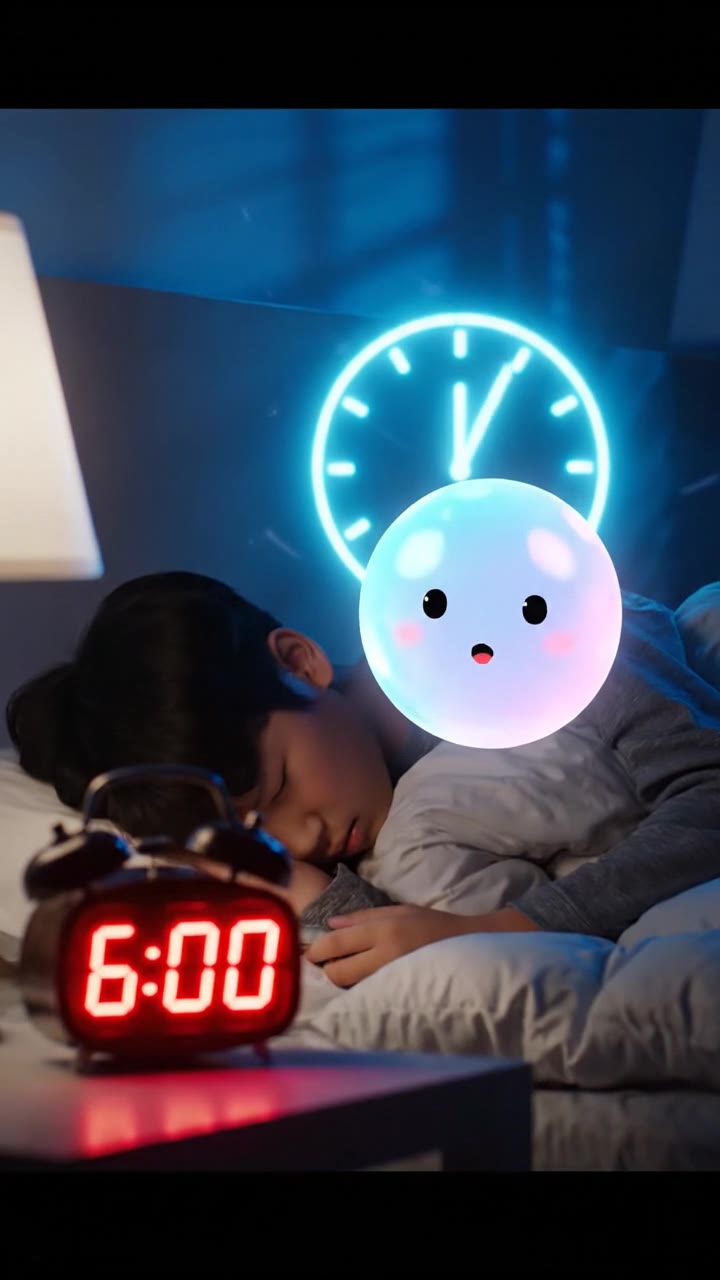
청소년기에 일어나는 생체 시계의 이동
청소년기에는 수면을 유도하는 멜라토닌 호르몬이 분비되는 시점이 어린이보다 약 2시간 늦어집니다. 이 때문에 밤 11시 전에는 생리적으로 잠들기 어렵고, 아침 8시는 성인의 새벽 6시와 같은 생체 리듬을 가집니다.
Chapter 1
24시간 불이 꺼지지 않는 사회와 수면 부족의 역사
Chapter 2
잠이 부족한 뇌와 몸의 과학적 비명
Chapter 3
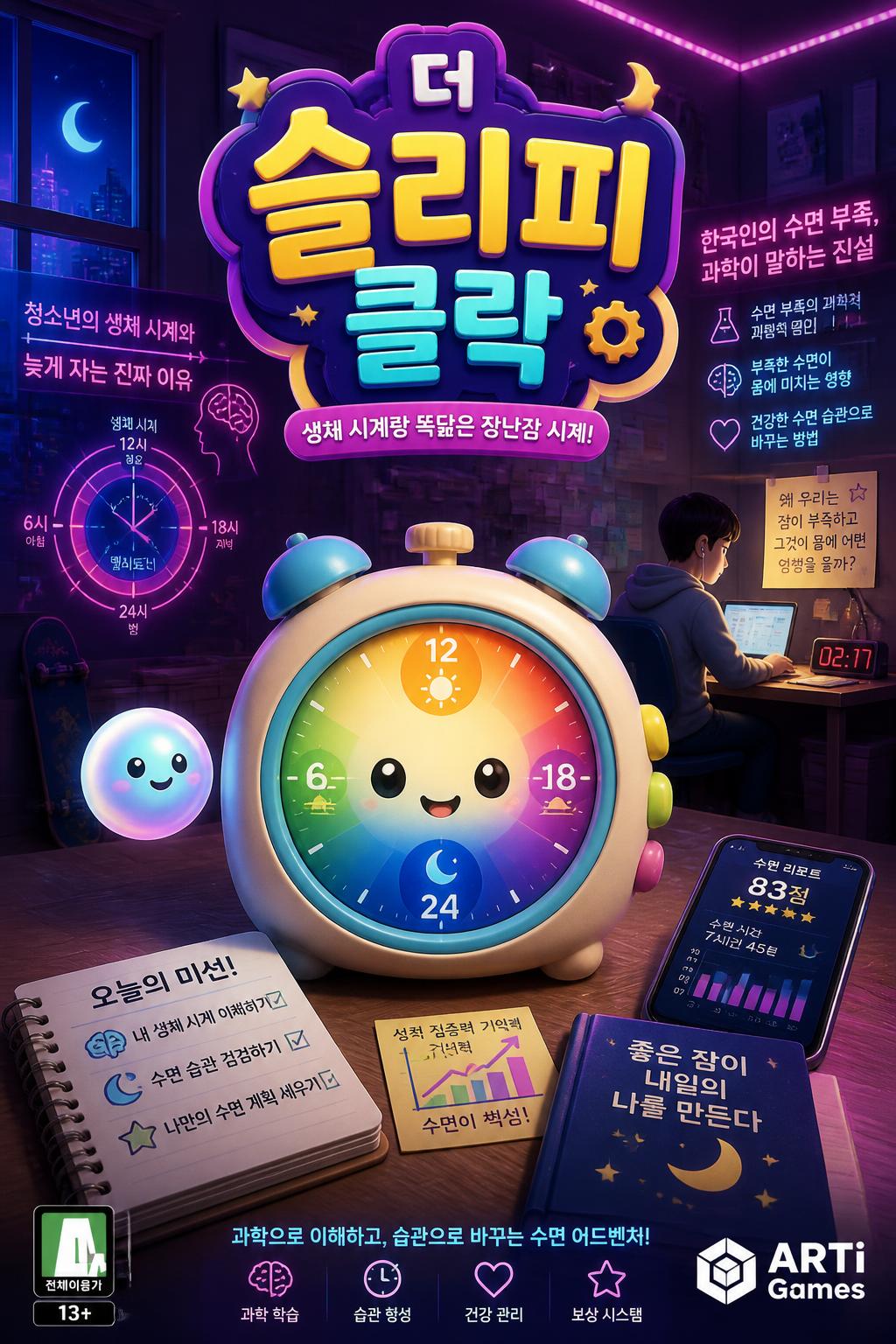
청소년의 생체 시계와 늦게 자는 진짜 이유
Chapter 4
기적을 만드는 수면 과학과 꿀잠 솔루션
Ch 3 · 청소년의 생체 시계와 늦게 자는 진짜 이유
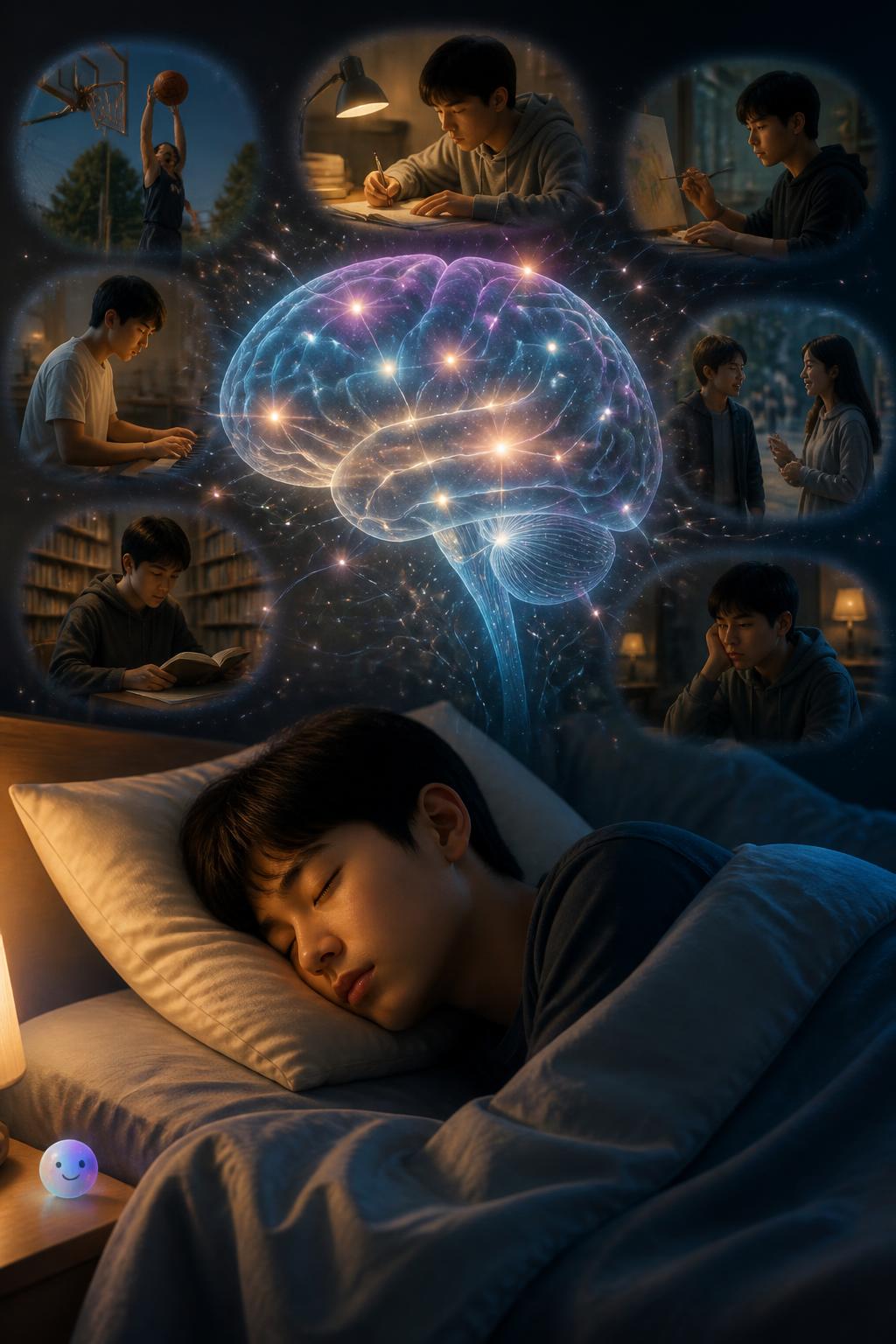
soomin During deep REM cycles, the frontal lobe prunes weak neural pathways to lock in memories. Missing this sleep damages a teenager's grades and emotional control.
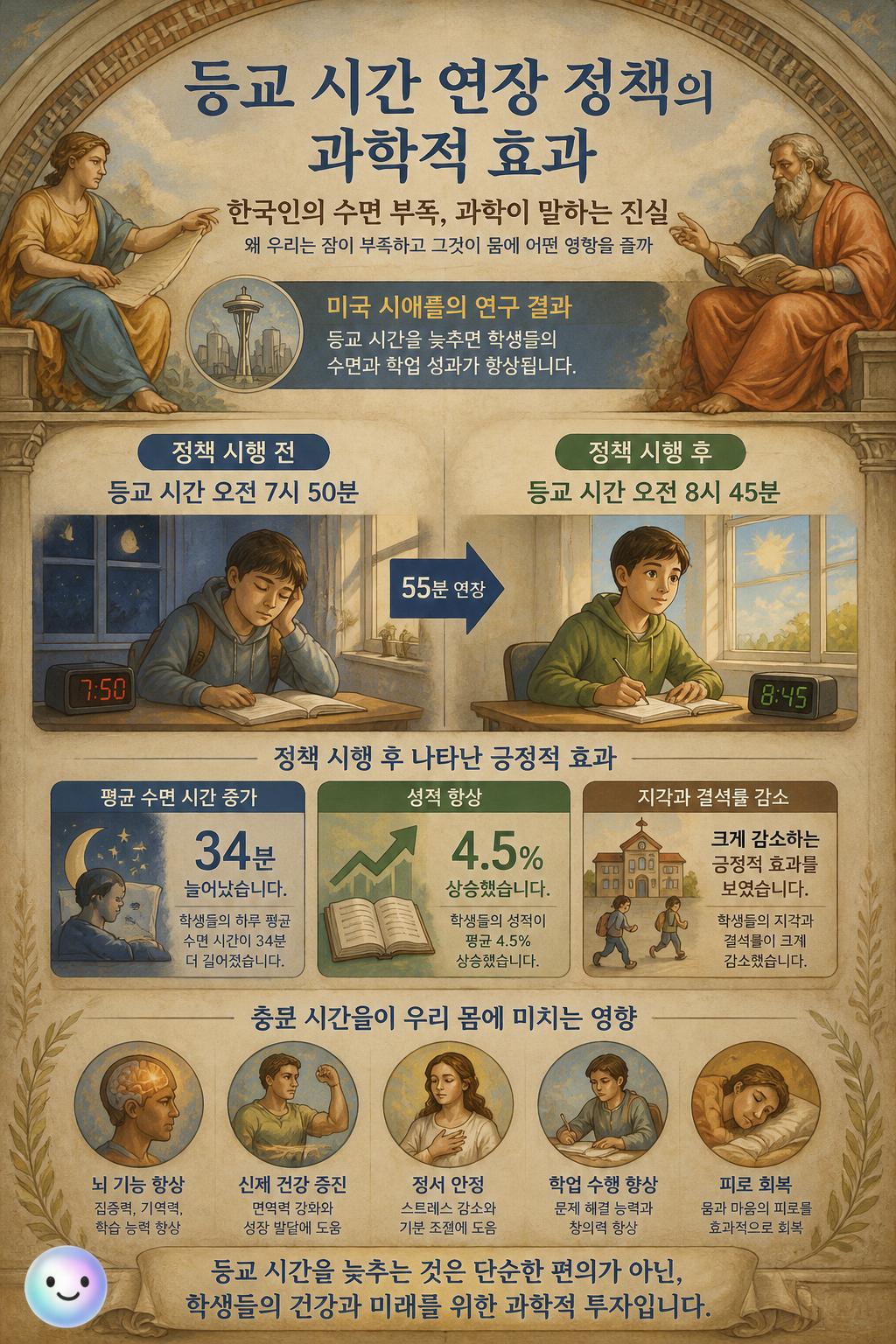
soomin When Seattle schools delayed start times by 55 minutes, students gained 34 minutes of sleep. This simple schedule change boosted average grades by 4.5 percent and reduced absences.
soomin Delayed melatonin release keeps teenagers awake until eleven p.m. and makes an eight a.m. wake-up call feel like six a.m. for adults.
soomin Deep NREM sleep between 10 PM and 2 AM releases seventy percent of your growth hormone. Missing this crucial window stunts bone growth and delays muscle cell repair.
BETA
soomin Spin the toy clock to discover how your biological clock controls your sleep cycle.
Glossary
멜라토닌 (명사)
동물의 뇌에서 분비되어 생체 리듬과 수면 주기를 조절하는 호르몬이다. 청소년기에는 이 물질의 분비 시점이 성인보다 약 두 시간 지연되어 늦은 수면을 유발한다.
동물의 뇌에서 분비되어 생체 리듬과 수면 주기를 조절하는 호르몬이다. 청소년기에는 이 물질의 분비 시점이 성인보다 약 두 시간 지연되어 늦은 수면을 유발한다.