물의 양과 불이 결정하는 라면의 기초
스프 먼저 vs 면 먼저, 끓는점의 진실
면발의 탄력을 극대화하는 물리 법칙
맛의 시너지를 일으키는 부재료의 화학
soomin Hot water above 60 degrees Celsius swells the noodle starch to make it soft. Cooling causes these starch molecules to bond again, making the leftovers tough and crumbly.
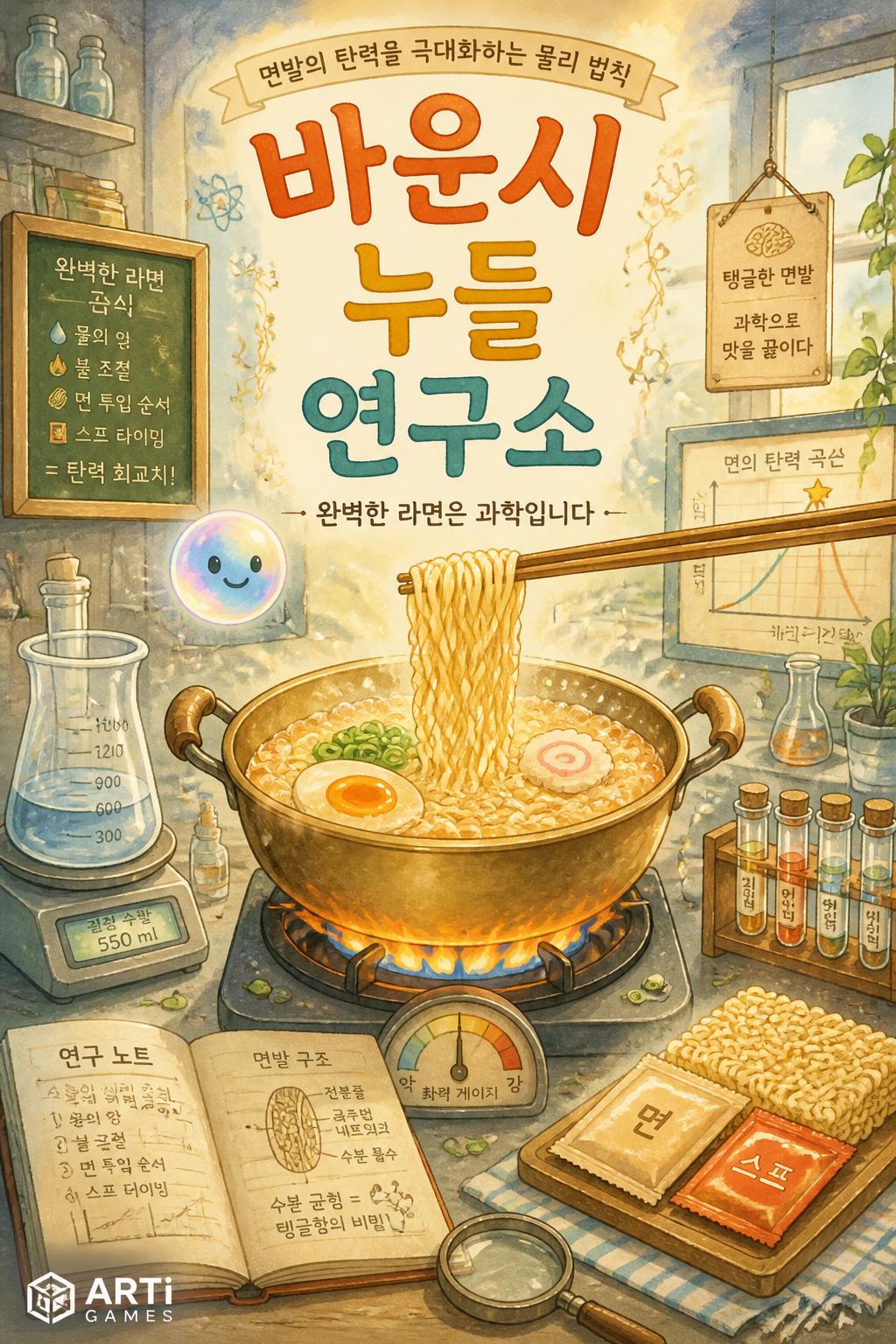
soomin Adjust water, heat, and ingredient order to discover the science of the perfect bouncy noodle.
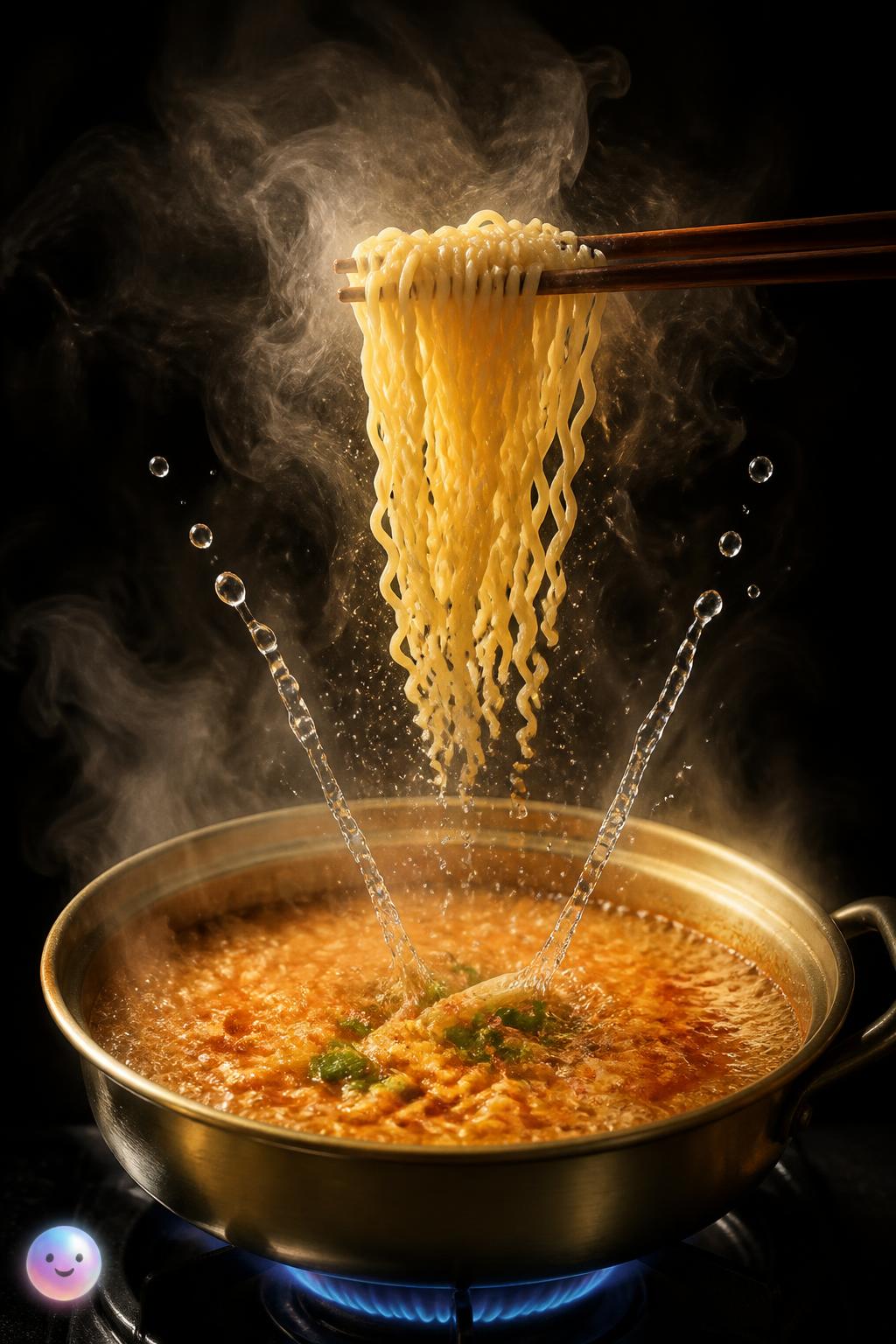
soomin Lifting boiling noodles into room-temperature air creates an eighty-degree temperature drop. Repeating this technique shrinks the outer starch layer to make the noodles incredibly chewy.
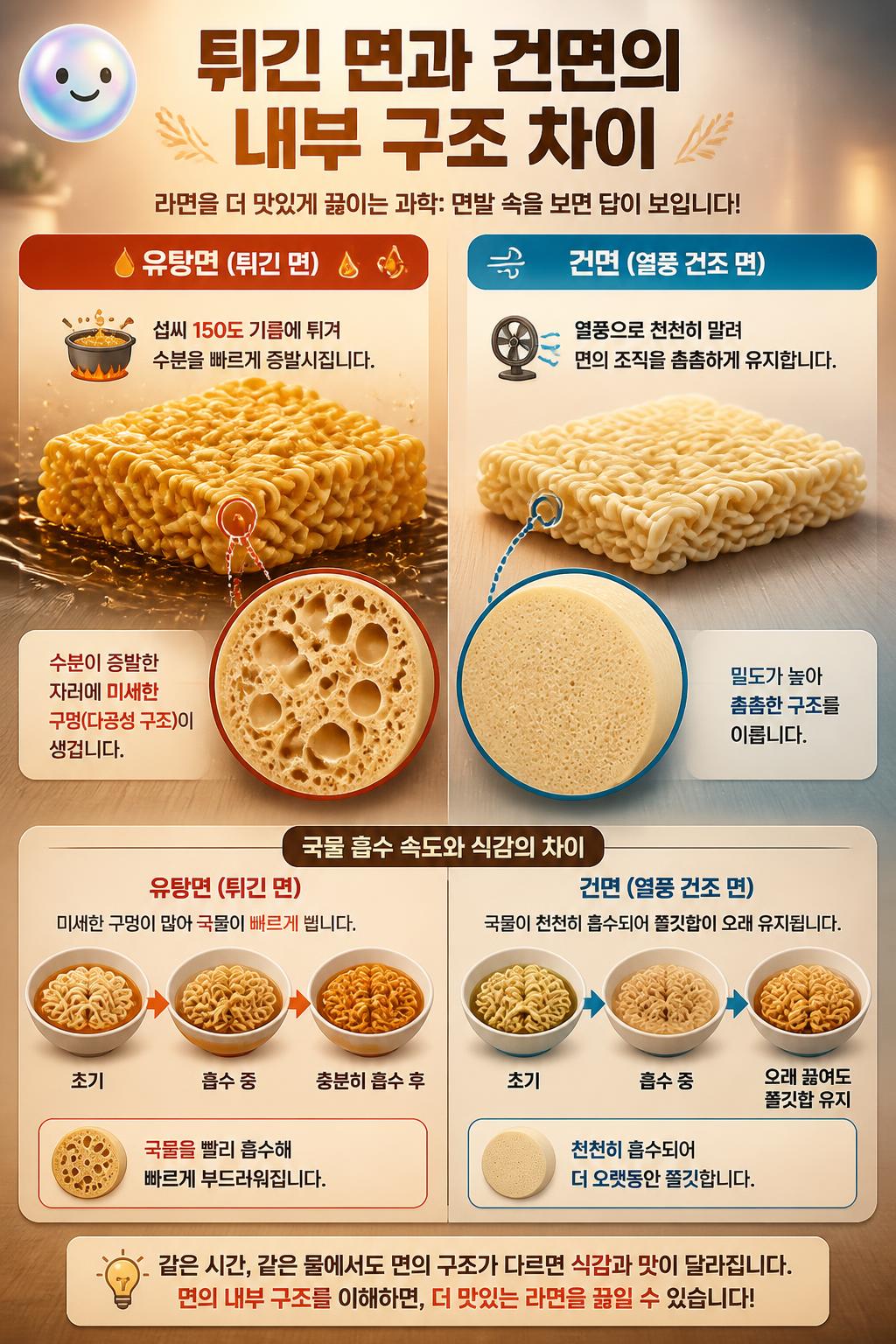
soomin Frying noodles in 150-degree-Celsius oil leaves tiny microscopic holes that soak up soup quickly. Hot-air drying creates a dense structure that absorbs broth slowly to keep noodles chewy.
soomin Pouring half a teaspoon of vinegar into boiling water thirty seconds before finishing condenses gluten proteins. This quick acid boost prevents noodles from breaking and increases elasticity by twenty percent.
액체가 기체로 변할 때 주위에서 흡수하는 열에너지. 라면을 끓일 때 면발을 공기 중에 들면 수분이 증발하며 기화열을 빼앗아 면이 빠르게 수축한다.