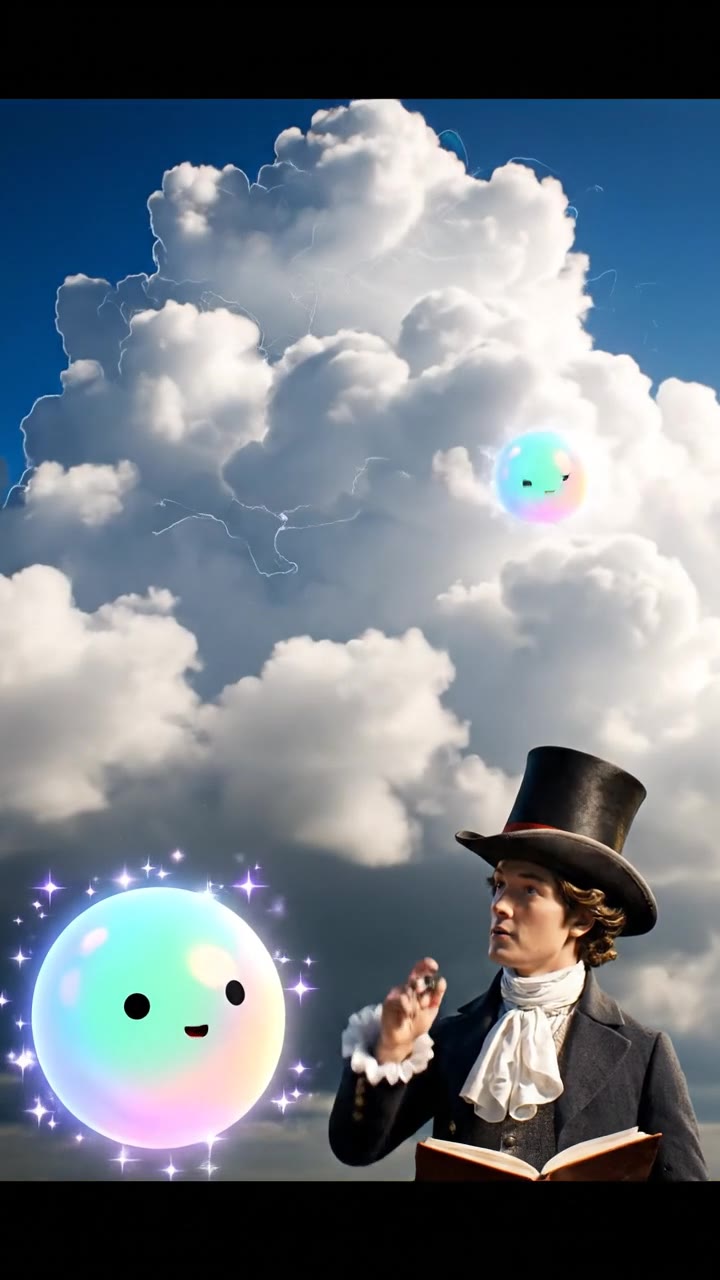
루크 하워드가 정립한 최초의 구름 분류법
루크 하워드는 구름을 형태에 따라 권운(털구름), 적운(뭉게구름), 층운(안개구름), 우중충한 비구름인 난운으로 분류했습니다. 이 라틴어 기반 분류법은 오늘날 세계기상기구(WMO)가 사용하는 국제 구름 분류의 기초가 되었습니다.
거대하고 무거운 구름의 몸무게
무거운 구름이 떨어지지 않는 과학
하늘을 수놓는 구름의 종류와 역할
인간이 구름을 다루는 기술과 미래
soomin These clouds rise over ten kilometers high, driven by powerful updrafts. They unleash lightning, tornadoes, and hundreds of thousands of tons of water in hours.
soomin Clouds have a high albedo, reflecting twenty percent of incoming solar energy back into space. This massive planetary mirror prevents Earth from overheating under the sun.
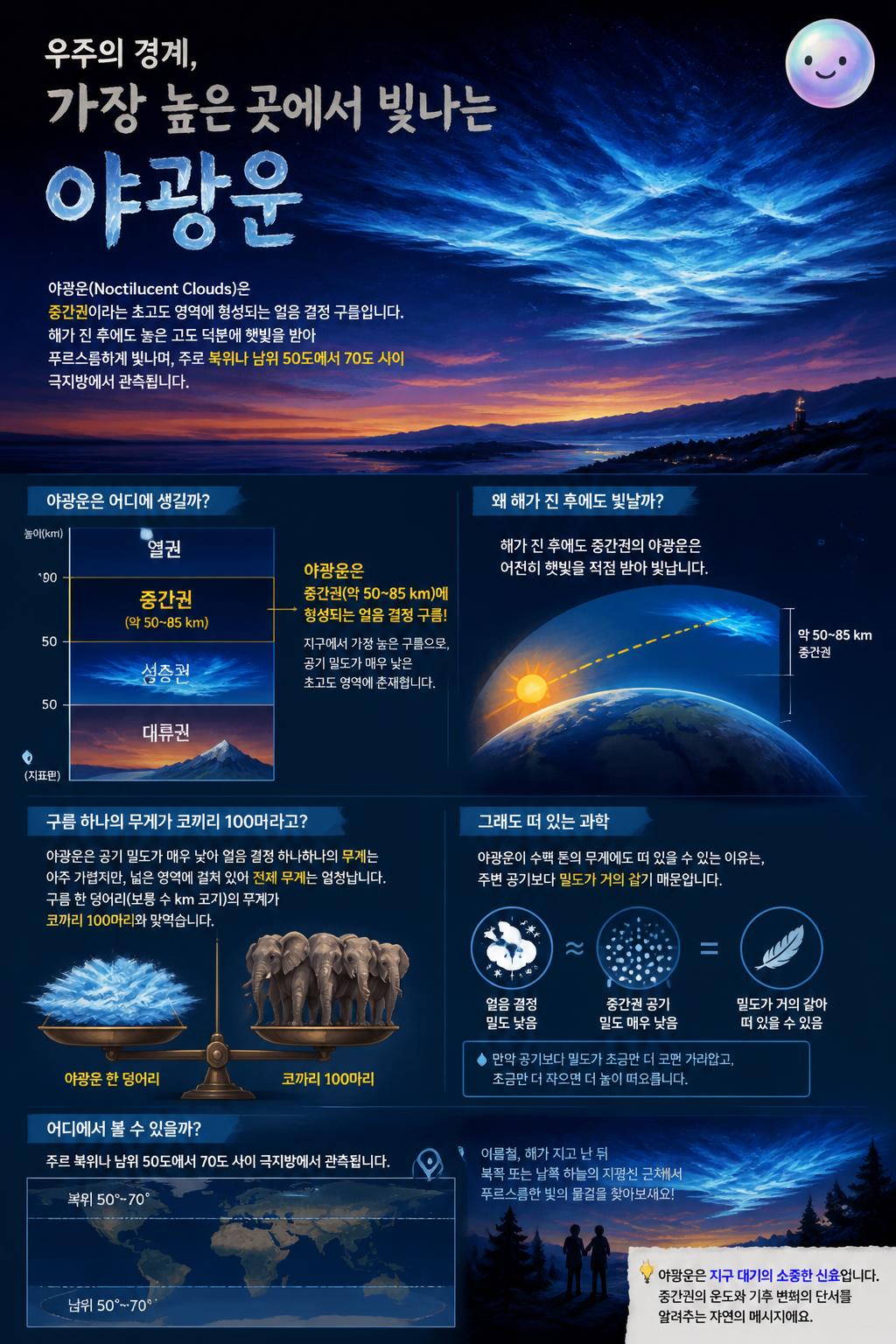
soomin These high-altitude ice crystals form in the mesosphere. They catch sunlight after sunset, glowing electric blue over polar regions between fifty and seventy degrees latitude.
soomin Howard used Latin names like cirrus, cumulus, stratus, and nimbus to group clouds by shape. This historic system still forms the basis of modern World Meteorological Organization standards
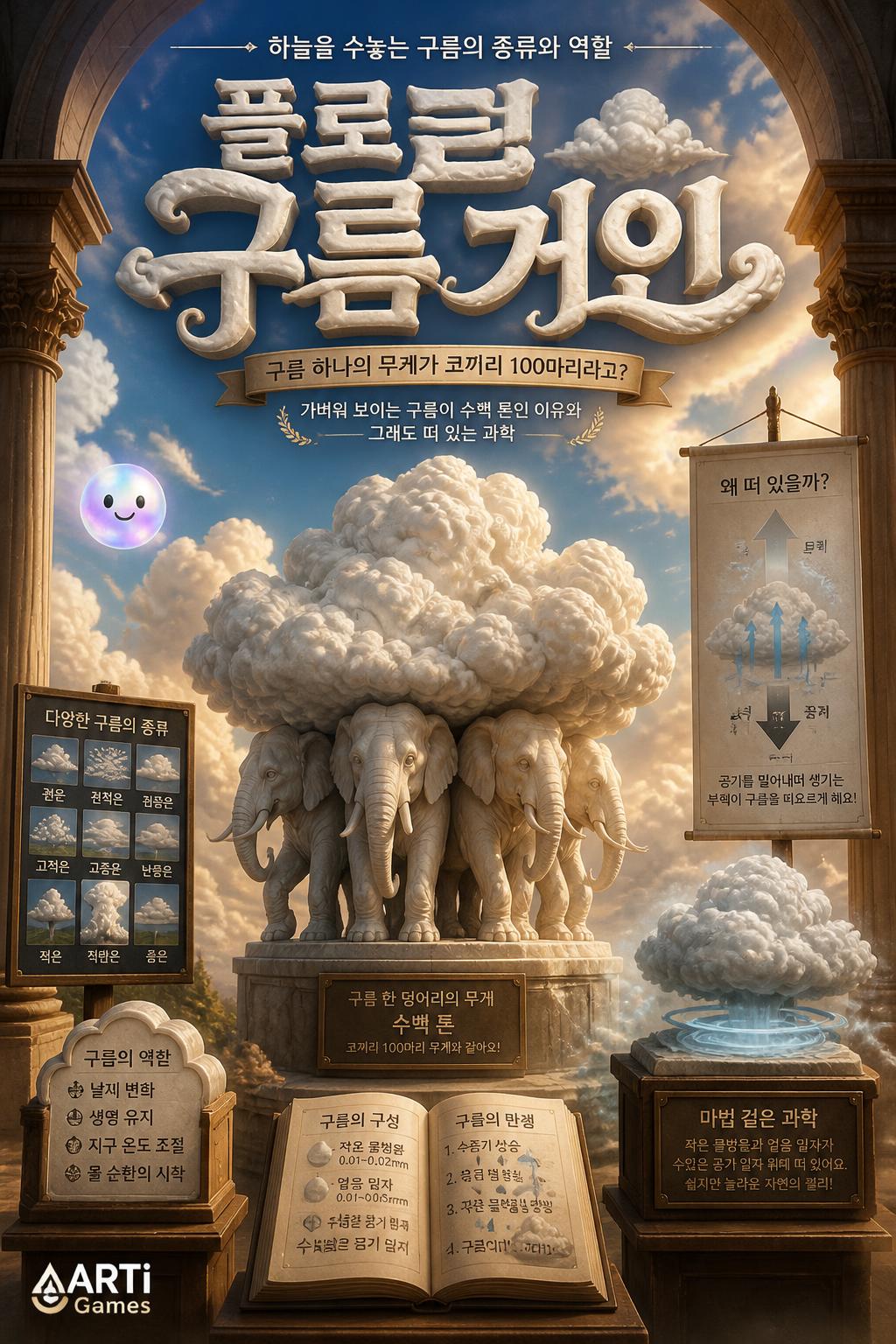
soomin Weigh giant elephants against fluffy clouds to discover how massive water droplets stay afloat.

공기 중의 수증기가 아주 미세한 물방울이나 얼음 알갱이로 변해 하늘에 모여 떠 있는 것. 1803년 영국의 기상학자 루크 하워드가 이를 형태와 높이에 따라 열 가지 종류로 체계화했습니다.