
원하는 곳에 비를 내리게 하는 인공 강우
1946년 미국 제너럴 일렉트릭의 빈센트 쉐퍼는 드라이아이스를 이용해 최초의 인공 강우 실험에 성공했습니다. 오늘날에는 요오드화은(Silver Iodide)이나 소금 입자를 비행기로 구름에 살포하여 물방울이 뭉치도록 유도하는 기술이 가뭄 해소에 활용됩니다.
거대하고 무거운 구름의 몸무게
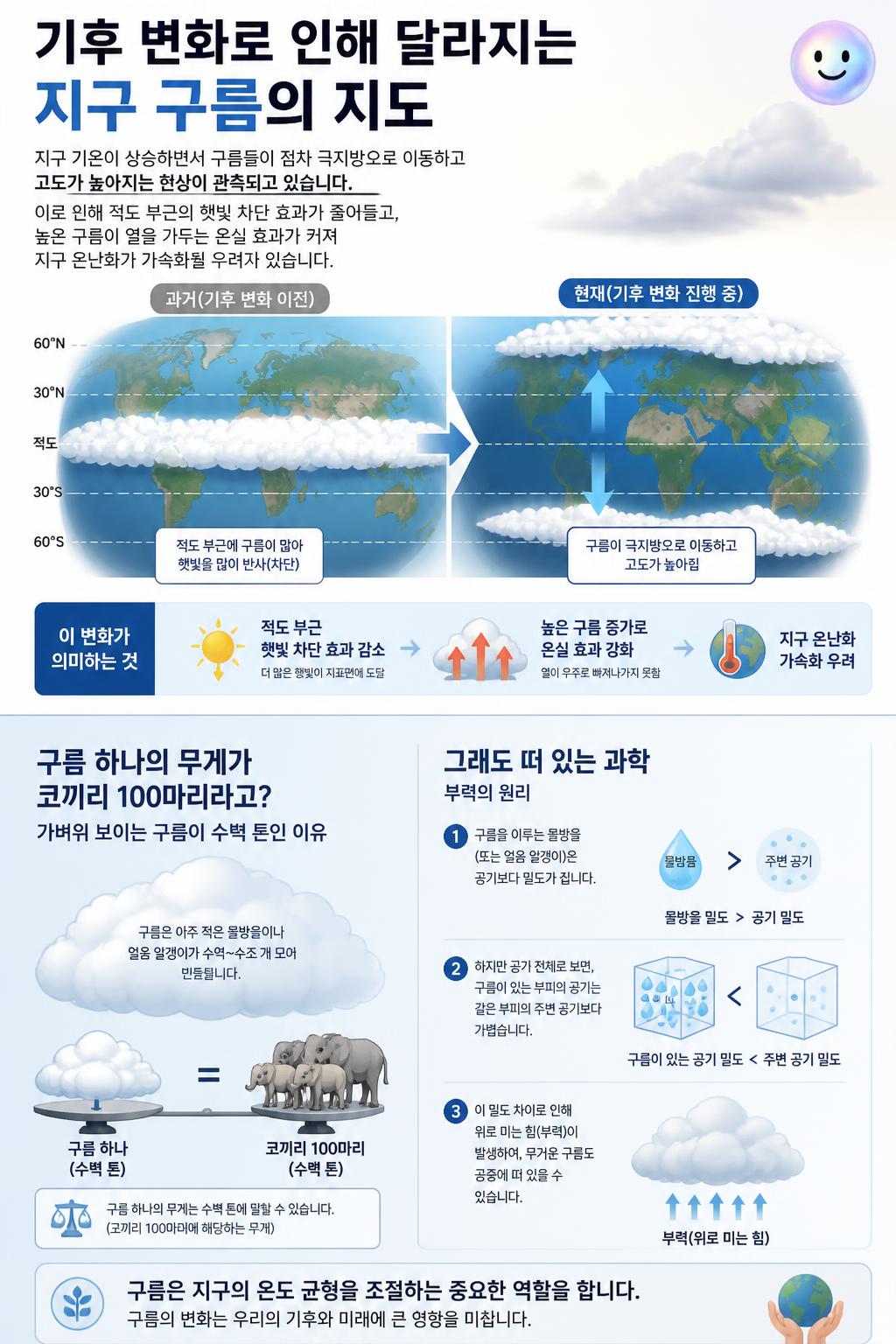
무거운 구름이 떨어지지 않는 과학
하늘을 수놓는 구름의 종류와 역할
인간이 구름을 다루는 기술과 미래
soomin Decades of satellite data show clouds migrating toward the poles and rising higher. This movement reduces equatorial shade and traps heat, accelerating global warming.
soomin Vincent Schaefer first made artificial rain in 1946 using dry ice. Today, airplanes spray silver iodide into clouds to group water droplets and fight droughts
soomin Operating alongside America's GOES satellites, this spacecraft measures cloud temperature and thickness. The real-time data helps meteorologists predict dangerous typhoons and warn communities about incoming floods.

soomin Balance rising warm air under your cloud to discover how massive clouds stay afloat.
인공 강우의 역사: 1946년 빈센트 쉐퍼가 과냉각된 실험용 냉장고 속에 드라이아이스 입자를 떨어뜨려 최초로 인공 구름을 만든 것이 인공 강우의 시초입니다.

인위적으로 구름을 발달시켜 비나 눈을 내리게 하는 기술이다. 1946년 빈센트 섀퍼는 구름 속에 드라이아이스를 뿌려 최초로 인공 강우를 성공시켰다.