
상승기류라는 하늘 위의 보이지 않는 엘리베이터
태양열로 따뜻해진 땅은 주변 공기를 데우고, 가벼워진 더운 공기는 초속 수 미터의 속도로 상승합니다. 이 강력한 상승기류가 구름 속 미세한 물방울들을 끊임없이 위로 밀어 올리기 때문에 구름이 아래로 떨어지지 않습니다.
거대하고 무거운 구름의 몸무게
무거운 구름이 떨어지지 않는 과학
하늘을 수놓는 구름의 종류와 역할
인간이 구름을 다루는 기술과 미래
soomin Tiny cloud droplets measuring ten micrometers wide fall at just a few centimeters per hour. Gentle updrafts easily overcome this slow terminal velocity to keep clouds afloat.
soomin Condensing water vapor releases heat that warms the inside of a cloud. This warm, low-density air creates buoyancy, lifting the cloud upward like a giant hot air balloon.
soomin Sun-warmed ground heats the air, creating powerful upward currents that travel meters per second. These invisible forces constantly push tiny water droplets upward to keep clouds afloat.
soomin Water vapor clings to floating sea salt, volcanic ash, and wildfire smoke to condense into liquid droplets. These microscopic condensation nuclei allow stable clouds to take shape across the sky.

soomin Weigh clouds against herds of elephants to discover how hundreds of tons stay afloat.
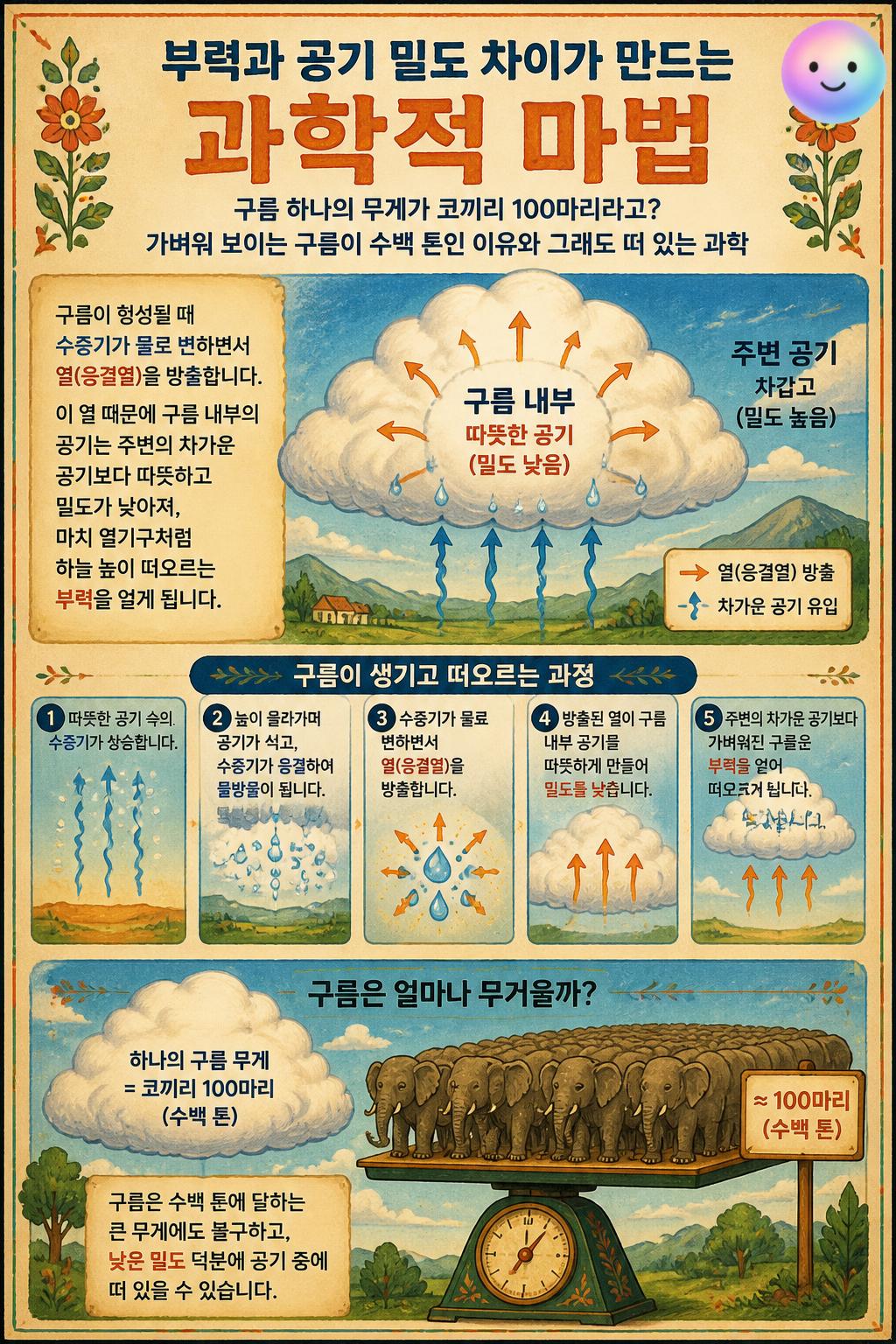

대기 중에서 지표면의 가열 등으로 인해 위쪽으로 이동하는 공기의 흐름. 지표면이 데워지면서 발생하는 이 대기 흐름은 코끼리 백 마리 무게의 수분 덩어리가 지상으로 추락하지 않도록 받쳐준다.