Chapter 1
What was on the medieval menu
Chapter 2
Faith, relics, and everyday worship
Chapter 3
The gritty reality of medieval warfare
Chapter 4
Magic, medicine, and the witch trials
Ch 2 · Faith, relics, and everyday worship
renaissanceman Churches collected and displayed physical remains of saints to attract pilgrims and generate massive local revenue.
Quiz
How many holy days (holidays) did the medieval church calendar typically mandate as rest days?
Fun Fact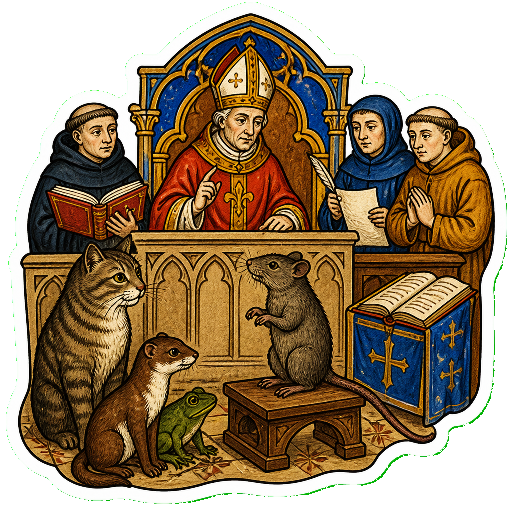
Animal trials: Medieval ecclesiastical courts sometimes put destructive pests like weevils, rats, or locusts on trial, formally excommunicating them if they ruined local crops.
renaissanceman Fearing purgatory, wealthy medieval patrons bought written indulgences and funded chapels for priests to sing daily masses.
Quiz
Which document governed the daily routines of prayer and labor for most medieval monks?
Quiz
What did the medieval church sell to Christians promising to reduce their soul's time in purgatory?
Quiz
What did medieval pilgrims purchase at holy shrines to prove they had completed their journey?
Glossary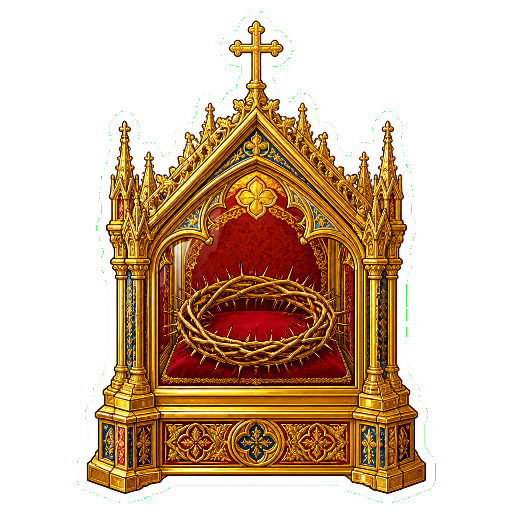
relic (noun)
A part of a deceased holy person's body or belongings kept as an object of reverence. In 1239, King Louis IX of France enshrined the Crown of Thorns within Paris's Sainte-Chapelle.
A part of a deceased holy person's body or belongings kept as an object of reverence. In 1239, King Louis IX of France enshrined the Crown of Thorns within Paris's Sainte-Chapelle.
BETA
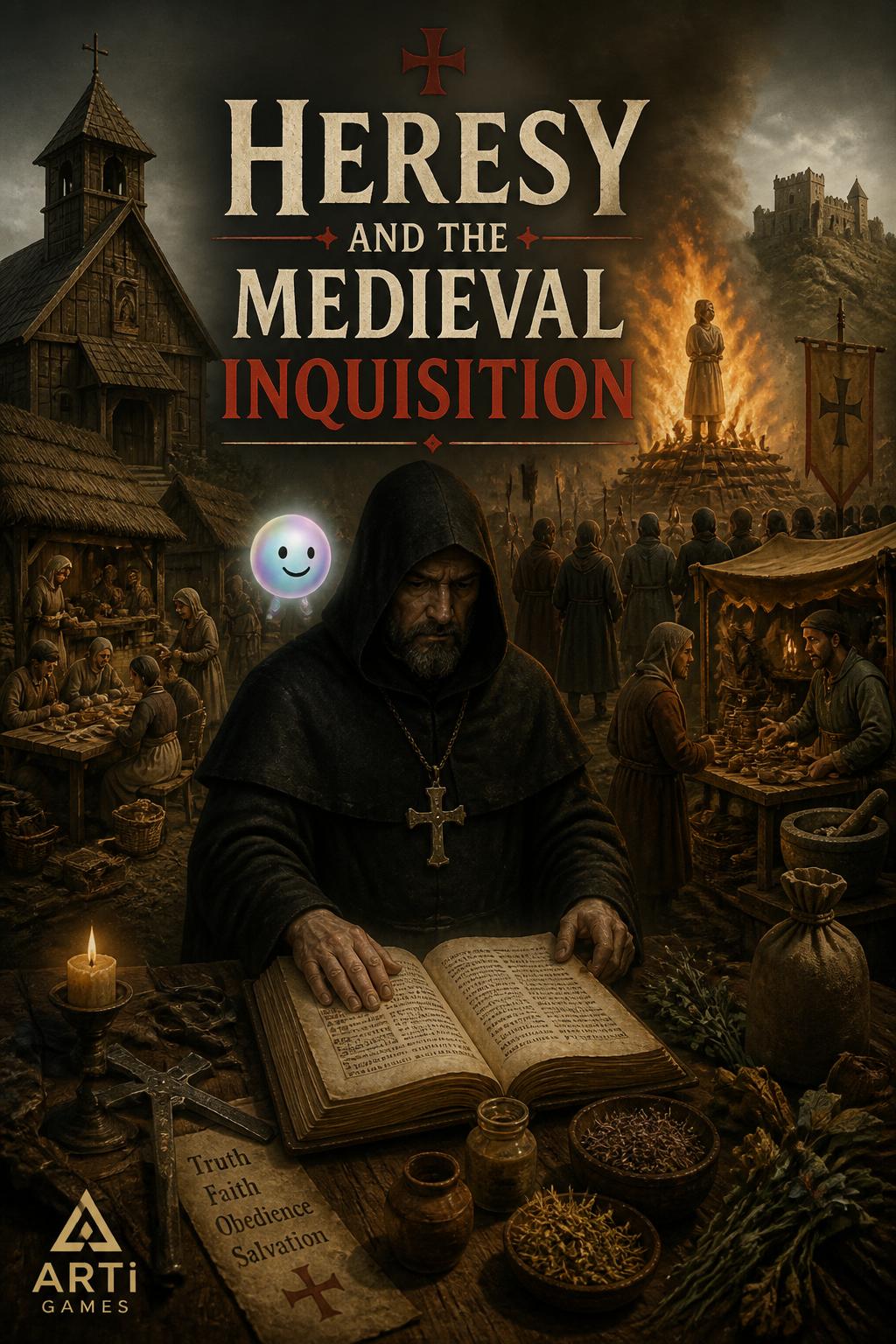
renaissanceman Play an authentic historical game exploring daily life, witchcraft, trials, and religious beliefs during the medieval Inquisition.
Quiz
Why did thousands of medieval pilgrims travel to Canterbury Cathedral after 1170?
Quiz
Which heretical group in southern France was the primary target of the early 13th-century Inquisition?