
Chapter 1
Secret histories of English rhymes
Chapter 2
Global melodies and historical echoes
Chapter 3
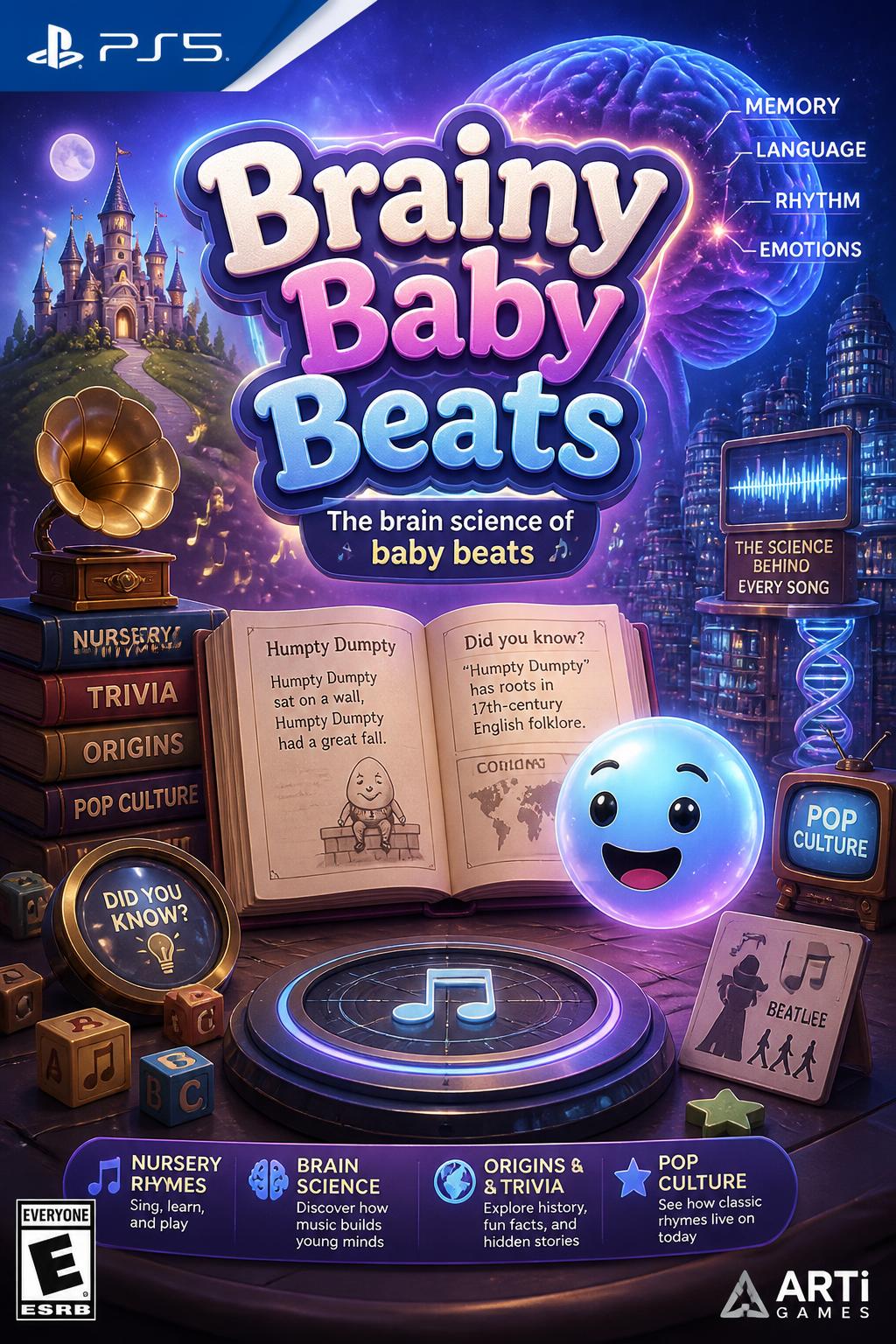
The brain science of baby beats
Chapter 4
Nursery rhymes in modern media
Ch 3 · The brain science of baby beats
schopenhauer An educational card displays the path of language from phonemes to nursery rhymes
Quiz
What maternal sound do repetitive nursery rhyme rhythms mimic to soothe infants?
Quiz
What are the smallest units of sound in a language that nursery rhymes help babies identify?
BETA
schopenhauer Match classic nursery rhymes to their historical origins to discover the secrets behind the lyrics.
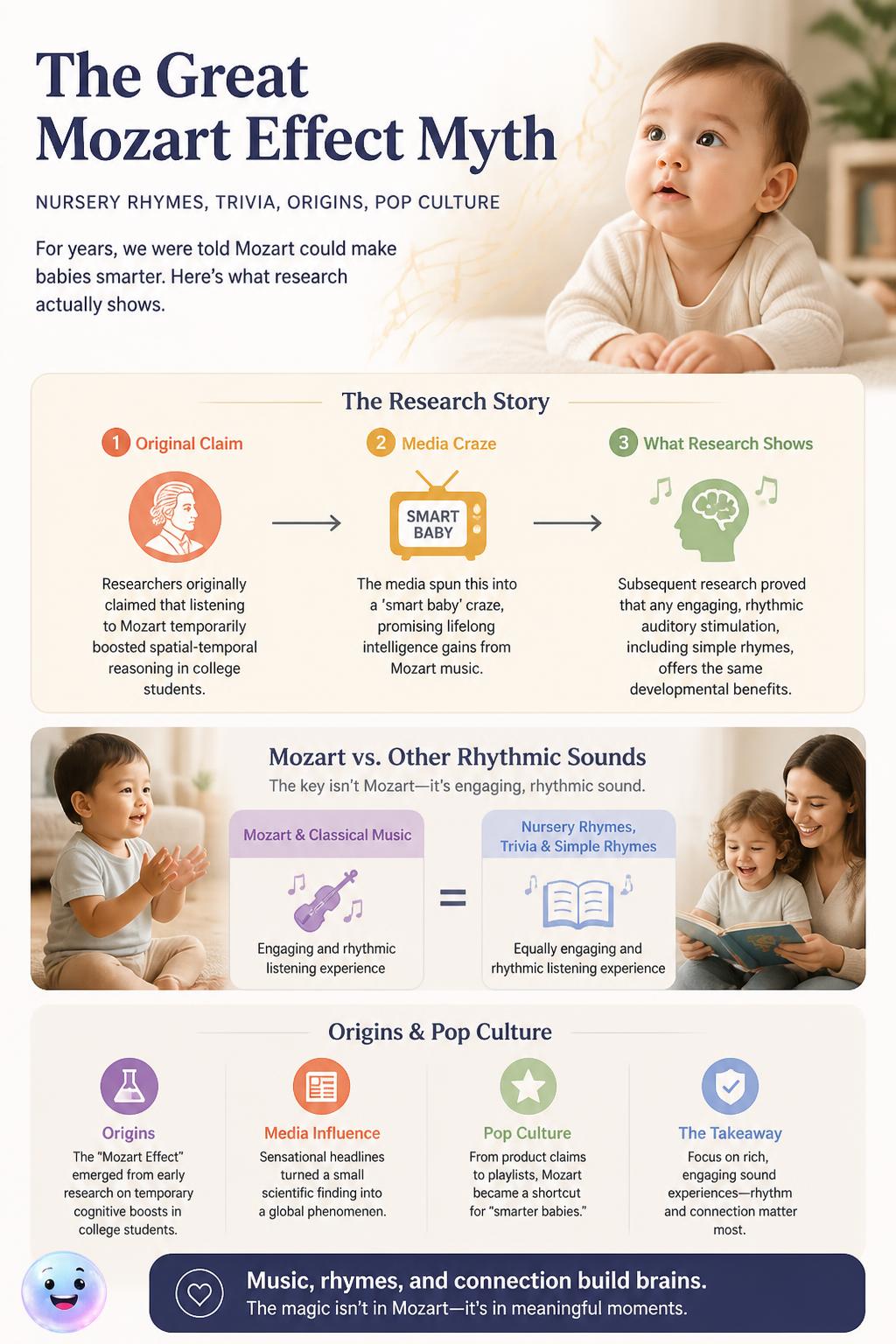
schopenhauer An illustrated timeline traces the Mozart myth from college classrooms to baby nurseries.
Quiz
Why do infants prefer 'parentese' or high-pitched, rhythmic speech used in nursery rhymes?
Quiz
Which musical interval is incredibly common in children's songs across different global cultures?
schopenhauer Infant Rhythm Cognition
Even when we sleep, we feel a skipped drumbeat!
schopenhauer Children from Sweden to Swahili-speaking regions naturally tease using a falling minor third interval. Musicologists explain how this pitch fits developing vocal cords and brains perfectly.
Quiz
What linguistic skill is strongly predicted by a child's early knowledge of nursery rhymes?
Quiz
What cognitive skill does listening to rhythmic music actually help temporarily improve?

Fun Fact
Heartbeat sync: Research shows that when mothers sing nursery rhymes, their infants' heart rates physically synchronize with the musical tempo.