Setting the scenes in Denmark and Scotland
Supernatural catalysts of ghost and witches
Ambition versus hesitation
The tragic climaxes of poison and steel

schopenhauer Understand Hamlet's endless delay and overthinking. Learn how to easily tell Hamlet apart from Macbeth with fun trivia and key differences.
What is Prince Hamlet's primary psychological struggle throughout Shakespeare's play?
Unlike Lady Macbeth who is a co-conspirator, how does Queen Gertrude act in Hamlet?

schopenhauer Match iconic quotes and characters to discover how to tell Hamlet apart from Macbeth.
schopenhauer Watch to easily tell Macbeth and Hamlet apart. Explore Macbeth's ruthless ambition, discover fun trivia, and learn key ways to differentiate them.

schopenhauer Macbeth's tragedy lies in his rapid action, spurred by a drive for power at all costs.
Which famous soliloquy features Hamlet debating the nature of life, death, and suicide?
schopenhauer Ambition versus Hesitation
Hamlet hesitates and overthinks a thousand lines, But Macbeth just rushes through his dark and quick designs.
schopenhauer Watch this video to easily tell Hamlet and Macbeth apart by comparing the roles of Gertrude and Lady Macbeth. Includes helpful trivia and tips.
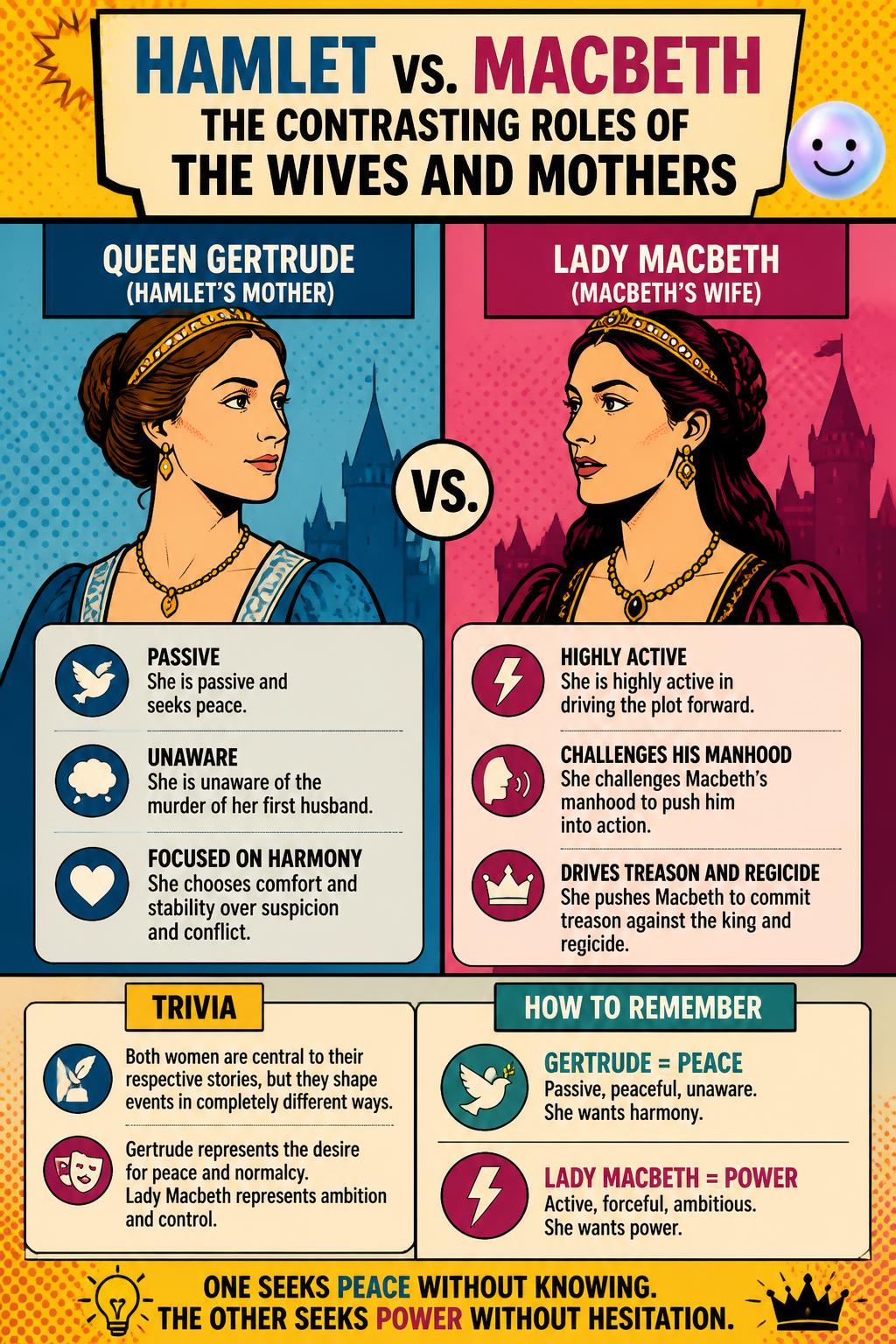
schopenhauer Gertrude and Lady Macbeth represent completely opposite forces of influence on the protagonists.
What does the historical Renaissance term 'melancholy' refer to in Hamlet's character?
To be or not: The famous 'To be or not to be' speech is often performed with Hamlet holding a skull, but he actually holds it in a completely different scene.
schopenhauer Learn how to differentiate Hamlet and Macbeth through their soliloquies of intellect versus despair. Get quick tips, trivia, and key differences.
Who is Hamlet's passive mother, the Queen of Denmark, who marries the murderer?
Which character's late-play monologue contains the tragic phrase 'Tomorrow, and tomorrow, and tomorrow'?
A strong desire to achieve or do something, typically requiring determination and hard work. This quality drives Macbeth to assassinate King Duncan, contrasting sharply with Hamlet's paralyzing reluctance to kill Claudius.