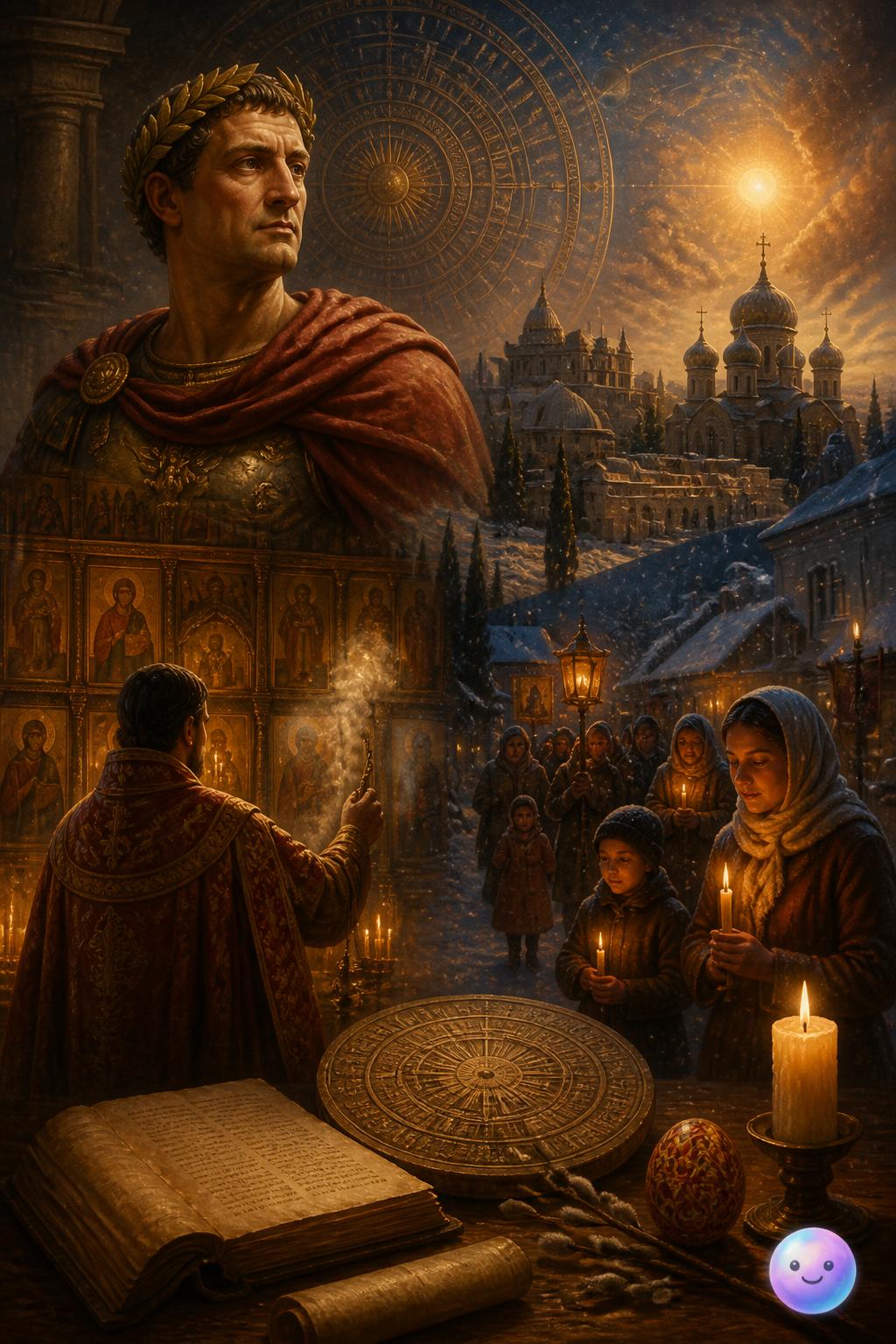
Chapter 1
The parting of East and West
Chapter 2
Windows to the divine
Chapter 3
Sacred architecture and spaces
Chapter 4
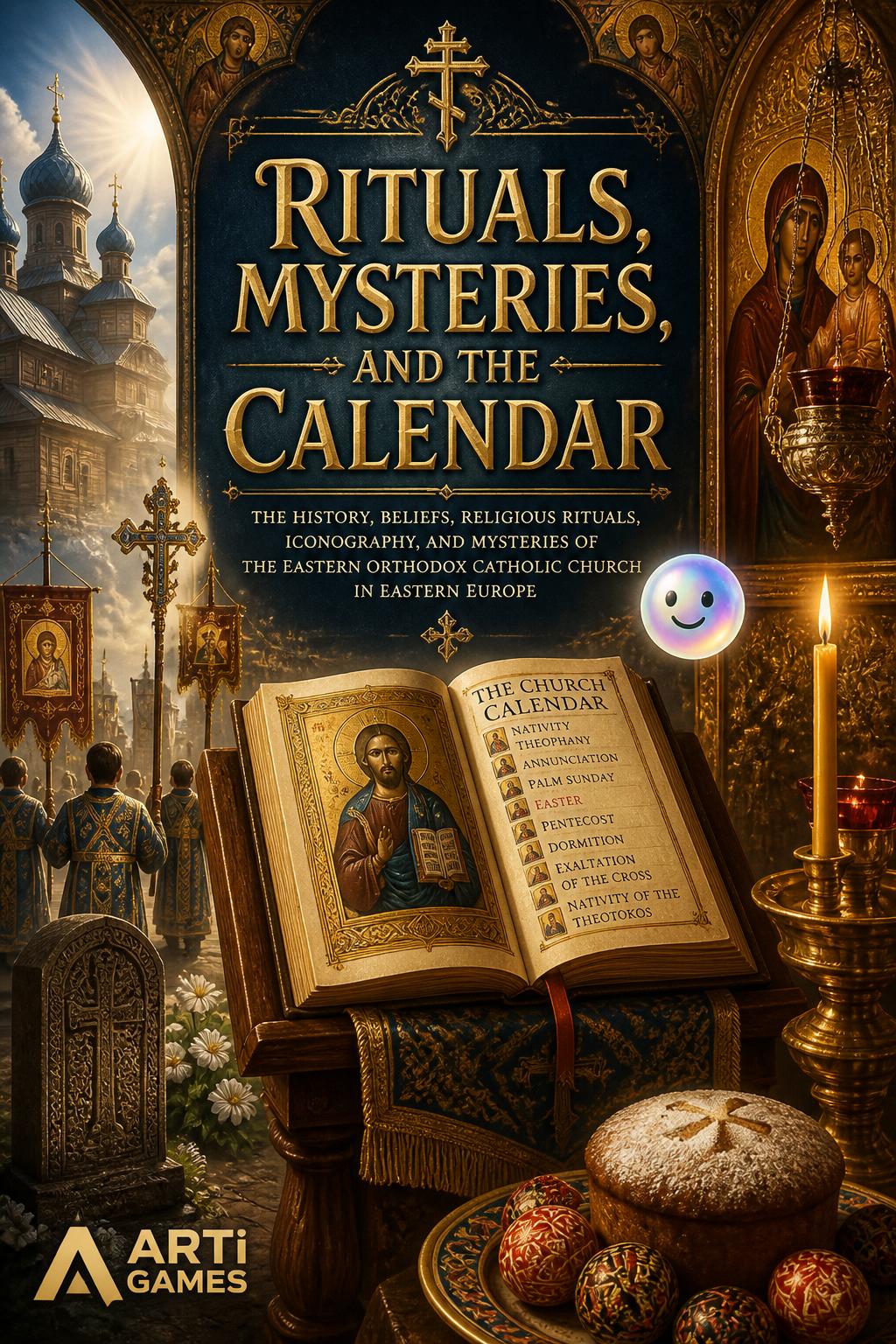
Rituals, mysteries, and the calendar
Ch 4 · Rituals, mysteries, and the calendar
renaissanceman Many Orthodox churches still use the ancient Julian calendar, putting their holiday dates thirteen days behind the Western Gregorian calendar.
Quiz
What is the Greek word for Easter, which Orthodox Christians consider the 'feast of feasts'?
Quiz
What miraculous flame is said to spontaneously ignite every year on Holy Saturday in Jerusalem?
Quiz
What is the name of the short, repetitive prayer used by Hesychast monks during silent meditation?
BETA
renaissanceman Sort feast days on the calendar to discover the mysteries of Eastern Orthodox rituals.
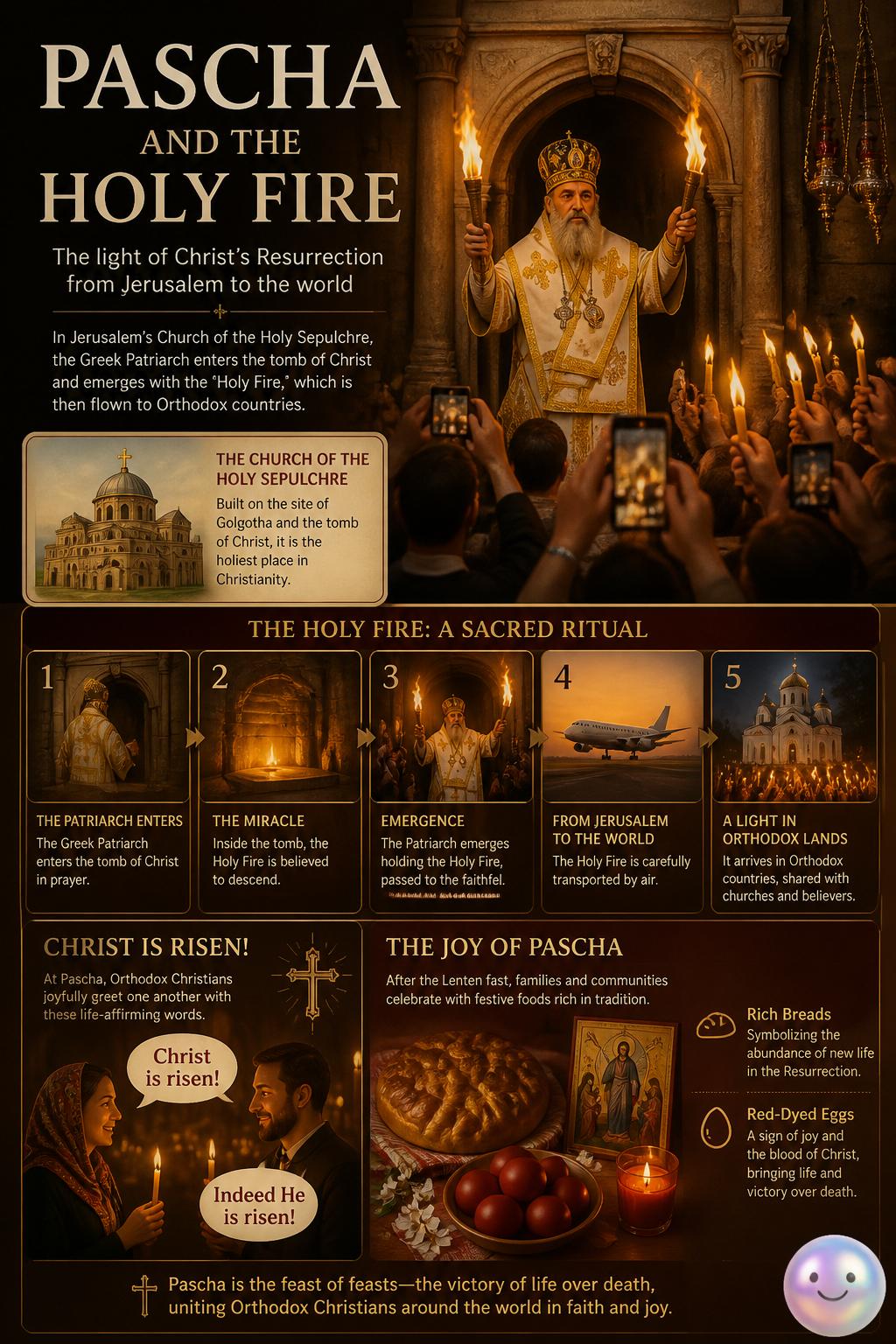
renaissanceman Known as Pascha, Orthodox Easter is the most joyful feast of the year, marked by midnight services and a miraculous flame.
Quiz
Why are Easter eggs traditionally dyed bright red in Eastern Orthodox cultures?
Quiz
Which ancient calendar is still used by several Orthodox national churches to calculate feast days?
Quiz
What posture is traditionally kept by the congregation during almost the entire Orthodox Divine Liturgy?
renaissanceman Eastern Orthodox Church Rituals
Through time they hold their sacred dates, Eastern Orthodox, tradition dictates. Julian calendar, for their holy light, Christmas and Easter, sometimes a different night.
Quiz
What is the main Eucharistic service of the Eastern Orthodox Church called?
Quiz
On what date do Orthodox Christians who follow the old calendar celebrate Christmas?
Fun Fact
Red egg battles: During Pascha, families play a game cracking hard-boiled eggs dyed bright red, symbolizing Christ breaking out of the tomb.
Glossary
liturgy (noun)
A prescribed form or set of forms for public religious worship. The Byzantine Rite centers on the Divine Liturgy of Saint John Chrysostom, formalized in the fourth century.