The kings of the kitchen
The mighty kettles that sing
From battlefield to concert hall
The physics of making a racket
Stealing the spotlight
maestro Nineteenth-century musicians coined this nickname because players constantly swap between triangles, cymbals, and woodblocks. This hectic multitasking resembles a busy chef handling many different utensils.
Why can a tiny steel triangle be heard clearly over a massive 100-piece orchestra?
What is the primary physical challenge of an orchestral percussionist during quiet symphonic movements?
maestro Orchestral Percussion Section
Loud in the kitchen, / copper kettles roll, / stomp that pedal to tune!
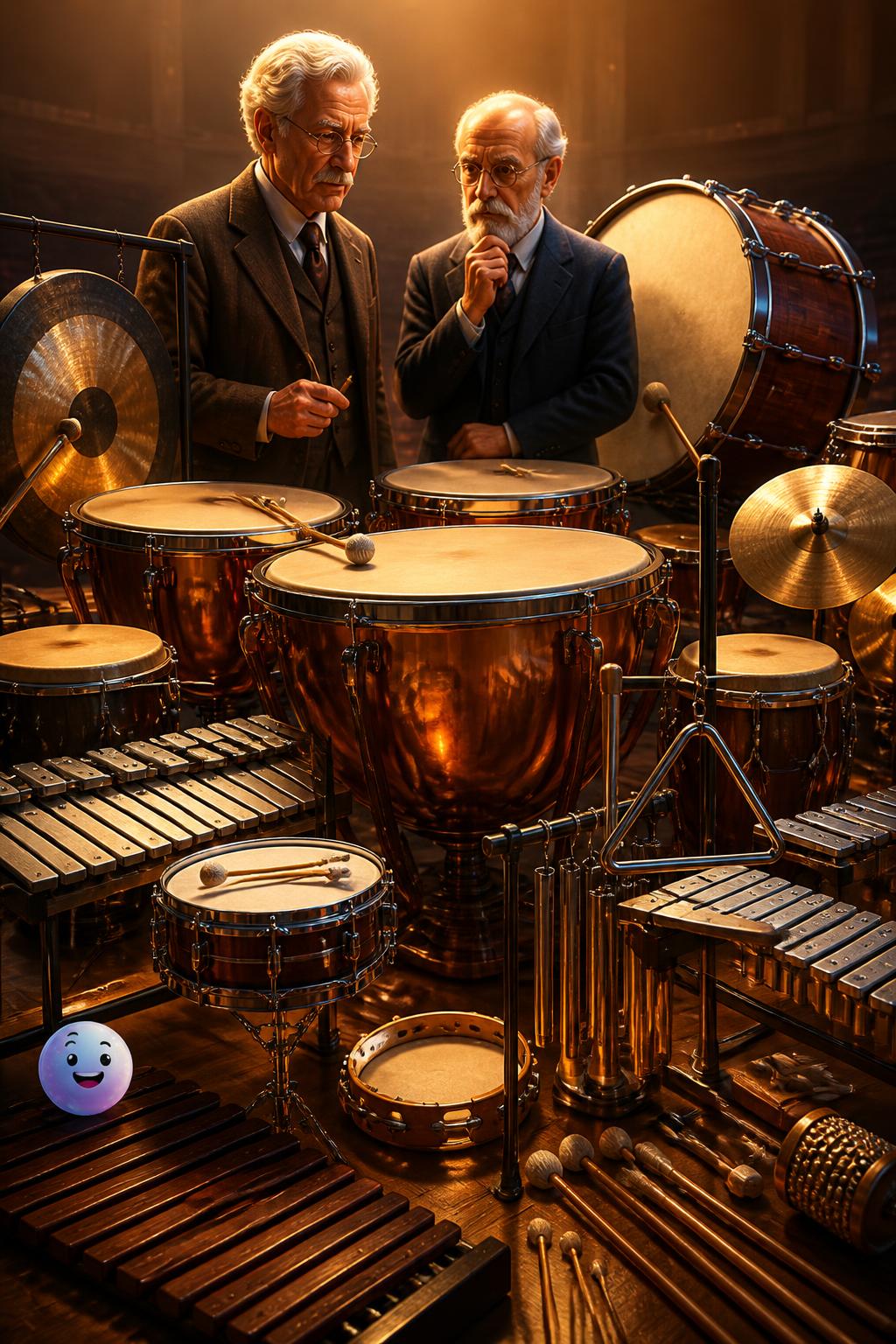
maestro Expressive 3D animated timpani and percussion instruments fill a warm orchestral stage.
What nickname do orchestral musicians use for the percussion section due to its variety of tools?
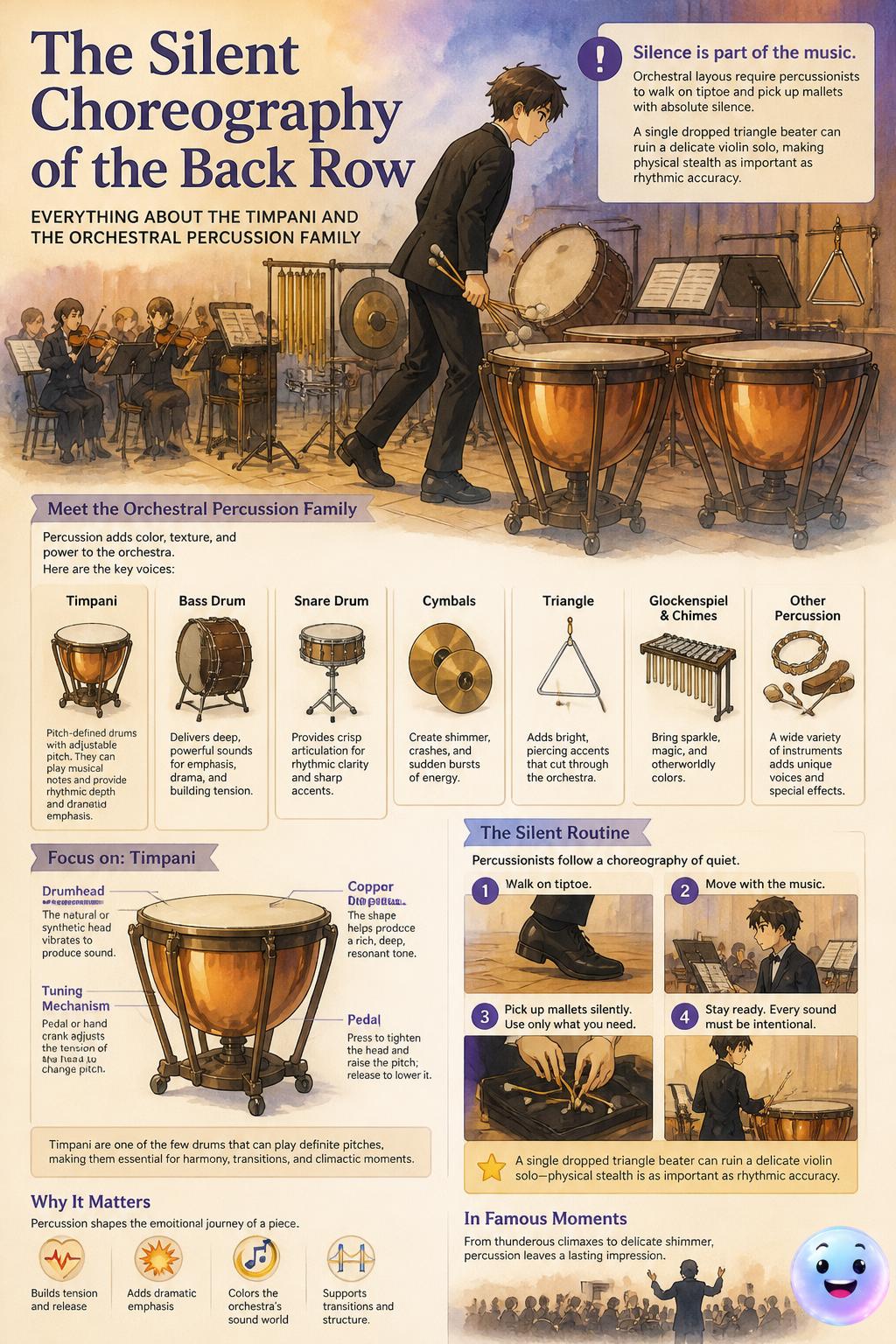
maestro Percussionists tiptoe across the stage and lift mallets without making a sound. A single dropped triangle beater can ruin a delicate violin solo.
Which instrument classification refers to instruments like gongs and triangles that vibrate their entire body to make sound?
Which percussion instrument consists of a metal bar bent into a three-sided shape and struck with a metal beater?
Triangle's unusual shape: Early orchestral triangles were often actual triangles but with rings dangling from the bottom bar to add a continuous, jingling buzz.

maestro Tap famous orchestral rhythms to discover how the percussion family drives the symphony.
Which country or region did the massive, unpitched orchestral tam-tam gong originate from?
What 1914 classification system group categorized instruments into idiophones and membranophones?
Large orchestral kettledrums consisting of a copper bowl with a head stretched across it, tuned to specific pitches. Jean-Baptiste Lully first introduced these kettledrums to the classical orchestra in his 1675 opera Thésée.