From horse carts to lunch wagons
Prefabricated architecture on wheels
Food, folks, and the blue-plate special
The roadside revival
hank In 1913, Jerry O'Mahony modeled his stationary diners after luxury railroad dining cars.
During the 1930s, diner design was heavily influenced by which sleek, futuristic architectural style?
Which material became highly popular in 1930s diner construction because it was easy to clean and looked shiny?
hank Assemble mobile lunch wagons to discover how prefabricated architecture shaped the classic American diner.
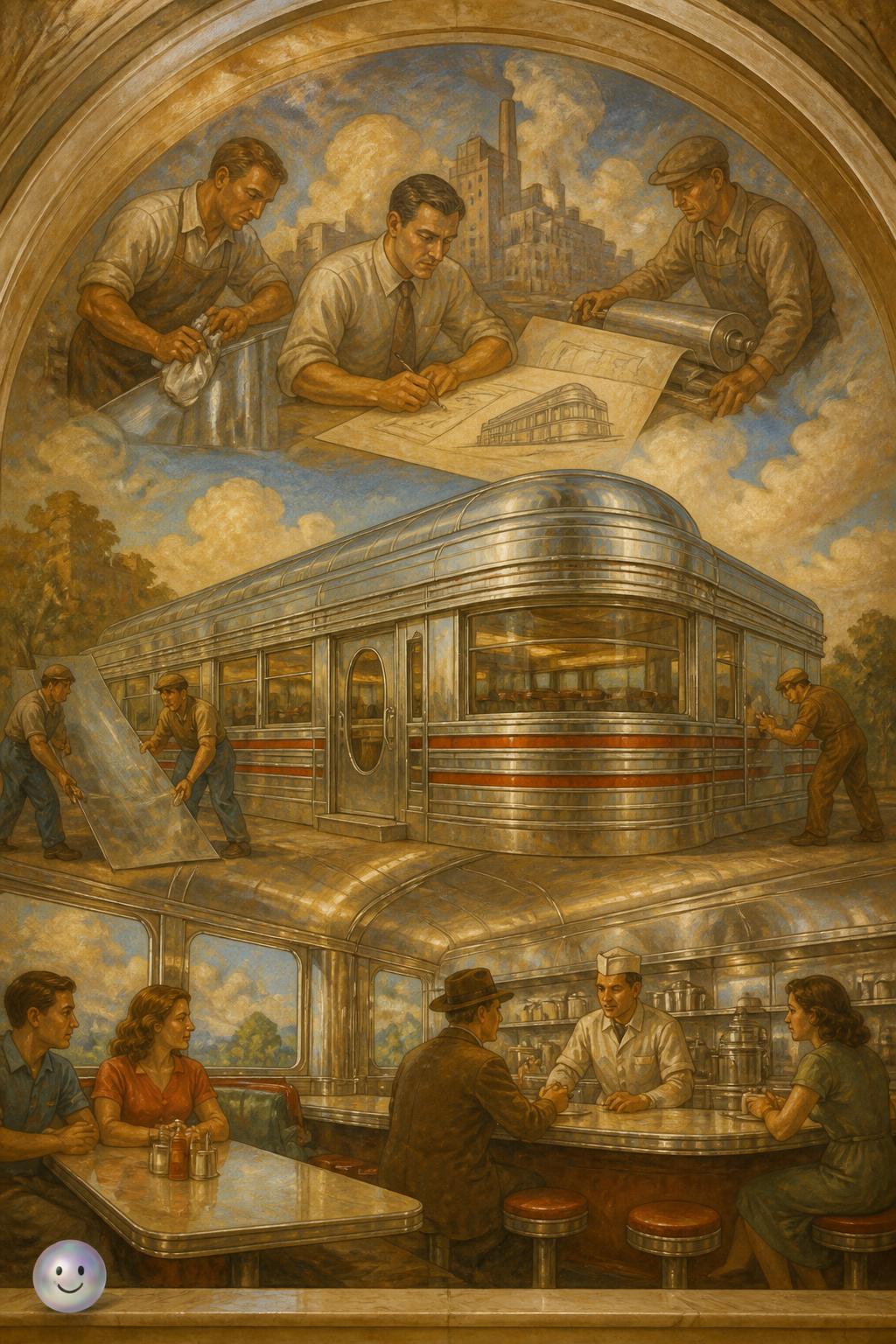
hank During the 1930s, diners adopted stainless steel, chrome, and curved corners to look like futuristic, high-speed locomotives.
How did Valentine diner owners pay their monthly installments to the manufacturing company in the 1940s?
What state was home to the Valentine company, which prefabricated compact box diners?
hank American Diner on Wheels
From humble wagons rolling by (Yeah, diners made to go!) A factory-built delight (For folks on the go!)
hank In the 1940s, Arthur Valentine designed compact $5,000 box diners with built-in safes for installment payments.
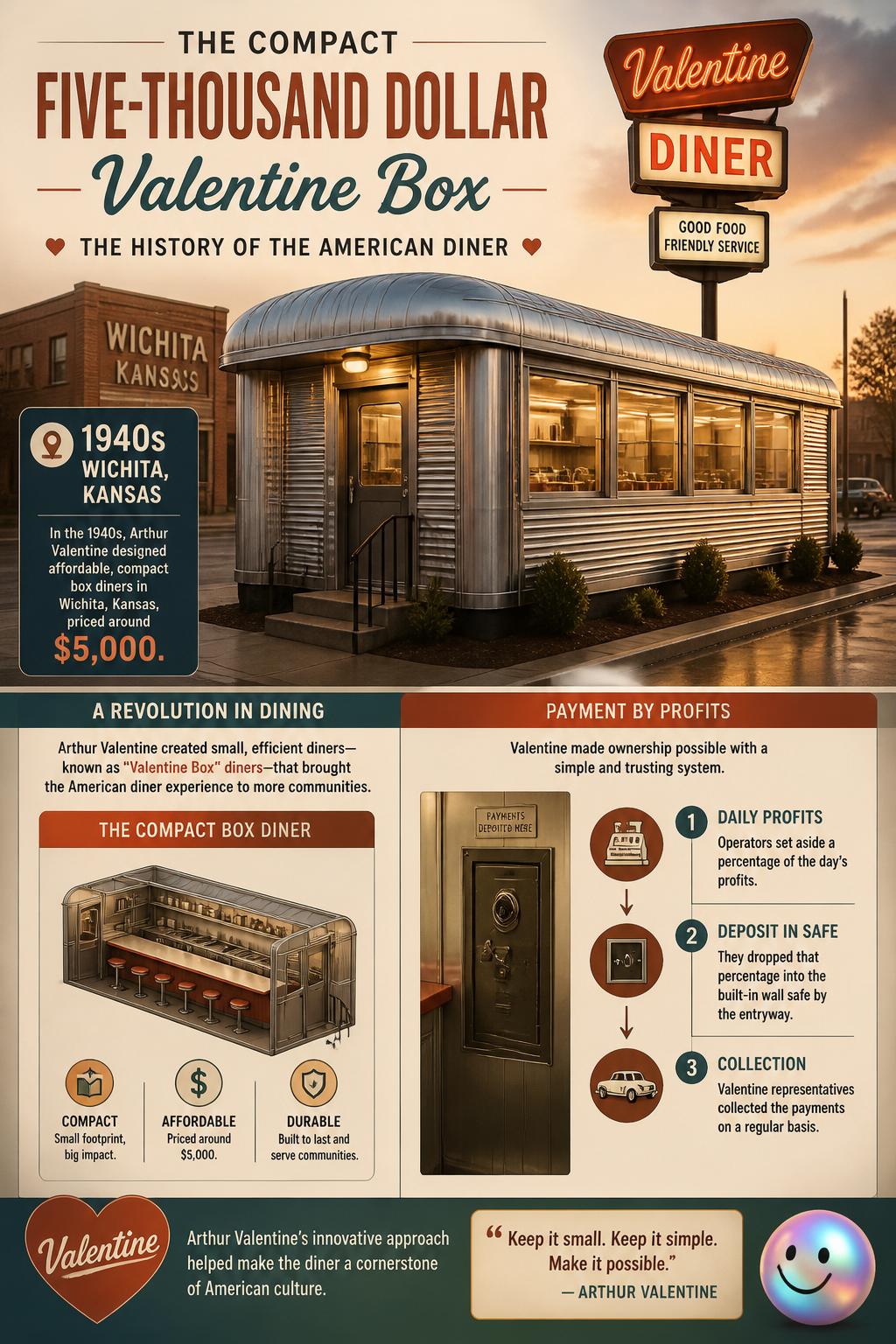
hank In the 1940s, Arthur Valentine prefabricated small, affordable box diners in Kansas with built-in daily payment systems.
How many diners did Jerry O'Mahony's company ship nationwide from its northeastern factories by the mid-20th century?
Diner wall safes: In the 1940s, some diner owners paid for their restaurants using built-in wall safes where manufacturers collected a daily percentage of the restaurant's profits.
Which manufacturer established the first stationary diner with electric lights, gas stoves, and running water in 1913?
How much did a compact, prefabricated Valentine diner cost when they were sold in the 1940s?
A mobile cart or vehicle from which simple meals are sold. In 1872, Rhode Island entrepreneur Walter Scott modified a horse-drawn wagon to serve late-night food.