The eccentric life of Marcel Proust
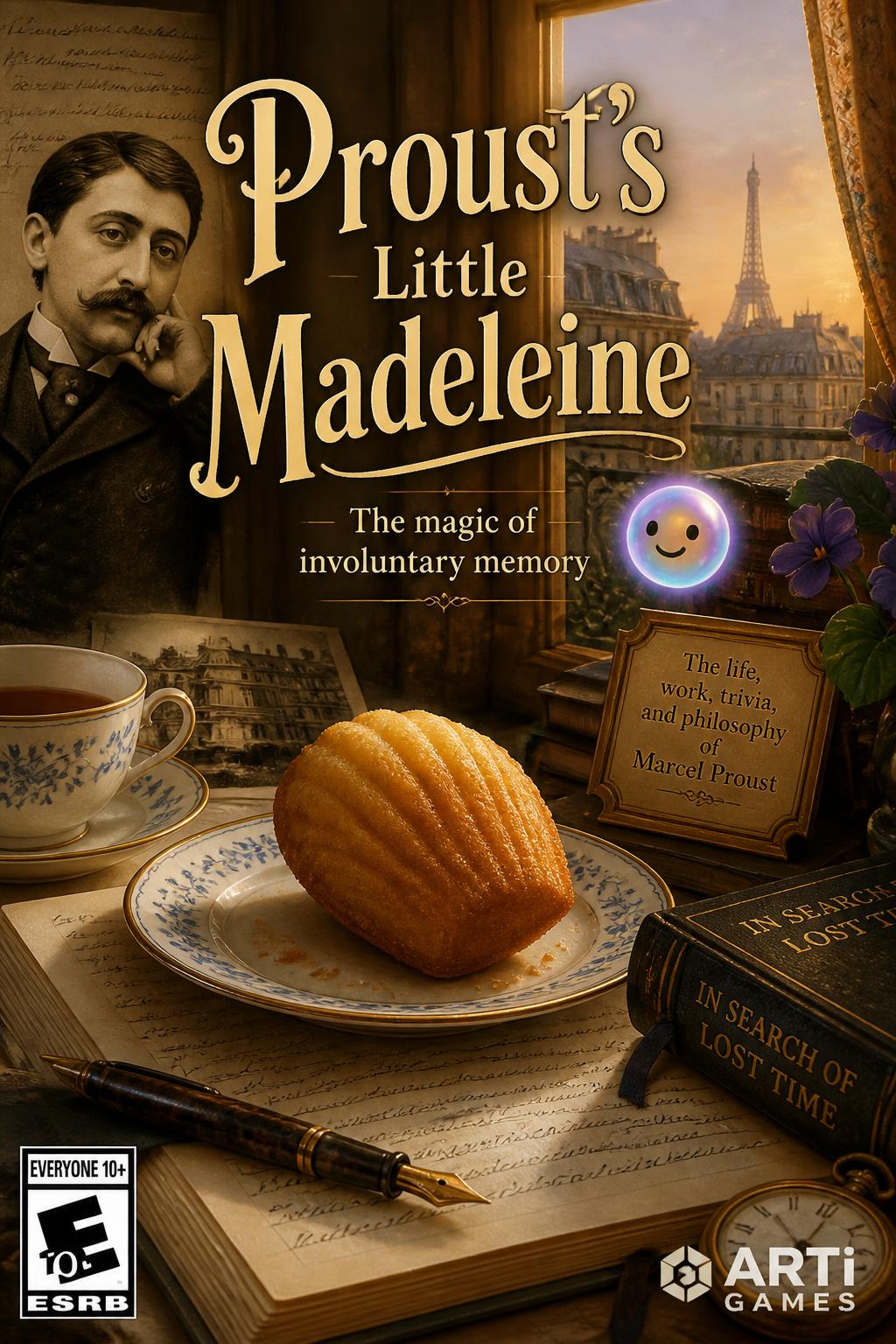
The magic of involuntary memory
In search of lost time
The philosophy of art and the Proust Questionnaire
schopenhauer In Proust's novel, tasting a madeleine dipped in tea instantly transports the narrator back to his childhood.
What did Marcel Proust originally write as the memory-triggering food before choosing the madeleine?
Which brain structure involved in emotion is directly connected to the olfactory bulb, explaining the Proustian effect?
schopenhauer Swipe tastes and smells into the tea to discover how Proust unlocked involuntary memories.
schopenhauer Proust believed that our senses, not conscious thought, bring back the vivid emotions of our past.

schopenhauer Proust distinguished between memories we actively try to recall and those that strike us unexpectedly through sensory triggers.
What type of herbal tea does the narrator dip his cookie into to trigger his famous memory?
schopenhauer Involuntary memory
A sip of tea, / a sweet madeleine, / and lost time lives again.
schopenhauer Proust's childhood holiday town renamed itself Illiers-Combray in 1971, becoming France's only town named after fiction.

schopenhauer The actual French town of Illiers was renamed Illiers-Combray to honor its role as the inspiration for Proust's childhood settings.
What specific sweet treat triggers the narrator's childhood memories in Marcel Proust's novel?
According to modern neuroscience, why do smells trigger such vivid 'Proustian' memories?
The original cookie: In early drafts of his famous scene, Marcel Proust originally used a piece of toasted bread or a biscotti instead of a madeleine.
schopenhauer Explore the science of Proustian memory in this video. Discover how Marcel Proust's life, work, and philosophy connect to involuntary memory.
Which real French town officially changed its name in 1971 to honor Marcel Proust's fictional town?
What is the name of the fictional town where Marcel Proust's narrator spends his childhood summers?
A small, rich sponge cake baked in a shell-shaped mold. Proust's narrator famously recalled his childhood in Combray after dipping this pastry into a cup of tea.