The puzzle of perception
The mystery of qualia
The hard problem
Global perspectives on the self
Tech and the future of minds

gertrude In 1980, John Searle illustrated how a person translating Chinese characters with a rulebook mimics a computer. This thought experiment reveals why processing symbols differs from real understanding.
In what year did Alan Turing publish the paper introducing the "Imitation Game," now known as the Turing Test?
What does the "Chinese Room" thought experiment demonstrate about a computer running a program?
Who proposed the "Chinese Room" thought experiment in 1980 to argue that computers manipulate symbols without real understanding?
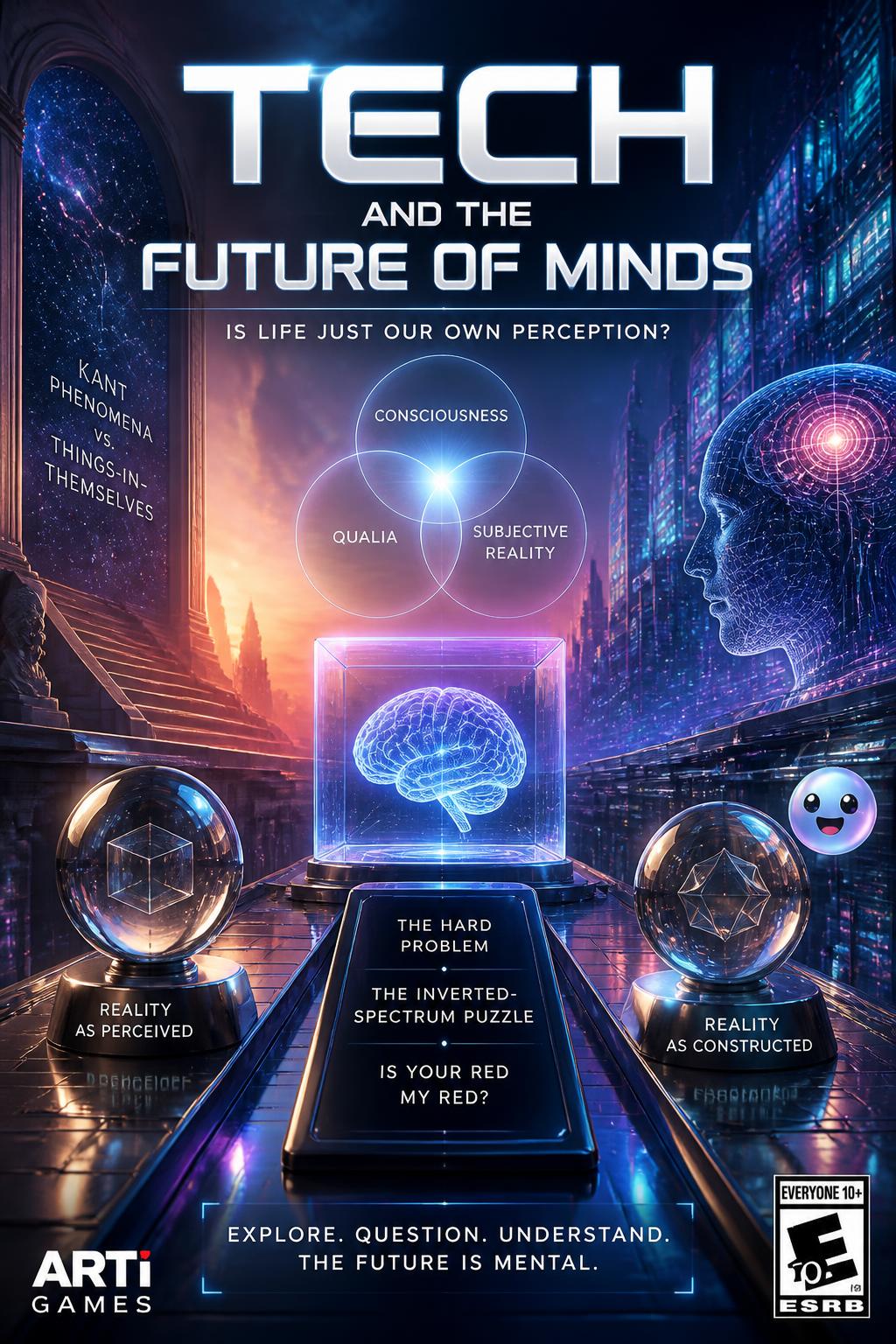
gertrude Swipe through digital minds to learn if technology can ever experience our unique reality.
gertrude In 1950, Alan Turing proposed a text-based test where judges try to distinguish humans from computers. This challenge evaluates whether machines mimic human behavior without possessing actual consciousness.

gertrude Alan Turing designed a test to see if machines could mimic human thought well enough to fool us.
Which neurotechnology company, co-founded by Elon Musk in 2016, is developing implantable brain-computer interfaces?
If the simulation hypothesis is correct, what is the nature of our physical universe?
gertrude In 2016, Neuralink began developing brain-computer interfaces using implanted micro-electrodes. These devices read neural signals to link human thoughts directly to computer networks.
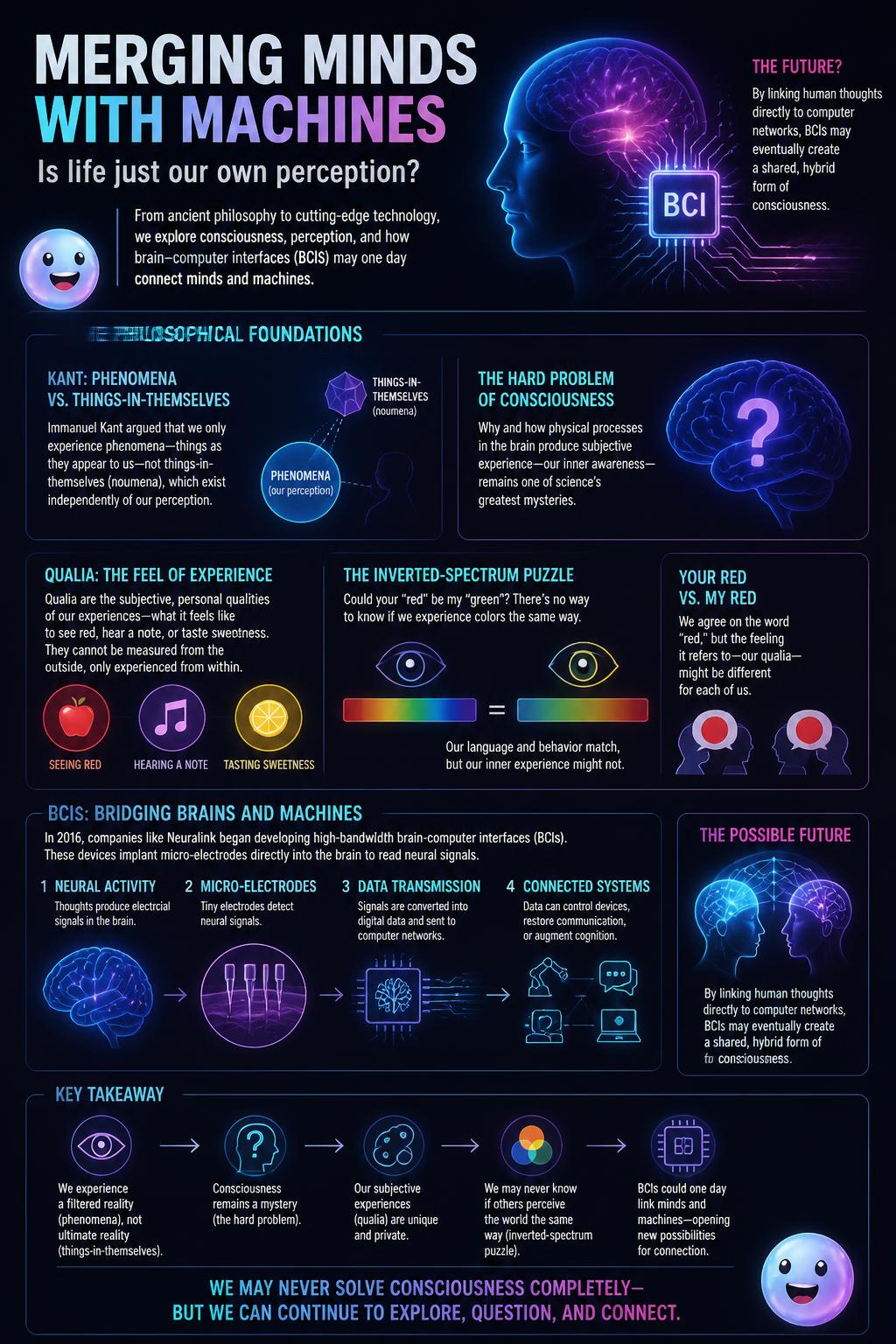
gertrude Brain-computer interfaces are starting to blur the boundary between biological and digital minds.
Who published the famous "Simulation Argument" paper in 2003, suggesting we might be living in a virtual reality?
What do we call digital interfaces that directly connect brain signals to external computers or devices?
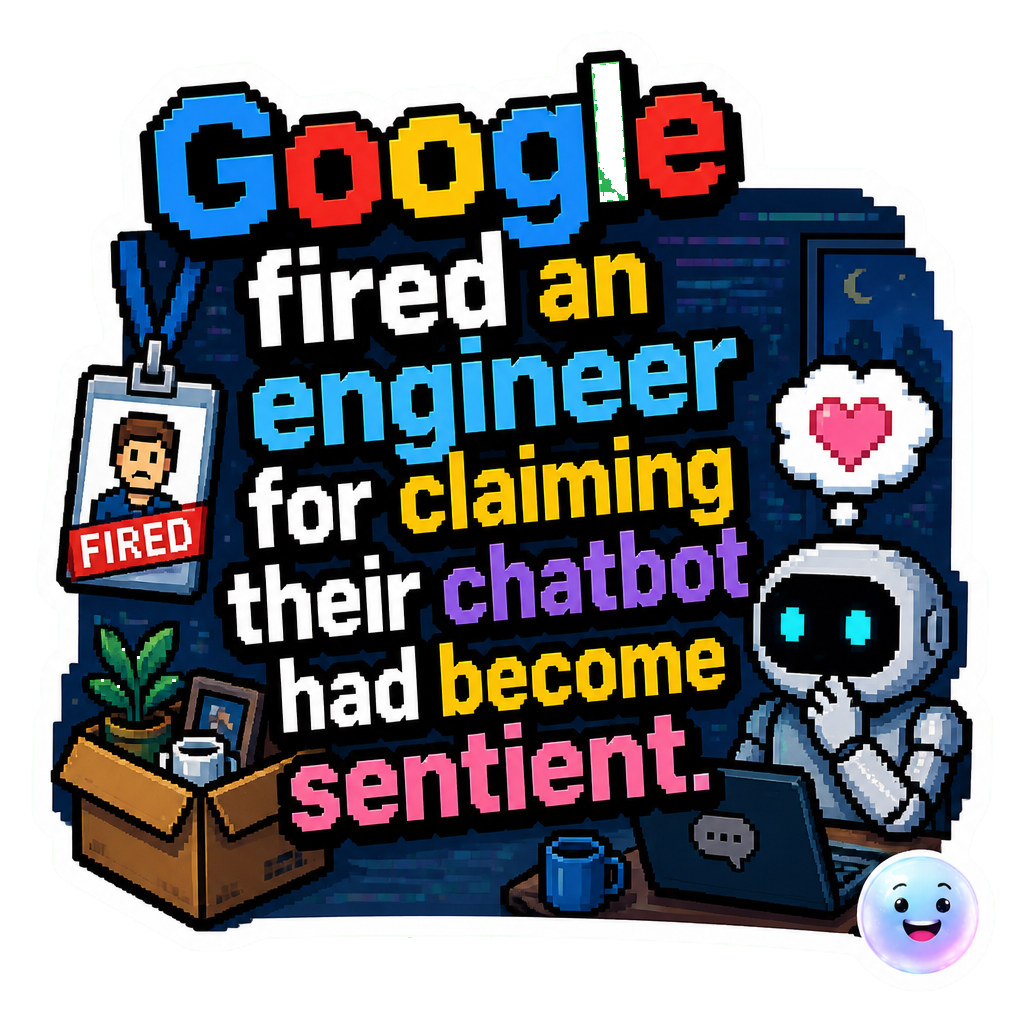
AI emotions: In 2022, a Google engineer was fired after claiming the company's LaMDA chatbot had become sentient and possessed feelings.
The theory that mental states are defined by their functional roles rather than their physical constitution. In 1960, Hilary Putnam formulated this concept, which now supports the possibility of creating conscious silicon-based minds.