The ancient philosophical spark
Cracking the shell
Mapping the nucleus
The quantum cloud
testerr In 1803, English schoolteacher John Dalton proved that different elements are made of atoms with unique masses.
Before Dalton's 1803 theory, what did most alchemists believe could turn lead into gold?
What subatomic particle did J.J. Thomson discover in 1897 using a cathode ray tube?
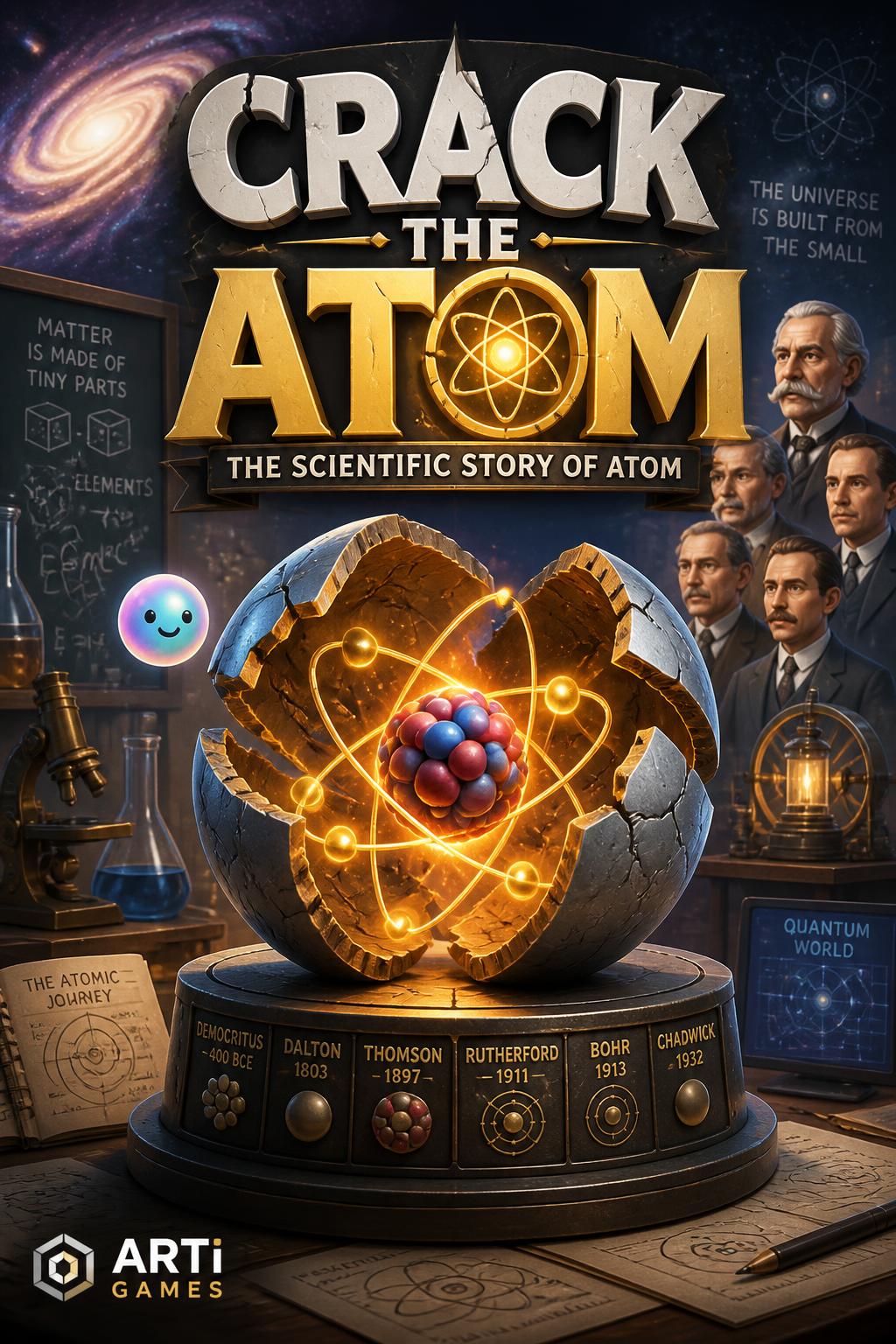
testerr Aim neutrons at the heavy nucleus to discover how splitting an atom releases energy.
testerr Discover how the unexpected cathode ray experiment changed our understanding of atomic structure in this educational science video.
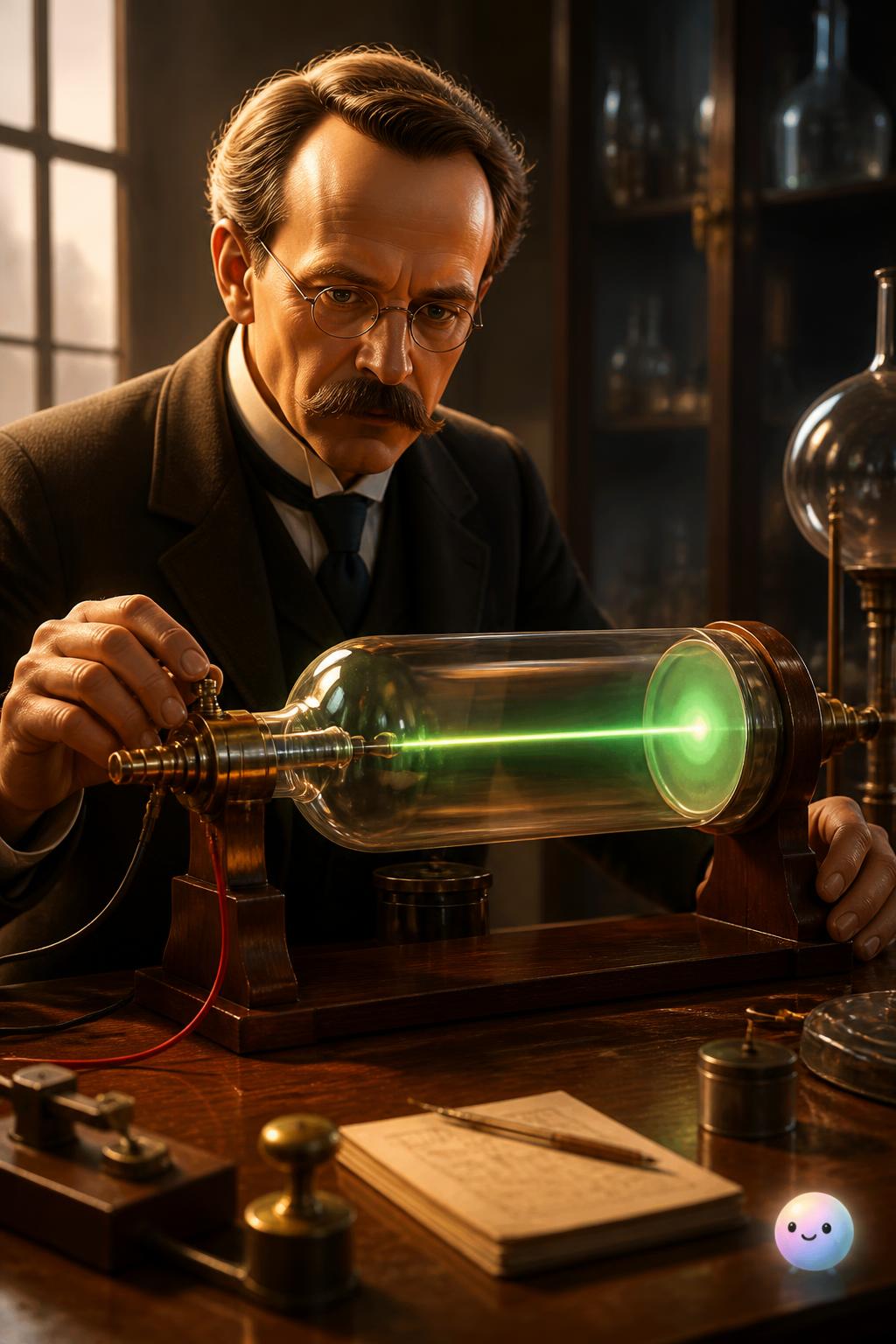
testerr J.J. Thomson discovered the first subatomic particle, proving the atom is not indivisible.
testerr Cracking the Shell
We cracked the atom’s shell (cracked the shell!) / Found the tiny electron running well (running well!)
testerr Watch this video to explore the plum pudding puzzle and discover how early scientists began to uncover the mysterious structure of the atom.
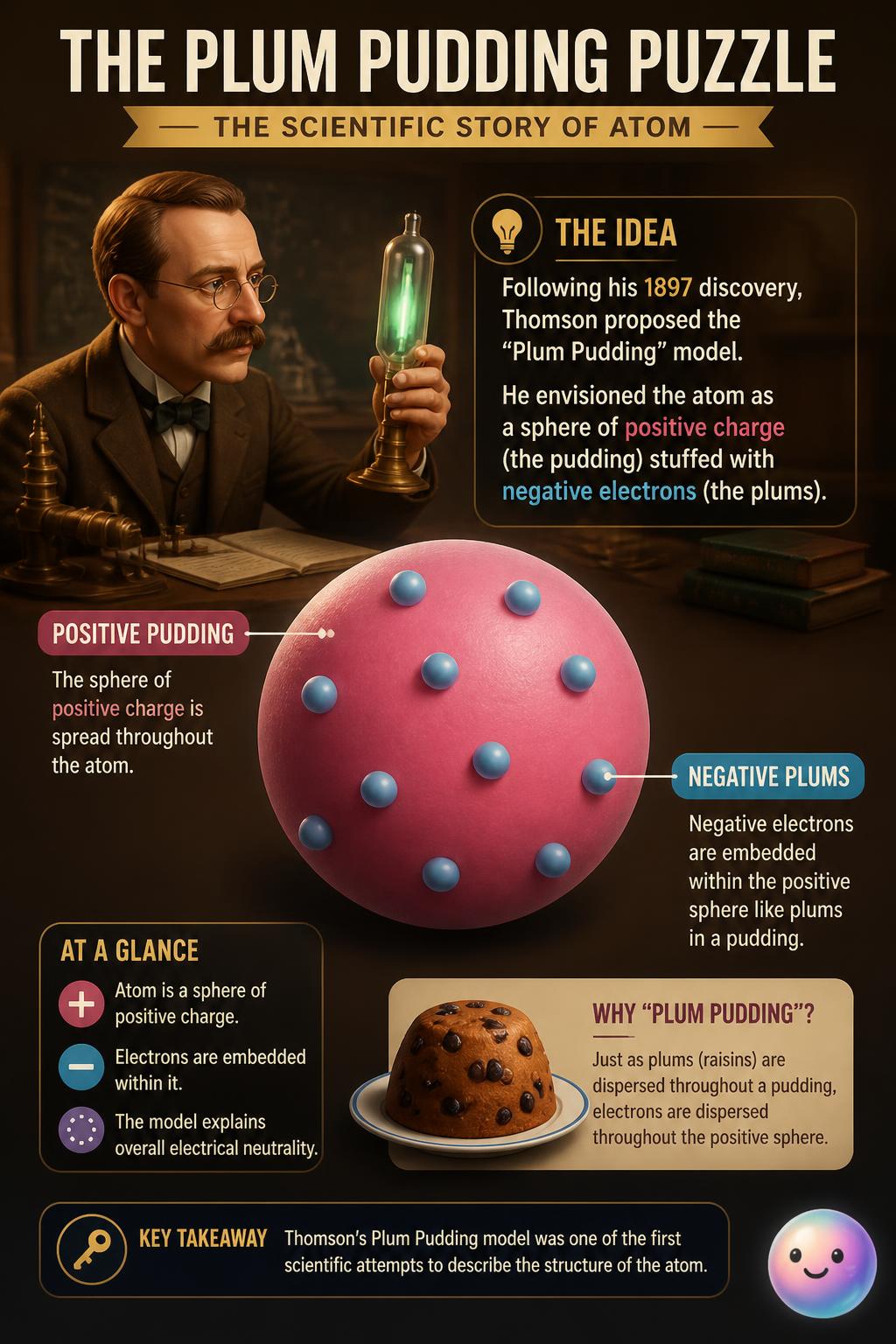
testerr Early scientists imagined the atom as a sweet British dessert of positive and negative charges.
In 1803, which English schoolteacher published the first modern scientific atomic theory?
Weighing electrons: An electron is so light that it would take about 29 million trillion trillion of them to weigh a single ounce.
testerr In 1909, Robert Millikan balanced gravity and electricity to calculate the exact charge of an electron.
Which American physicist conducted the famous 1909 oil drop experiment to measure electron charge?
Which city did John Dalton live and teach in when he formulated his atomic theory?
A stable subatomic particle with a charge of negative electricity, found in all atoms. In 1897, J.J. Thomson discovered this particle, proving that the supposedly indivisible atom has an internal structure.