Slicing up the world in post-war Europe
Spikes, spies, and the Pizza Meter
Global delivery and proxy conflicts
The final slice of the Soviet Union
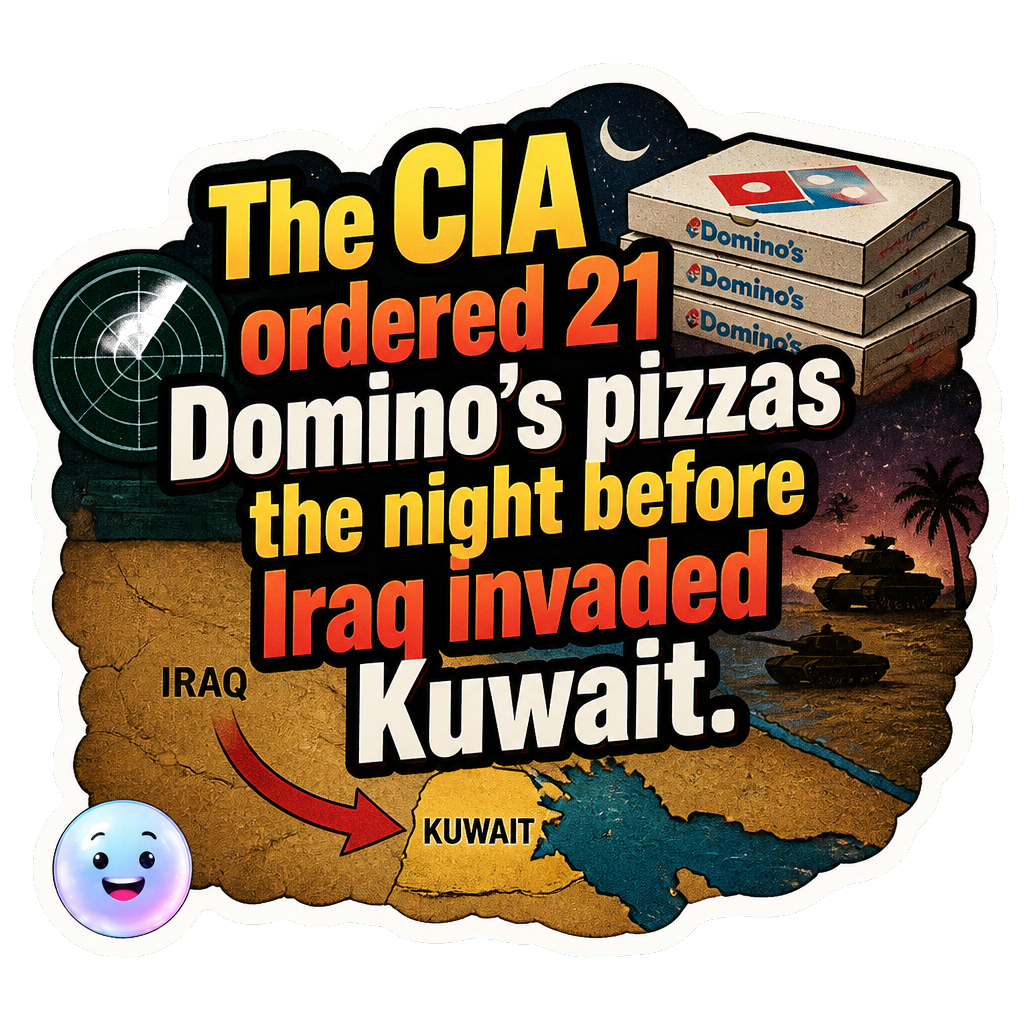
sonia Cold War operatives observed couriers bringing late-night food to the Pentagon. These sudden spikes in orders revealed when government officials worked overtime on major national security crises.
Which intelligence agency received a record-breaking 21-pizza order the night before Iraq invaded Kuwait in 1990?
What was the main reason government officials ordered so much pizza during Cold War crises?
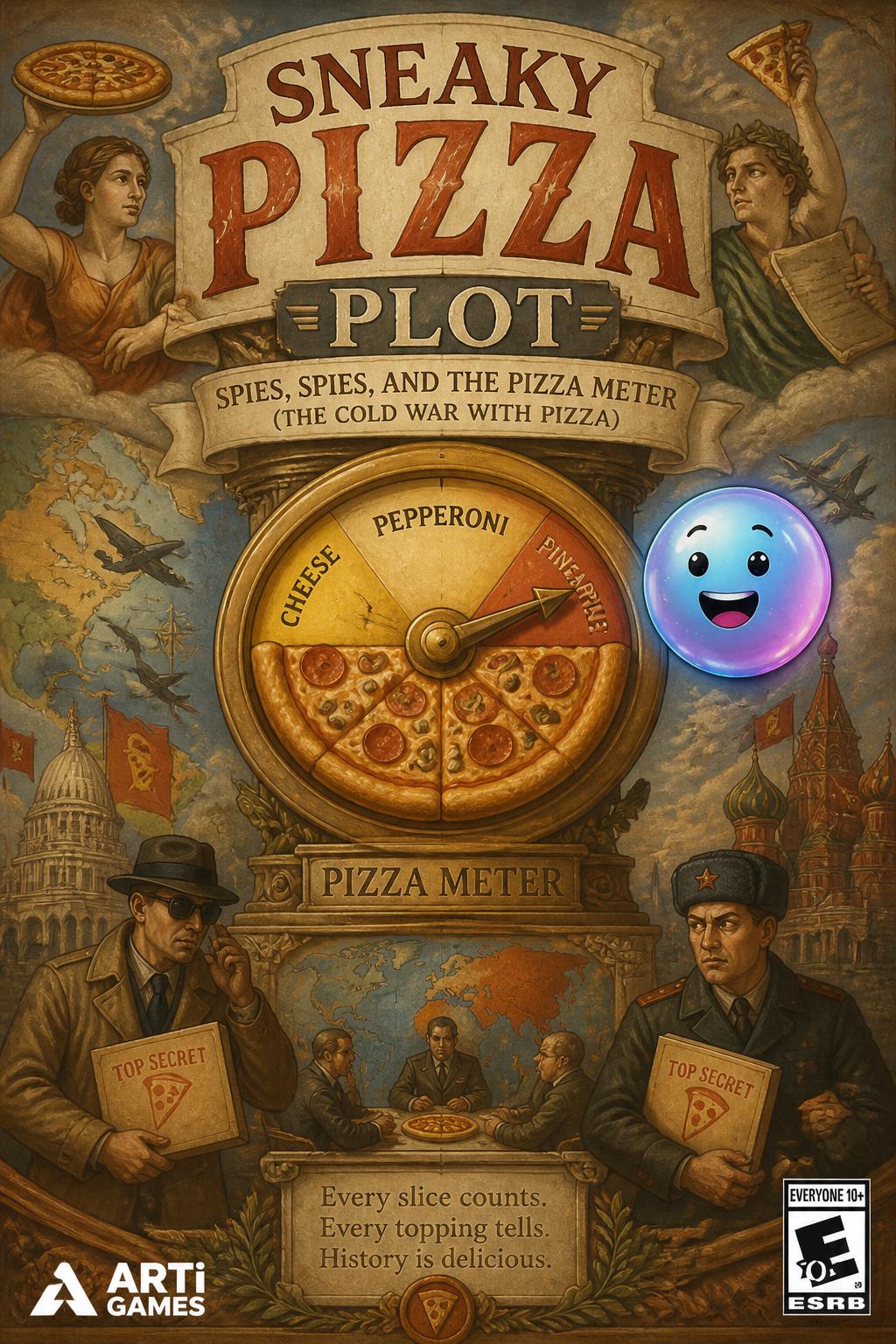
sonia Decode sneaky pizza orders to discover how Cold War spies shared secret intelligence.
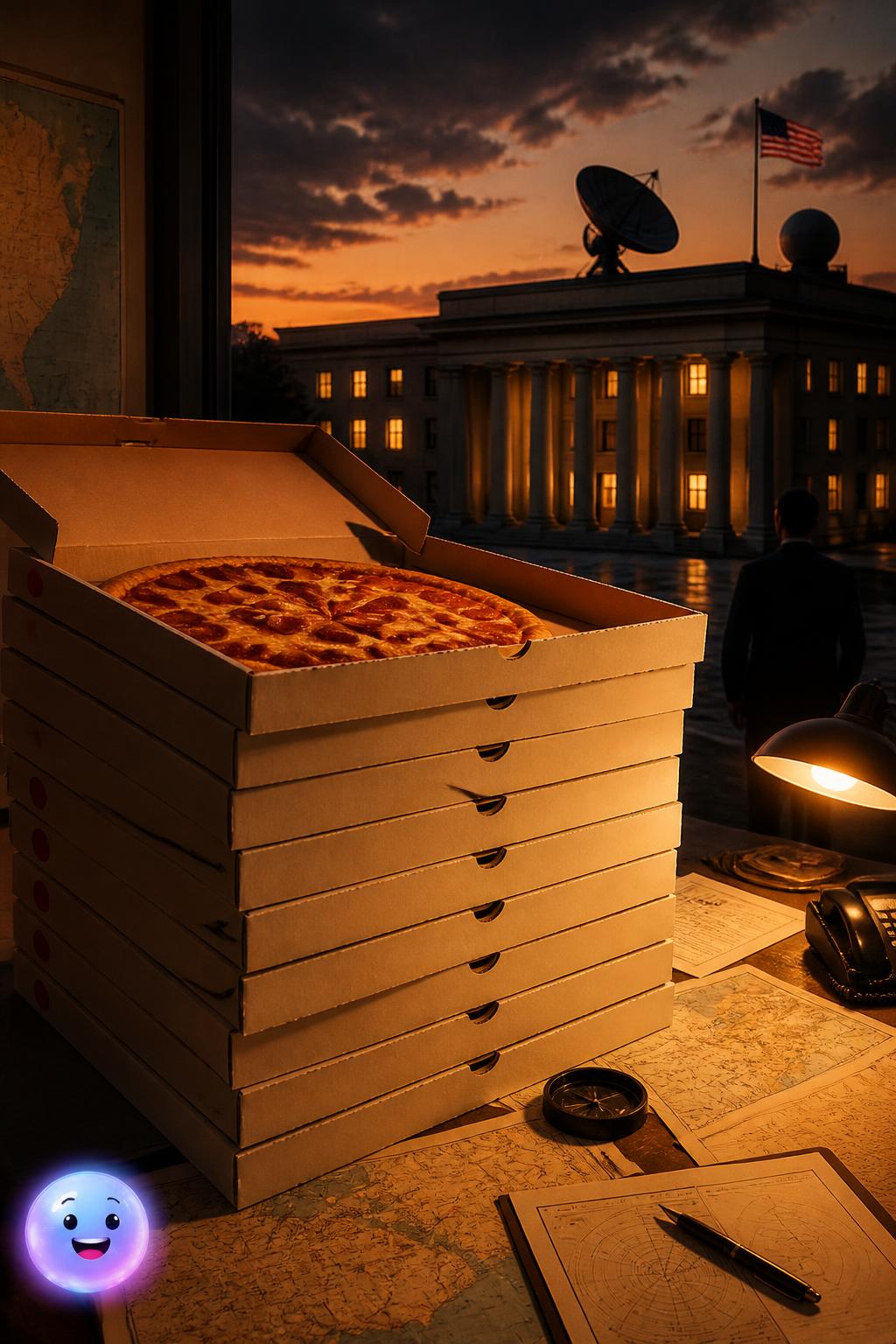
In what decade did the 'Pizza Meter' concept first gain widespread recognition among journalists and intelligence watchers?
Which American fast-food chain's franchise owner, Frank Meeks, popularized the 'Pizza Meter' theory in the late 20th century?
sonia The Pentagon Pizza Index
When the secret hotlines hum all night, they're ordering extra cheese!
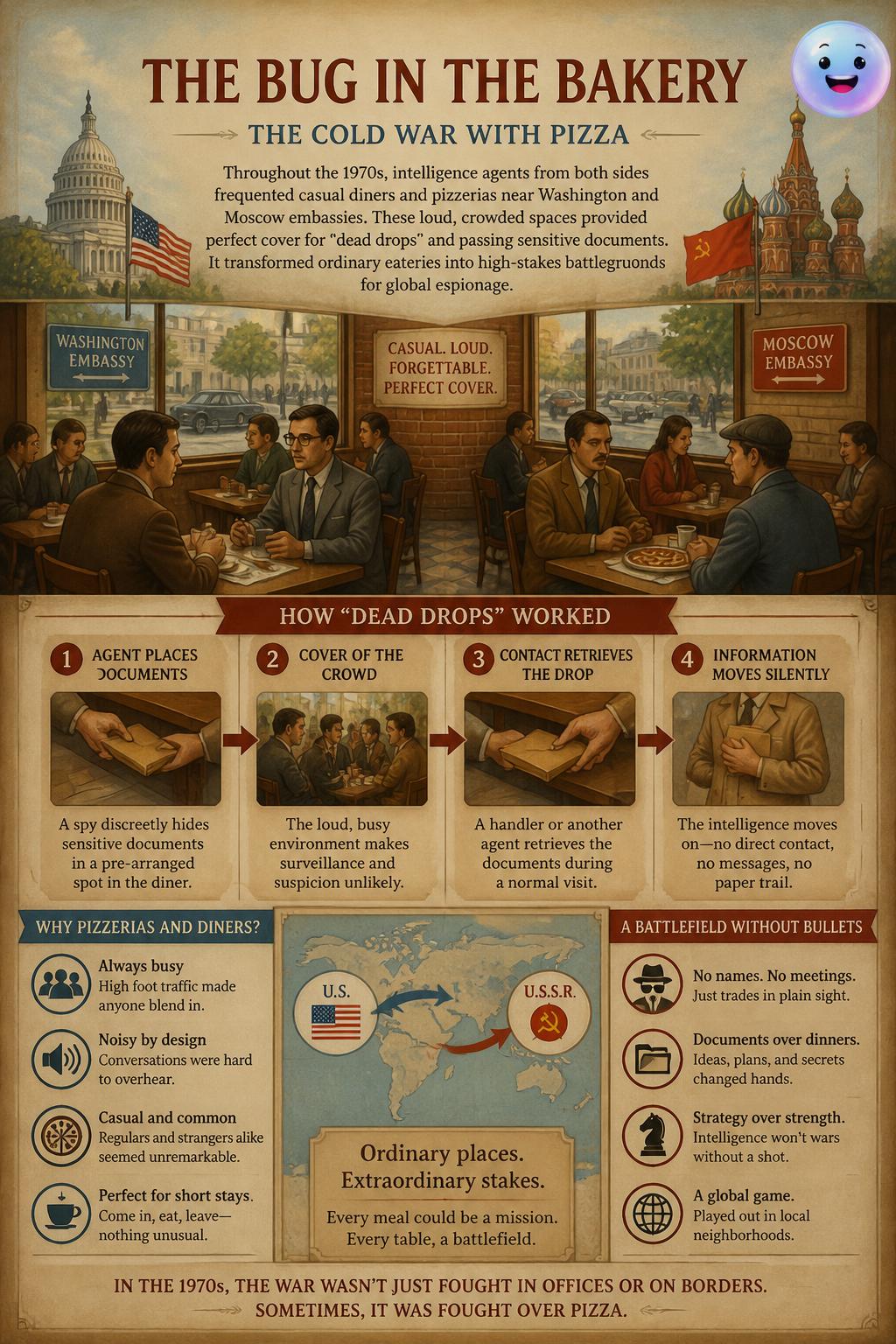
sonia During the 1970s, American and Soviet agents used noisy Washington and Moscow restaurants to pass secret documents. These crowded spaces provided the perfect cover for dangerous dead drops.
What is the informal name given to the phenomenon where spikes in food deliveries to government buildings predict global crises?
What nickname did Soviet intelligence allegedly give to the practice of monitoring Washington pizza deliveries?
sonia During the mid-20th century, Washington promoted McDonald's and Pizza Hut abroad. These delicious brands showcased capitalist abundance to win over nations wavering between democracy and communism.
Why did Soviet spies monitor pizza delivery shops near the Pentagon during the Cold War?
What major military action in 1991 saw Arlington pizzerias experience a massive delivery spike just before operations began?
The Pizza Meter: In 1990, pizzerias near the Pentagon saw deliveries jump from 50 to over 125 a night just before major military operations began.
An informal indicator tracking the volume of pizza deliveries to government facilities to gauge political or military activity. During the Cold War, Soviet spies tracked late-night deliveries to the Pentagon to detect impending military actions.