Chapter 1
The crimson geology of the desert
Chapter 2
Ancient wisdom and Songlines
Chapter 3
Bizarre beasts of the red dust
Chapter 4
Modern survivors and massive stations
Ch 1 · The crimson geology of the desert
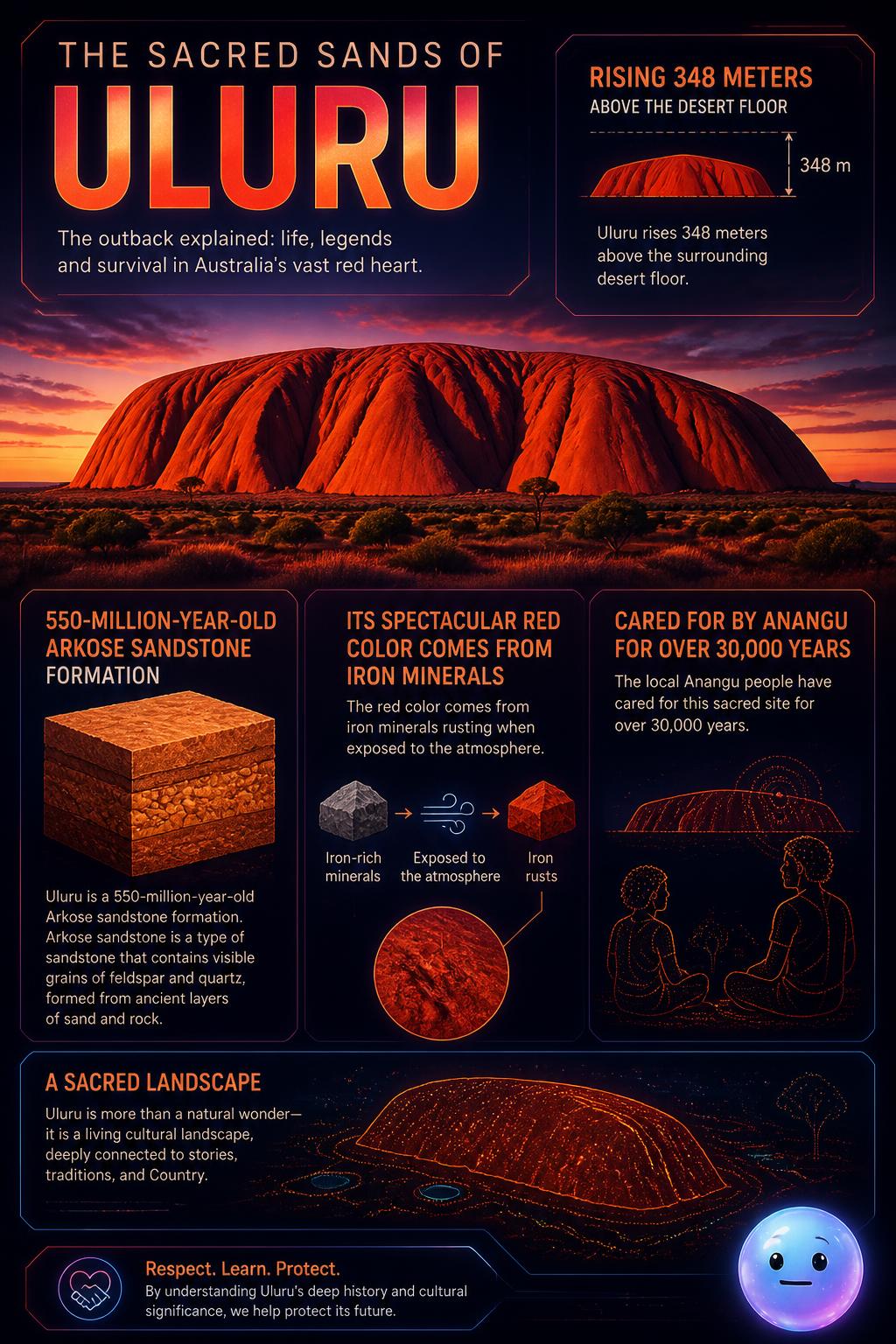
matilda The 550-million-year-old Arkose sandstone formation remains a sacred site cared for by the Anangu people for over 30,000 years.
Quiz
Which Indigenous Australian group is the traditional custodian of the sacred Uluru monolith?
Quiz
How high does the sandstone monolith of Uluru rise above the surrounding Australian desert?
BETA
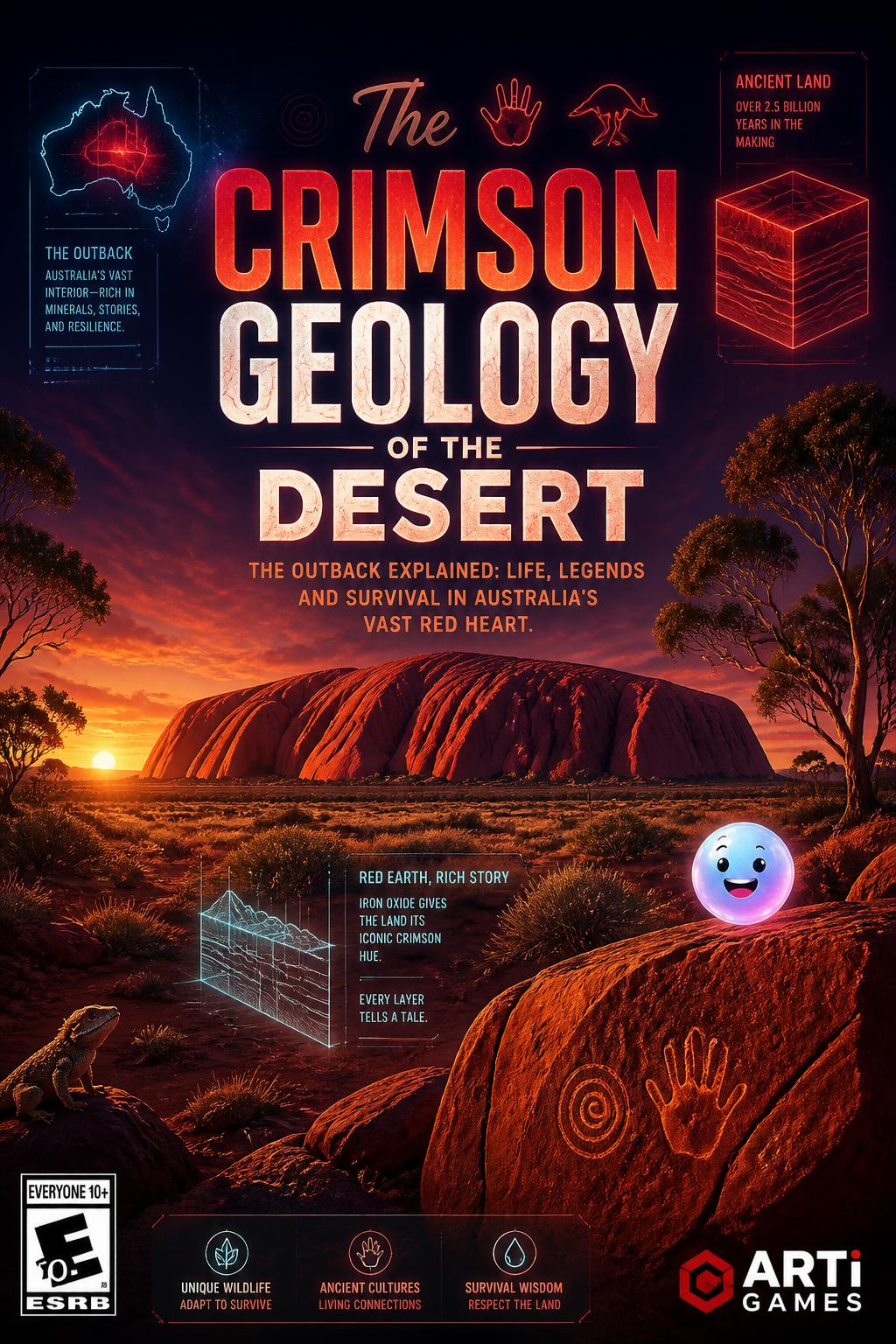
matilda Drag mineral layers to discover how weathering turned the Australian desert a deep crimson.

matilda Prehistoric marine reptile fossils in the outback have transformed into glittering, colorful opals.
Quiz
What prehistoric body of water covered a third of Australia during the Cretaceous Period?
Quiz
In which Australian desert town are prehistoric marine fossils commonly found preserved as valuable opals?
Quiz
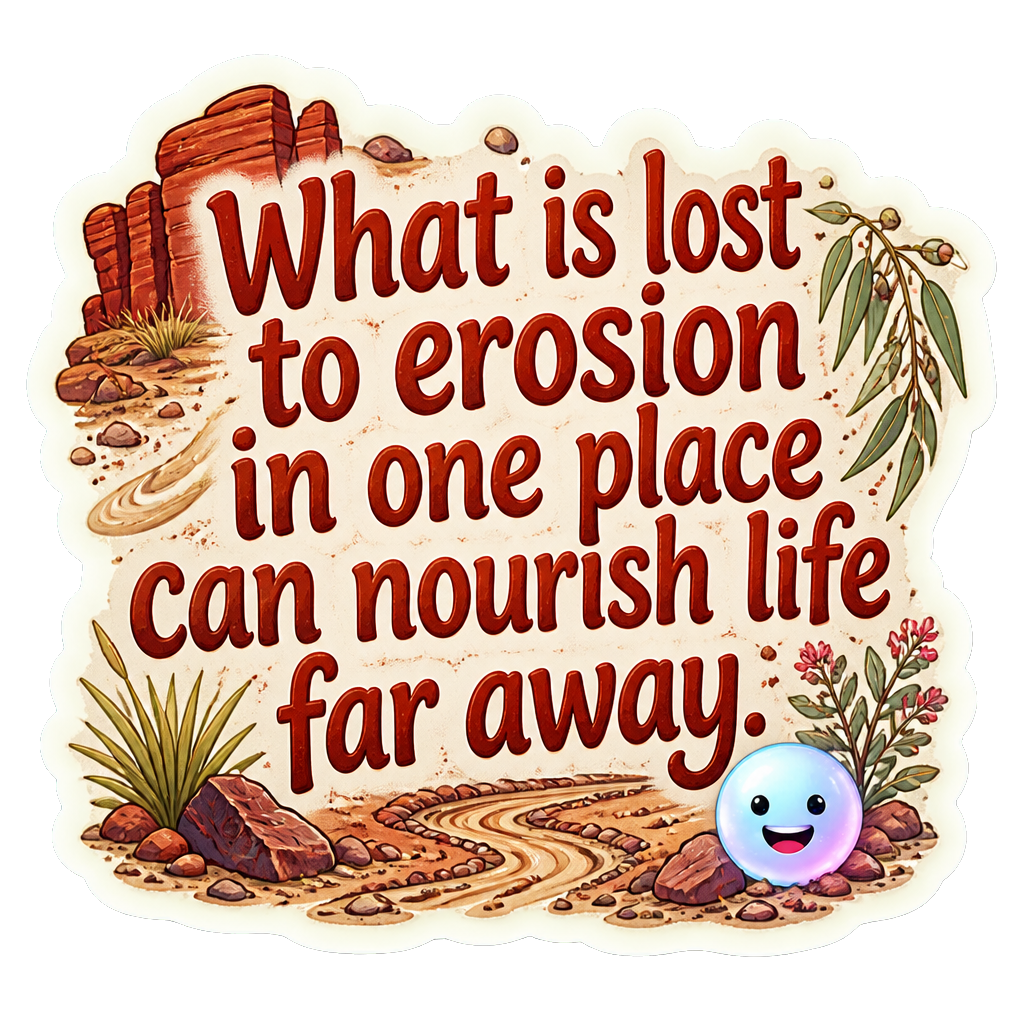
Where does the nutrient-rich red dust from Australian Outback storms travel to fertilize marine life?
Quiz
What chemical compound is responsible for the distinct red color of the Australian Outback?
Fun Fact
Outback dust: In 2009, a massive dust storm carried 5 million tons of Outback soil to Sydney, turning the entire city bright orange.
matilda Animals and humans survive extreme temperature swings in the Australian desert
Quiz
What is the scientific term for the extreme temperature variation between day and night?
Quiz
Why does the Australian Outback experience such extreme temperature drops at night?
Glossary
iron oxide (noun)
A chemical compound composed of iron and oxygen. This compound colors the ancient gorges of the Pilbara region, creating their iconic rusted appearance.
A chemical compound composed of iron and oxygen. This compound colors the ancient gorges of the Pilbara region, creating their iconic rusted appearance.