Bypassing the brain's fortress
Smart implants with superpowers
Bioprinting the enemy to defeat it
The future of brain medicine

007skaty Targeted Brain Tumor Therapy
Sound waves push the medicine straight to the cell (shielding the rest)

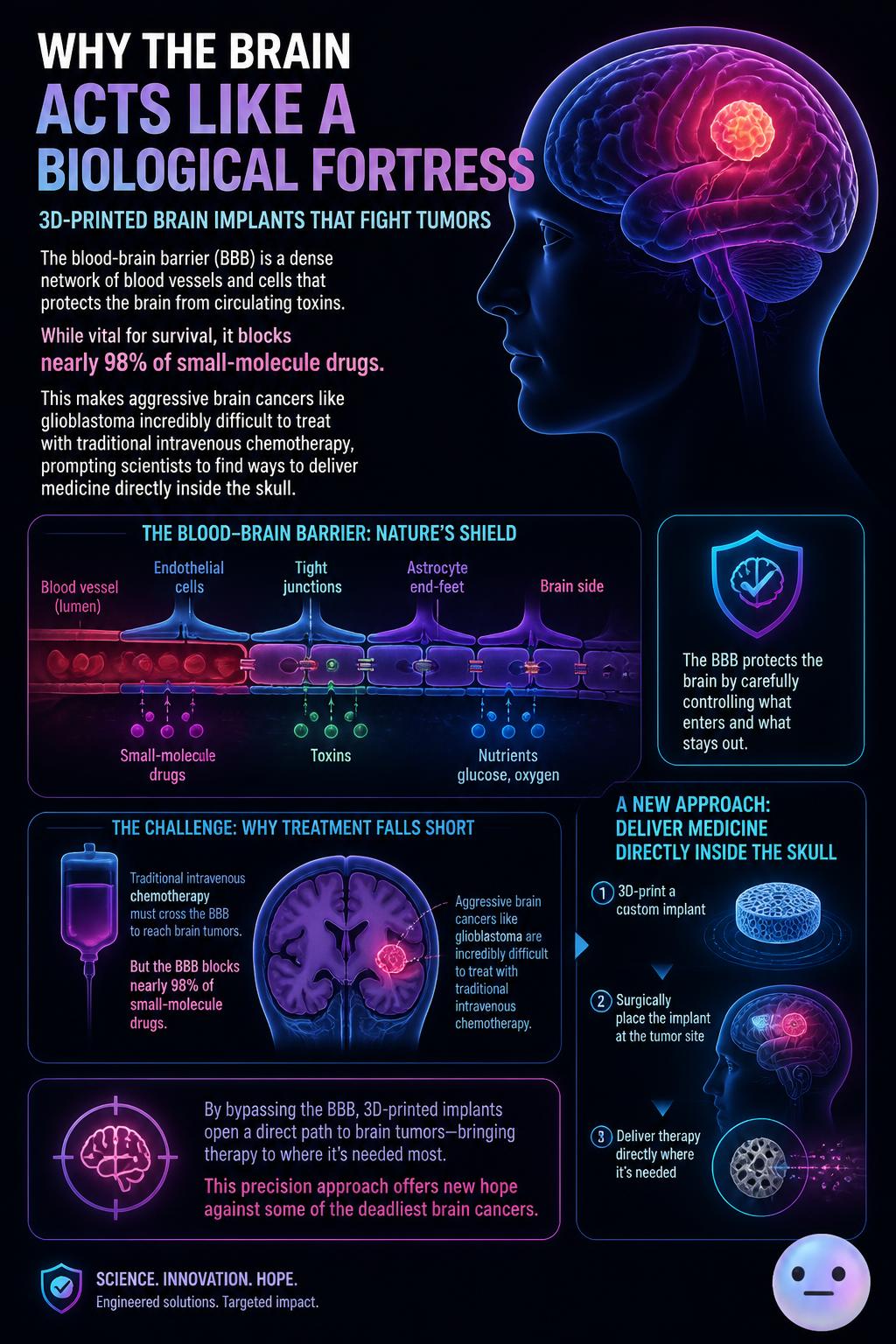
007skaty This dense cellular shield stops traditional intravenous chemotherapy, protecting aggressive glioblastoma tumors from the very treatments meant to destroy them.
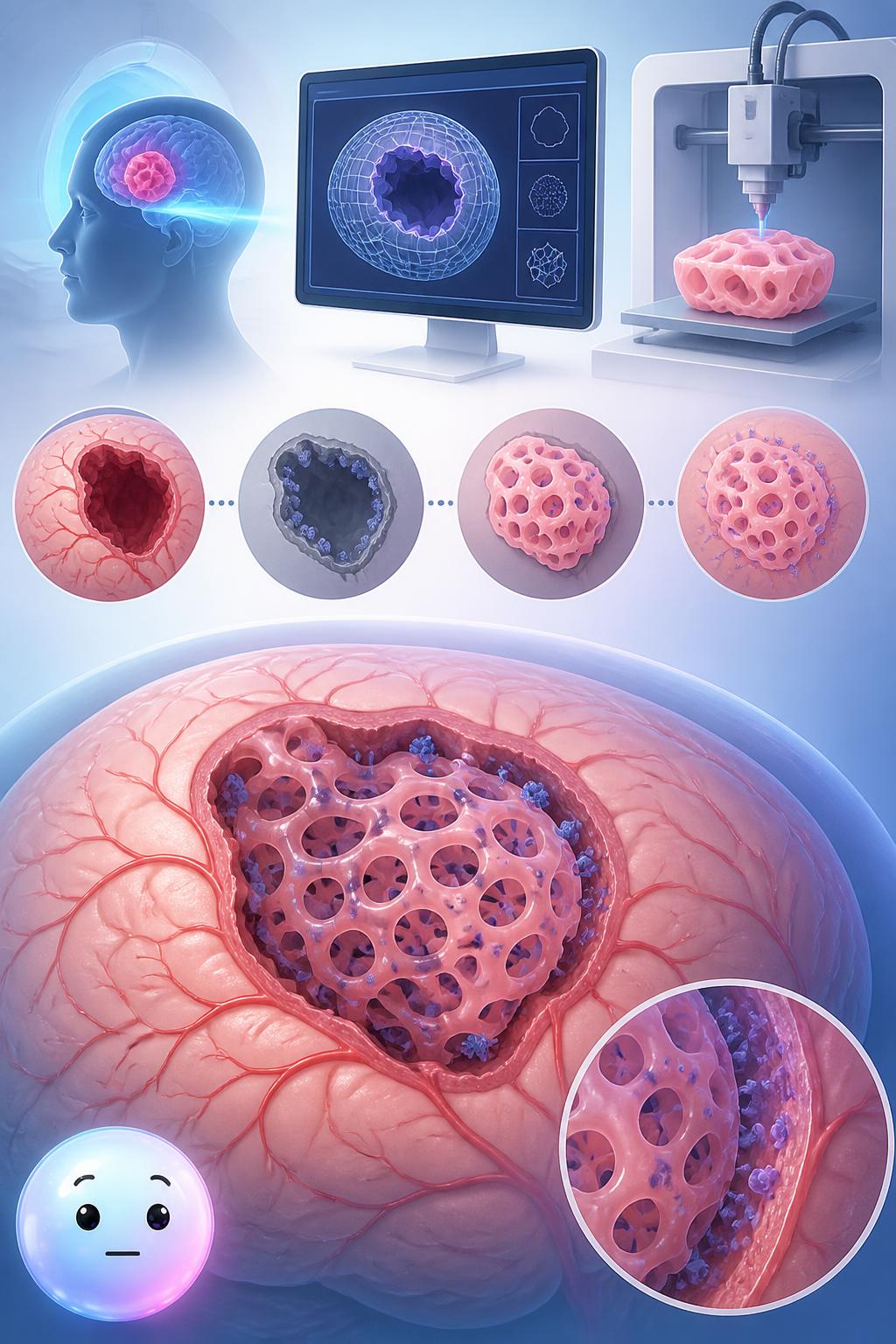
007skaty MRI scans map surgical wounds so bioengineers can print personalized chemotherapy scaffolds

007skaty Slide the vanishing patch onto the tumor to learn how dissolving implants fight brain tumors.
Brain-safe plastic: The biodegradable polymer polycaprolactone takes up to two years to fully dissolve in the human body, safely releasing therapeutic molecules the entire time.
A network of blood vessels and tissue that keeps harmful substances from entering the brain. In 2026, MIT researchers designed a 3D-printed device using ultrasound to temporarily open this physiological wall.
Approximately what percentage of small-molecule drugs does the blood-brain barrier block from entering the brain?
007skaty Bioengineers design custom 3D-printed scaffolds for irregular brain surgery cavities
What percentage of glioblastoma brain tumors typically recur within the surgical cavity margin?
Why are standard, stiff chemotherapy wafers less effective than custom 3D-printed implants?
Which FDA-approved biodegradable polymer is commonly used as a flexible matrix for 3D-printed brain implants?
Why is using a biodegradable material for brain implants highly advantageous for patients?
How does localized drug delivery protect a patient's healthy organs during brain cancer treatment?