The wild Hamburg apprenticeship
Studio innovations and sonic experiments
The silver screen and cinematic leaps
Global waves and cultural impact
schopenhauer In 1966, Ken Townsend invented automatic double tracking because John Lennon hated manually duplicating his vocals.
What everyday object did engineer Geoff Emerick use to muffle Ringo Starr's bass drum, changing drum recording forever?

schopenhauer Match the studio effects to discover how the Beatles created their revolutionary sounds.
schopenhauer John Lennon accidentally caused guitar feedback and used it to open the song "I Feel Fine.
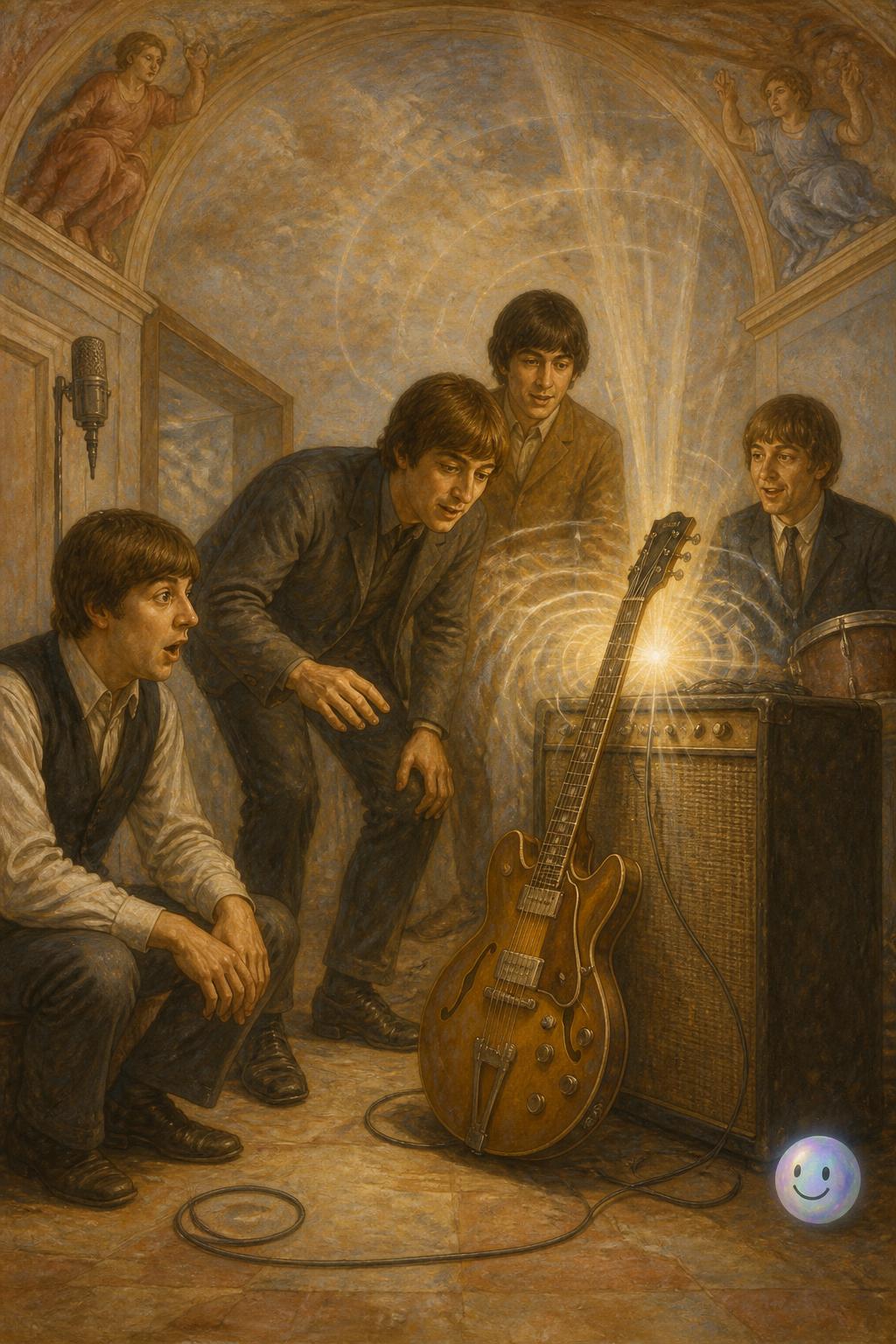
schopenhauer The Beatles were among the first to intentionally use guitar feedback on a commercial record.
For which psychedelic 1966 song did the Beatles use five backward, hand-made magnetic tape loops?
Which Beatles song, recorded in 1964, features the first intentional use of guitar feedback on a pop record?
schopenhauer Artificial Double Tracking
We spin two tape decks to double up your voice!
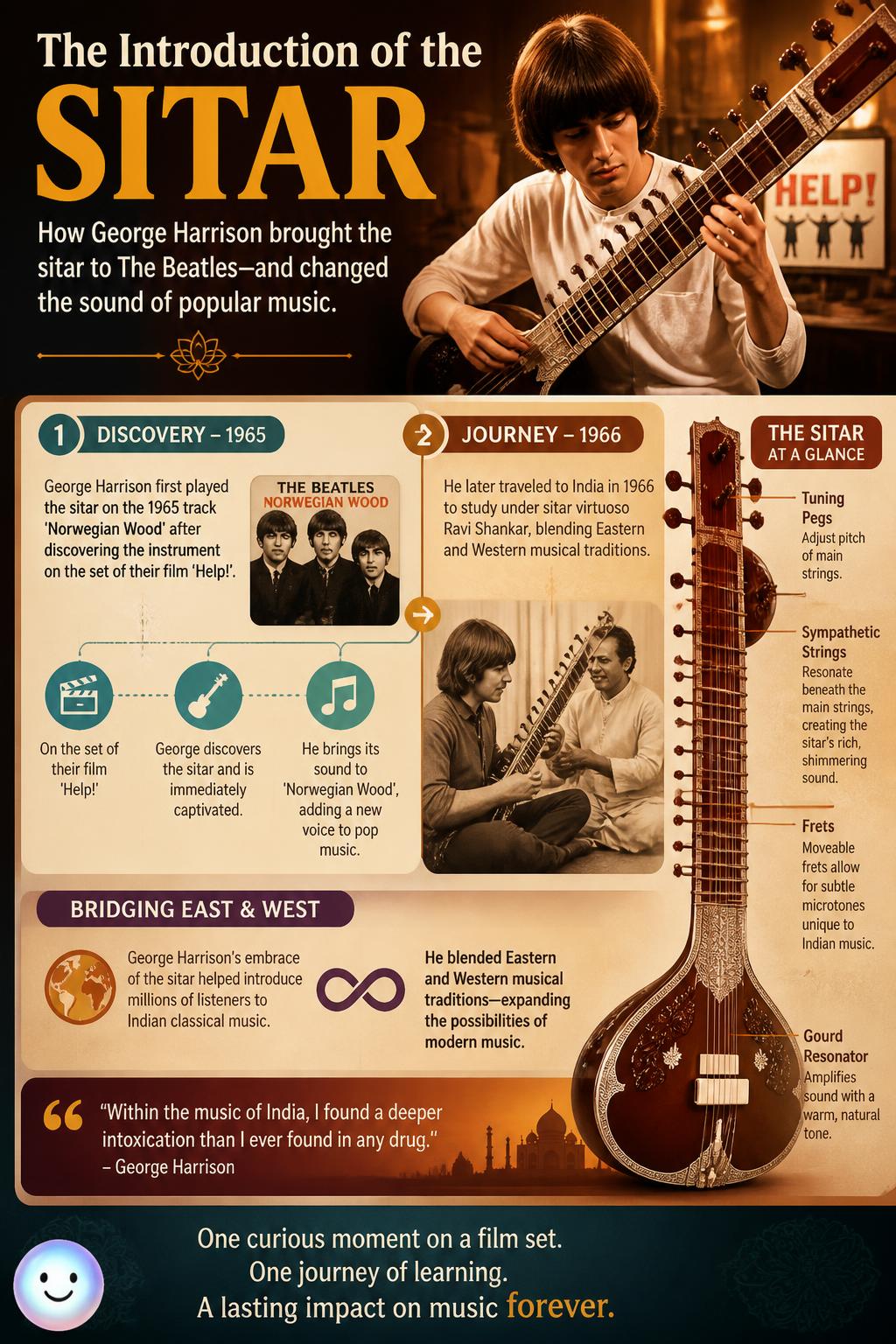
schopenhauer George Harrison introduced Indian classical instruments to Western pop music with the sitar.
On which 1965 song did George Harrison play the sitar, introducing Indian classical music to Western pop?
What did the Beatles run their vocals and instruments through to get a swirling sound on songs like 'Tomorrow Never Knows'?
Backward vocals: The 1966 song 'Rain' was the first pop record to feature backward vocals, created when John Lennon accidentally played a tape-reel upside down.
schopenhauer Lennon and McCartney ran tape loops backward to make seagull-like sounds for Tomorrow Never Knows.
Which 1966 Beatles song was the first pop record to feature backward vocals, created by playing a tape upside down?
Which Abbey Road engineer invented Automatic Double Tracking (ADT) to duplicate vocal tracks instantly?
An analog recording technique that duplicates an audio signal to create a layered vocal or instrumental sound. Ken Townsend invented this technique at Abbey Road in 1966 to automatically duplicate John Lennon's vocals.