
Chapter 1
The celestial wheel of astrology
Chapter 2
Tarot cards from parlor game to symbol map
Chapter 3
Numerology and the secret language of numbers
Ch 1 · The celestial wheel of astrology
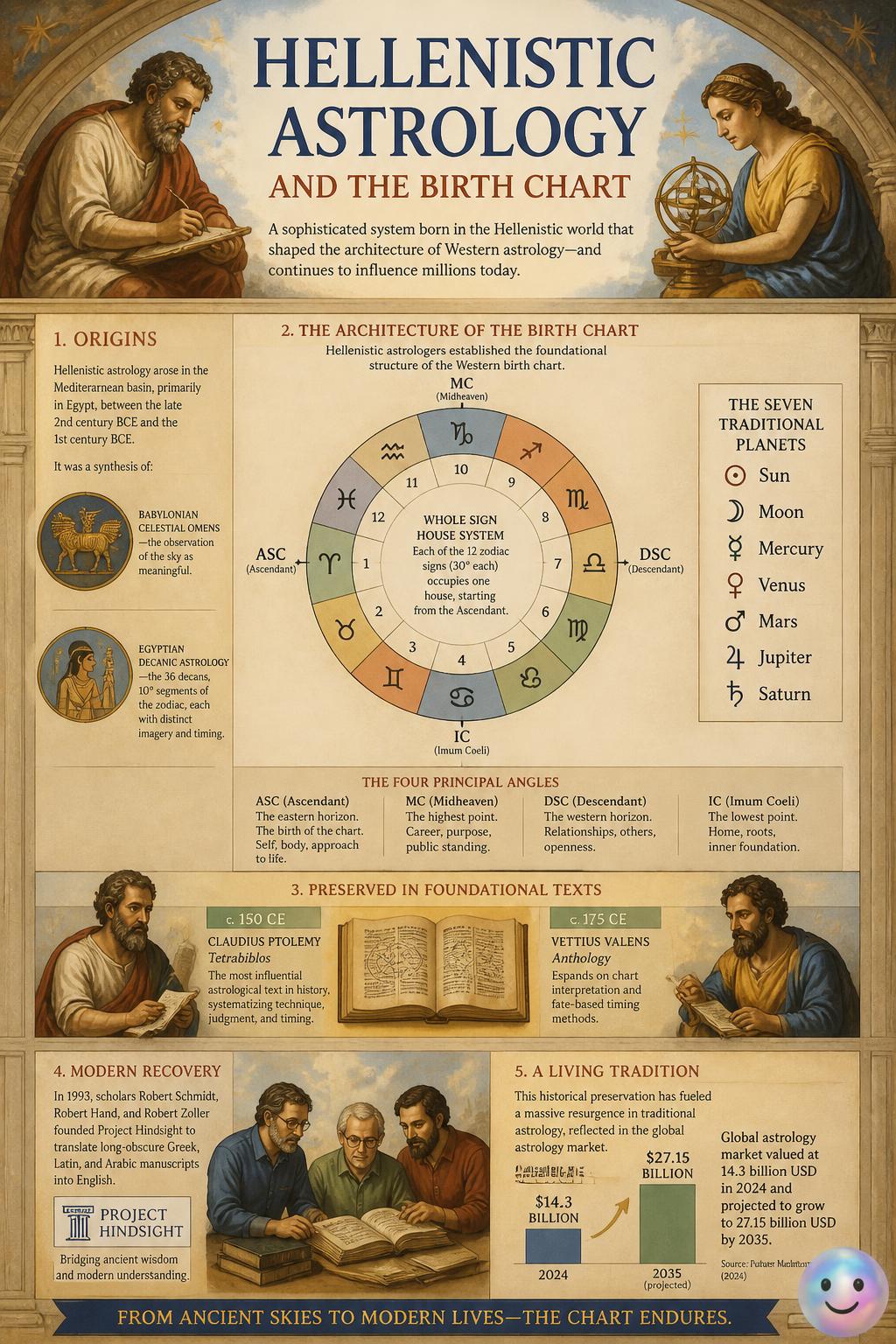
007skaty See how ancient Egyptian stargazers created the birth chart we still use today.
007skaty Babylonian Zodiac Origins
They split the sky into twelve equal parts, / And that is where the modern zodiac starts.
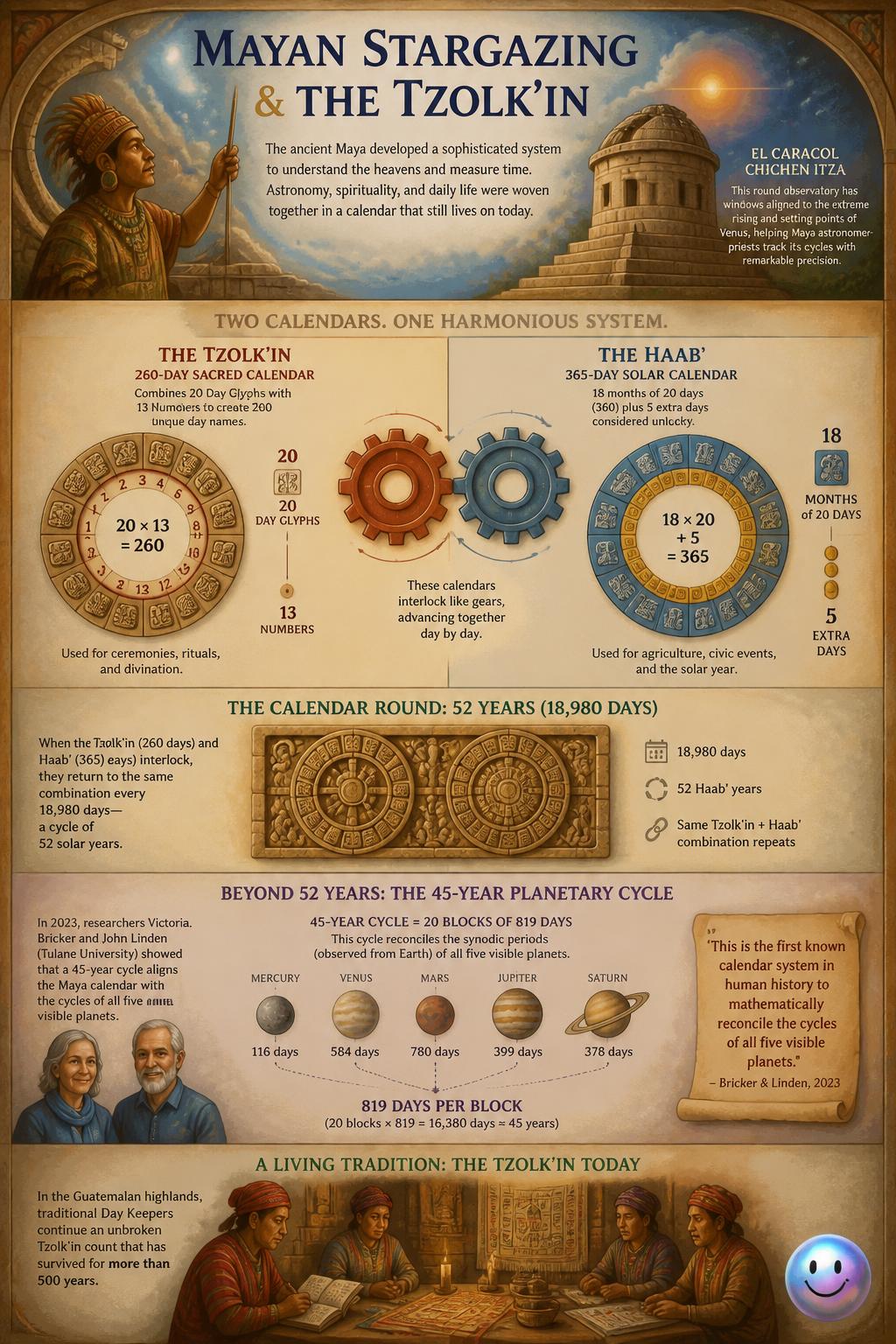
007skaty Explore how Mayan stargazing and the Tzolk'in calendar synced human life cycles with the movements of Venus in this visual infographic.
007skaty Babylonian Zodiac Origins
Twelve on the clay / Signs of the sky / Watch where the planets fly!
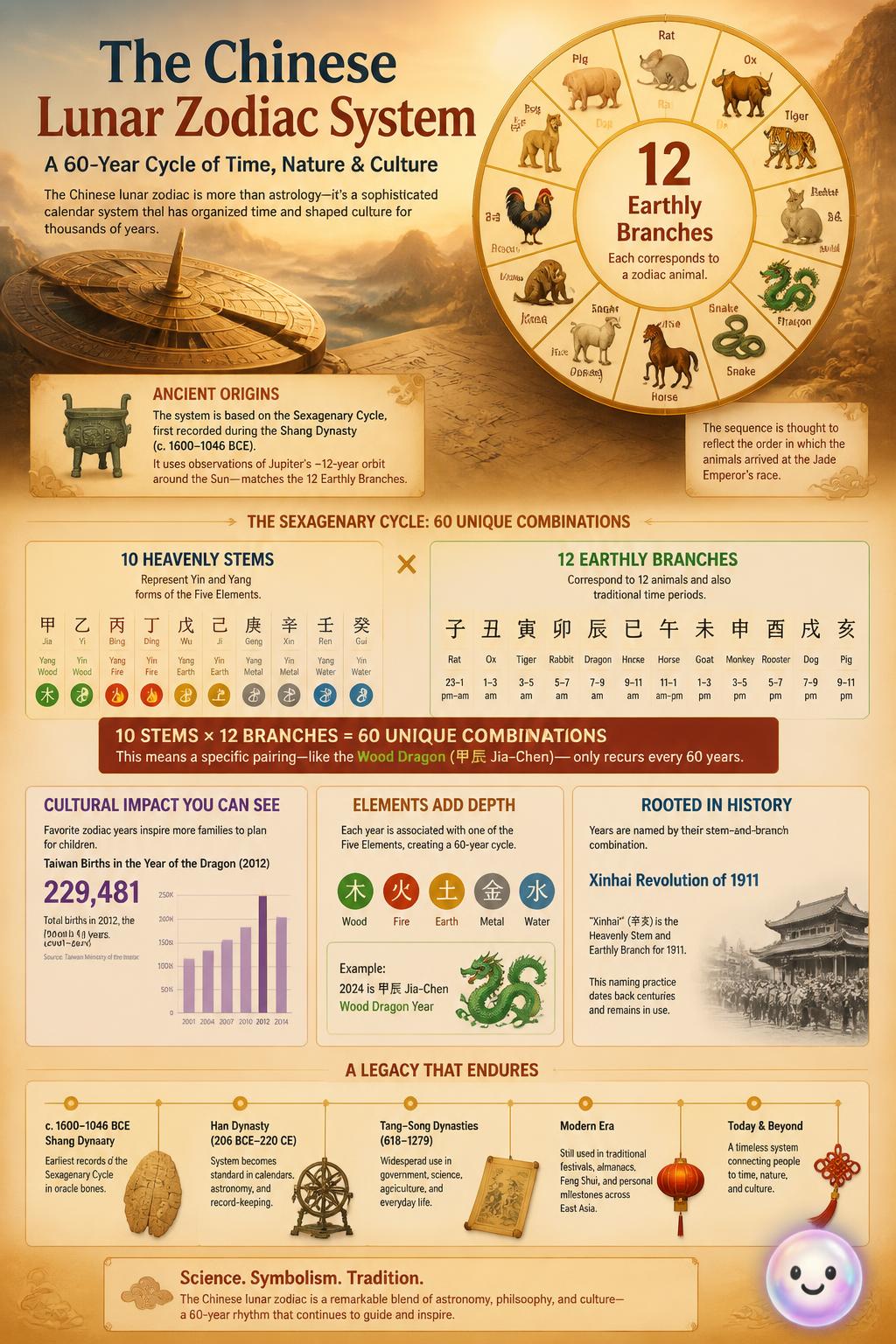
007skaty Learn how the Chinese lunar zodiac system assigns four different animals to you beyond just your birth year in this detailed infographic.
007skaty Babylonian Zodiac Origins
Twelve equal paths, carved in clay, mapping the stars!
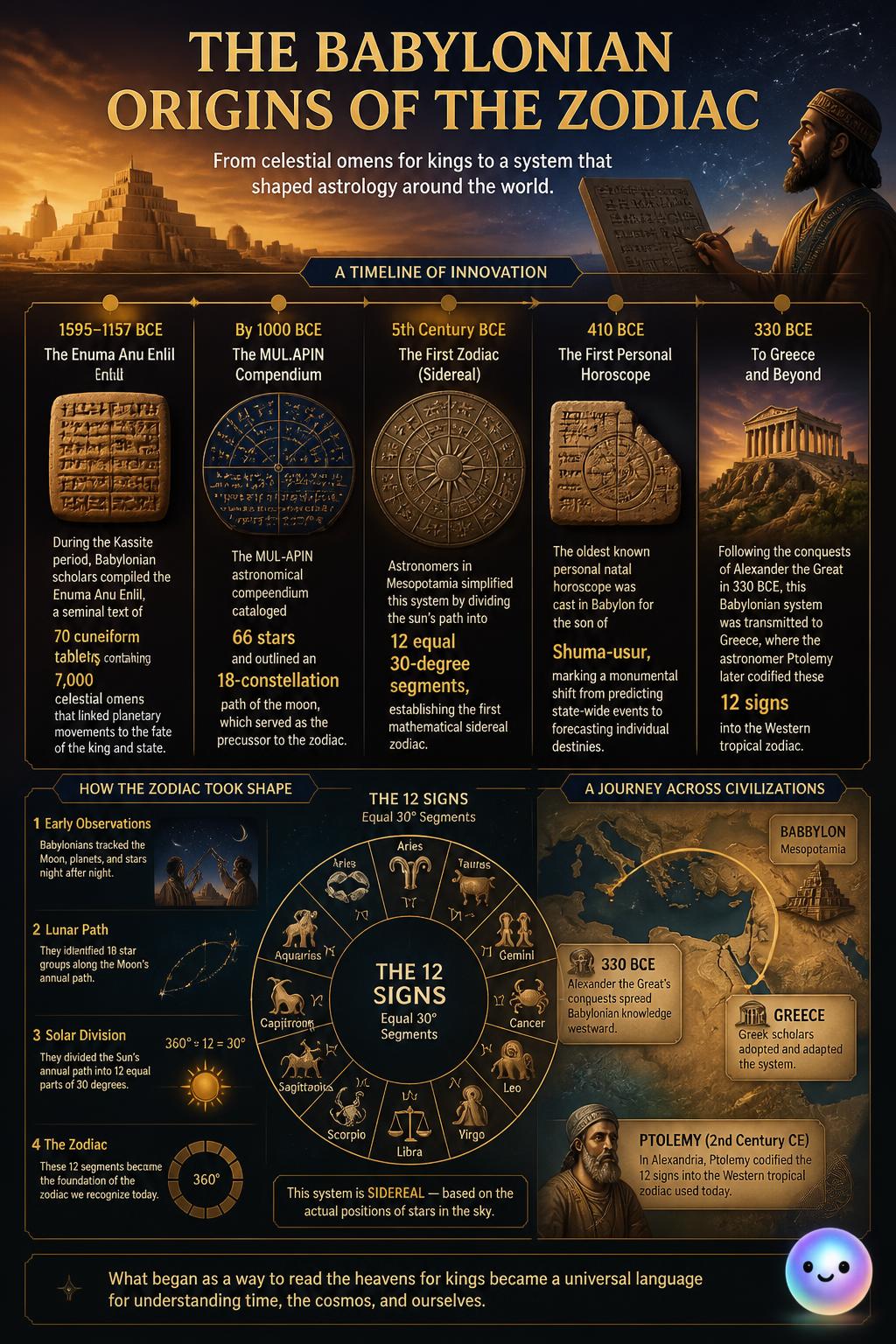
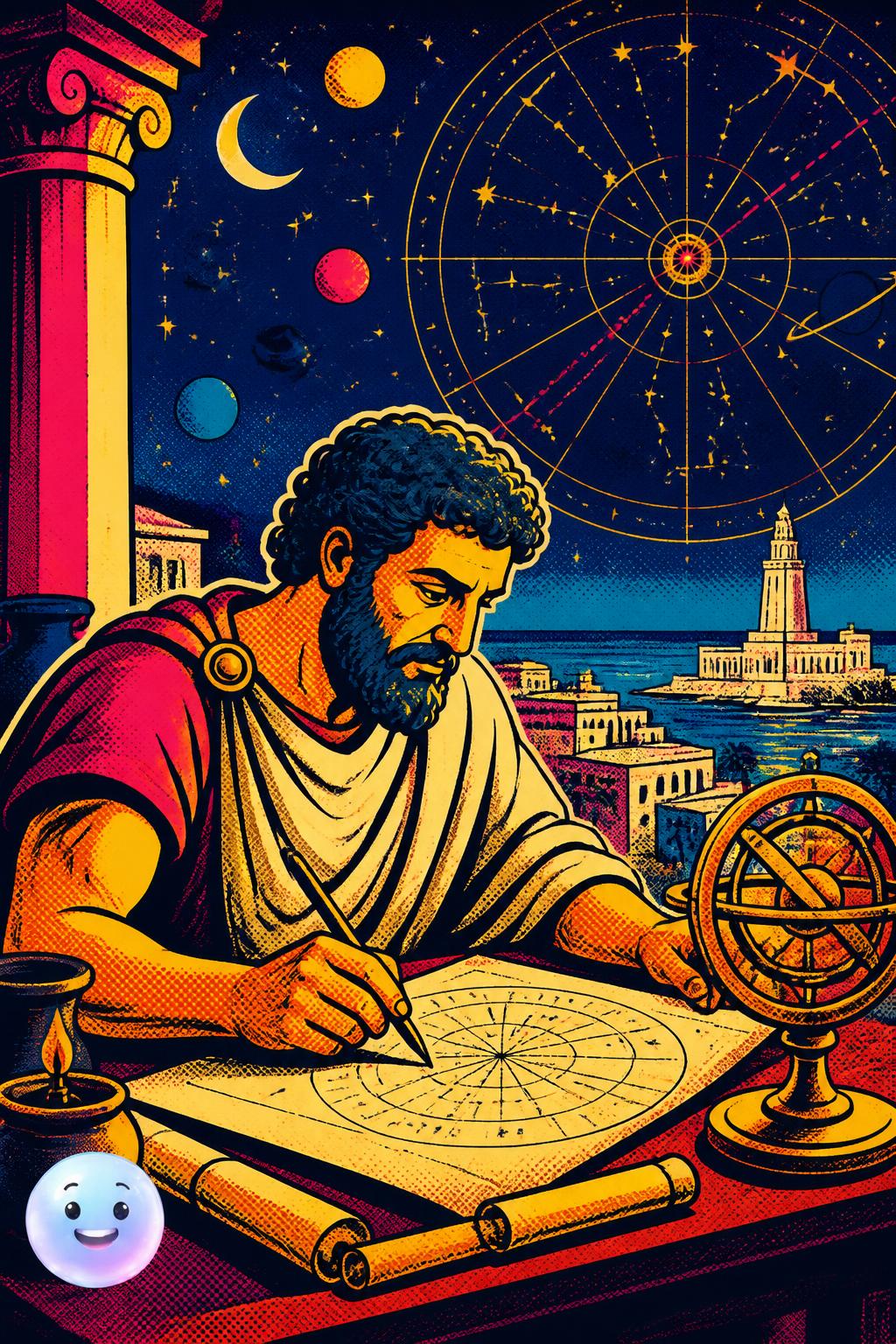
007skaty Ancient Babylonian astronomers divided the sky to invent our twelve zodiac signs.
007skaty Hellenistic Astrology
Watch the rising sign in the eastern sky, mapping out your soul in twelve houses!
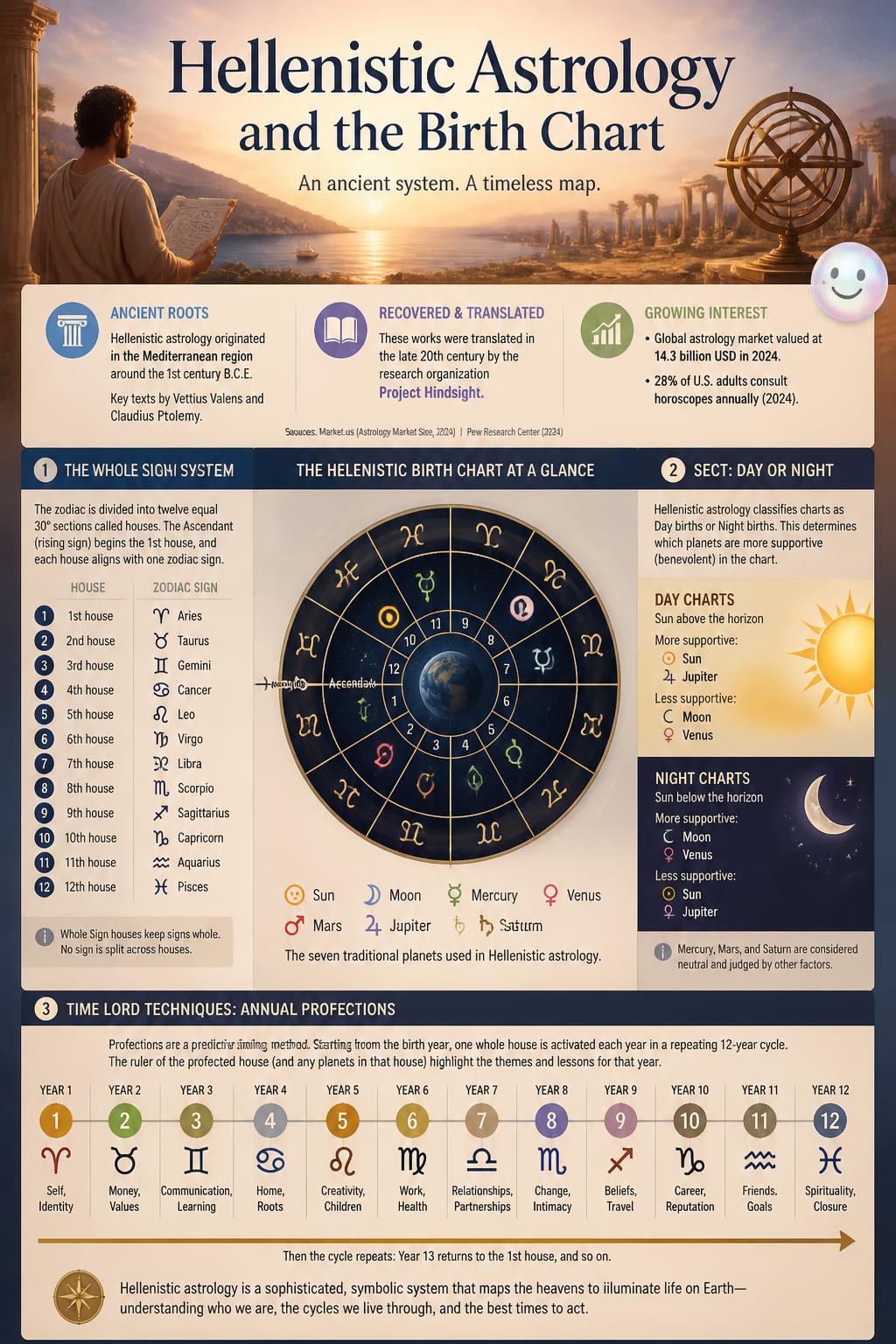
007skaty Hellenistic Birth Chart
Horoskopos, Horoskopos, the rising sign begins your chart!

Quiz
Around which century BCE did the Babylonians first standardize the zodiac into 12 equal signs?
Quiz
Which ancient Mesoamerican civilization used a 260-day calendar linked to human gestation?
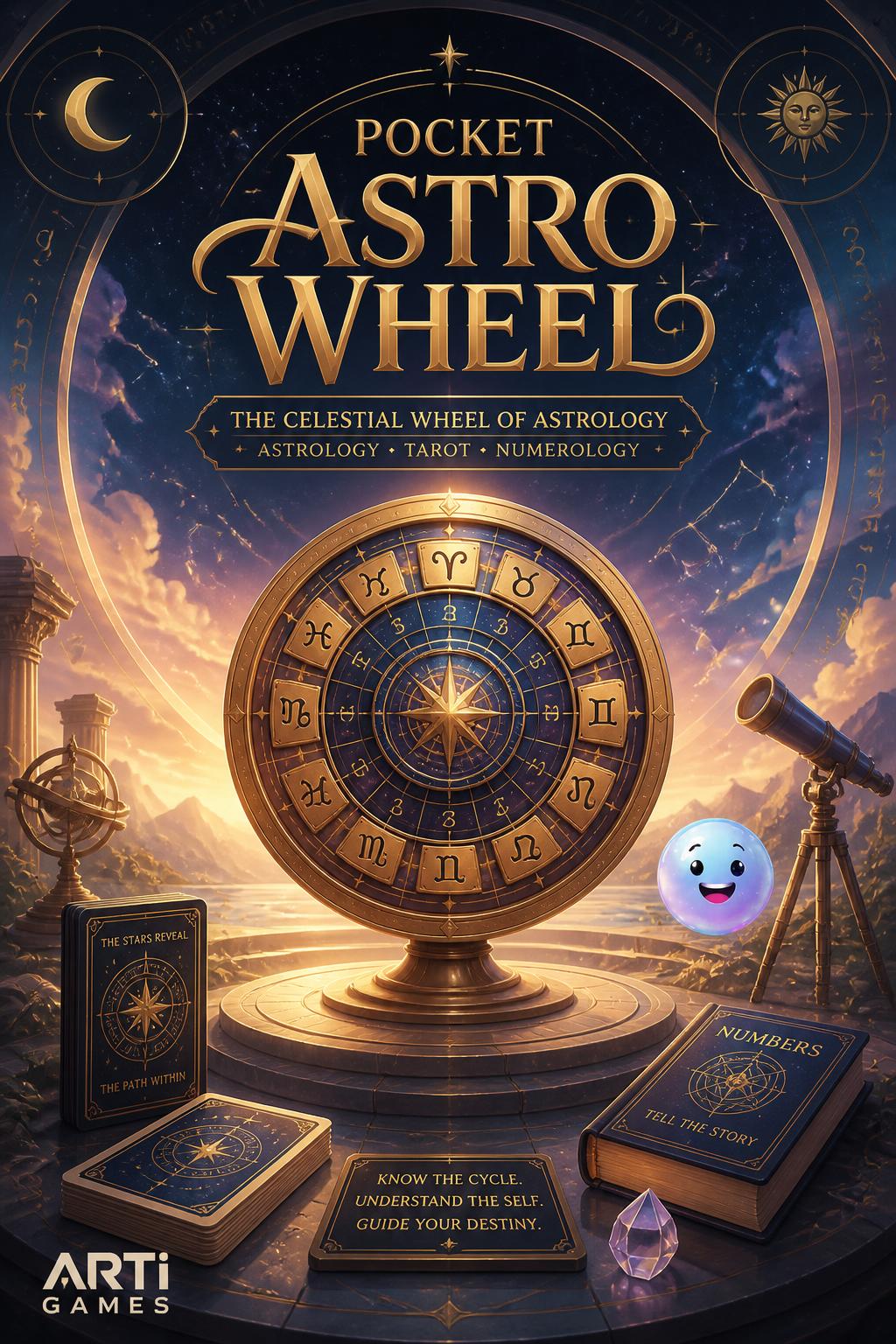
BETA
arti Spin the astro wheel to discover how zodiac signs and planets influence your personality.
Quiz
How many years does it take for the Chinese zodiac cycle to complete a full round of animals and elements?
Quiz
Which ancient civilization created the MUL.APIN tablets around 1000 BCE to map stars along the sun's path?
Fun Fact
Zodiac origins: The word 'zodiac' comes from an ancient Greek phrase meaning 'circle of little animals,' referencing the creatures represented in the constellations.
Glossary
zodiac (noun)
An imaginary band in the sky divided into twelve equal parts used to map celestial movements. Ancient Babylonian astronomers first divided this belt to create a practical seasonal farming calendar.
An imaginary band in the sky divided into twelve equal parts used to map celestial movements. Ancient Babylonian astronomers first divided this belt to create a practical seasonal farming calendar.