The Korean hanbang revolution
Ayurvedic aromas of India
Smoke and resin of the Americas and Middle East
Mediterranean apothecary and alchemy
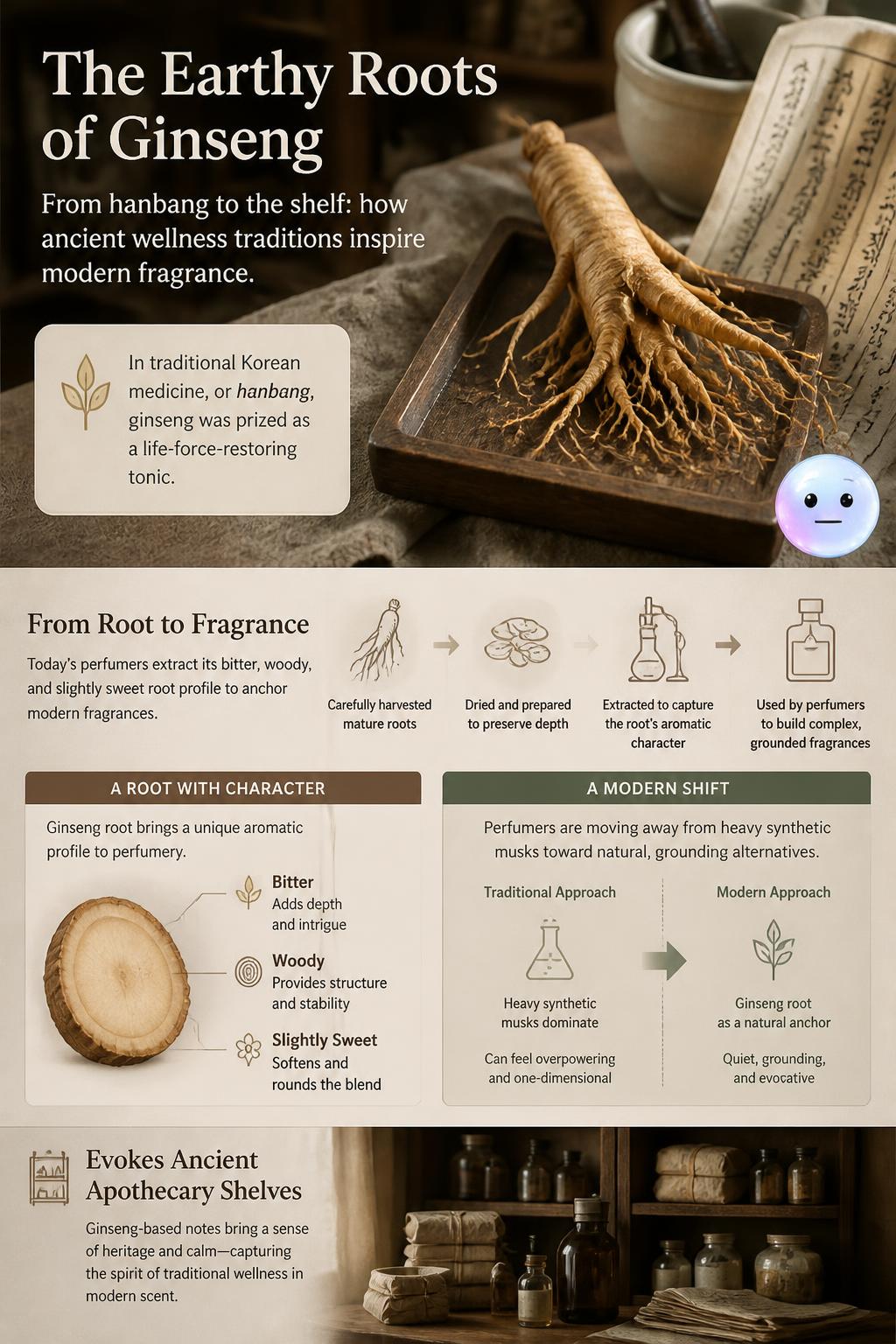
elorea Ginseng evolved from a life-force-restoring Korean hanbang tonic into a woody, sweet root extract that anchors modern fragrances.
Which part of the ginseng plant is primarily extracted to create the earthy, bitter note used in modern hanbang-inspired perfumery?
Which Korean historical dynasty's records document the widespread use of ginseng for both medicine and aromatic wellness sachets?
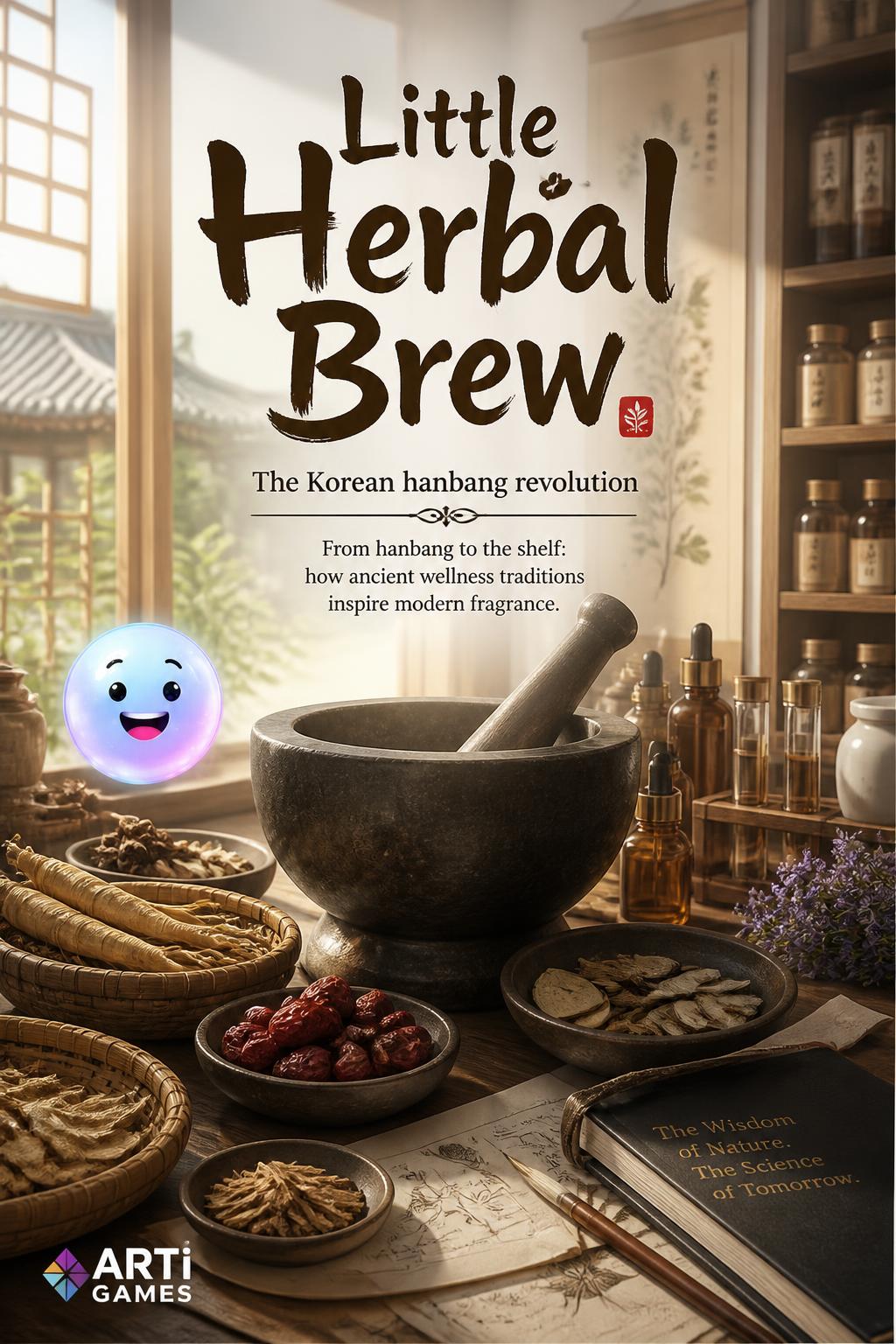
elorea Brew traditional Korean herbs to discover how ancient wellness inspires modern fragrance.
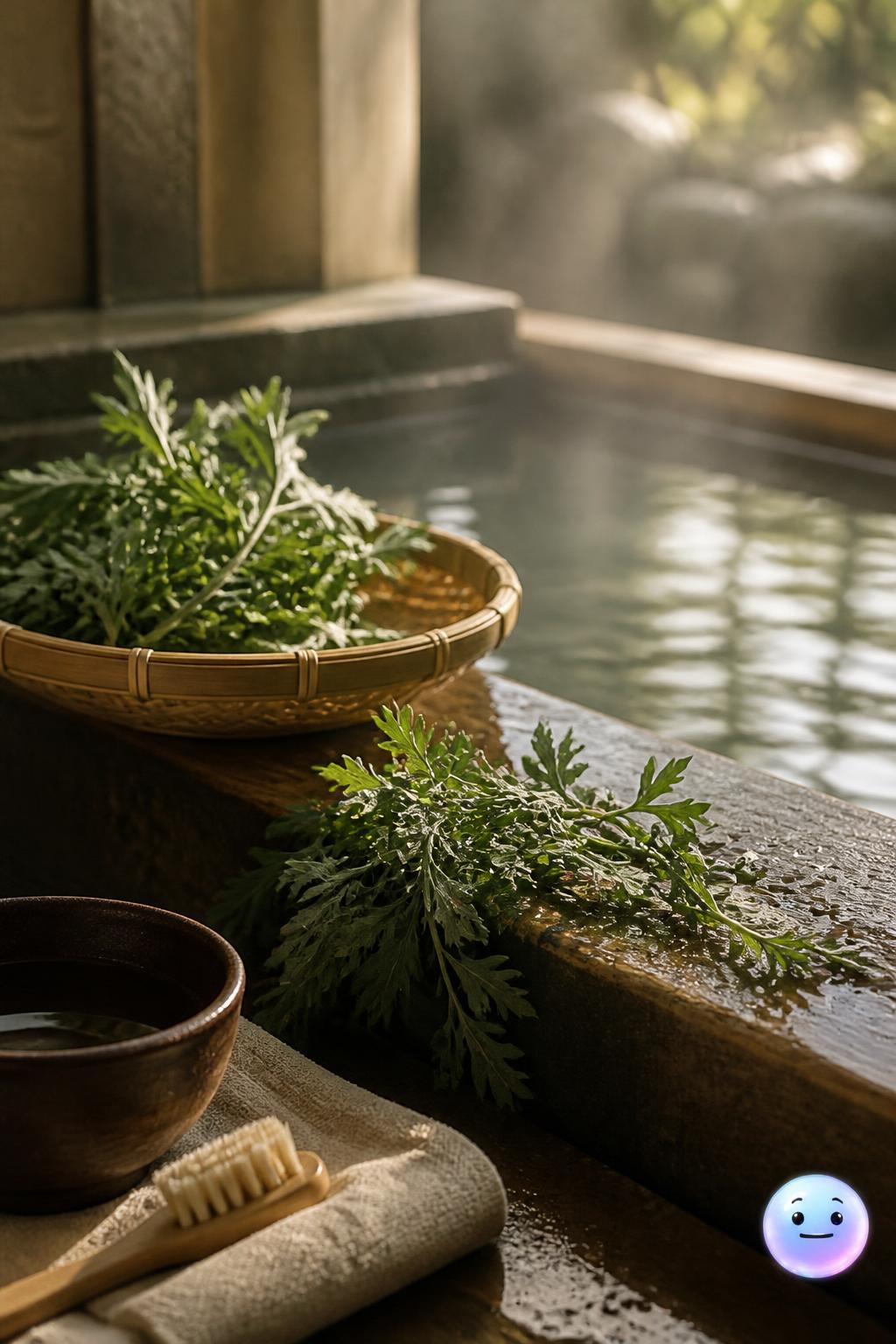
elorea Modern fragrances capture the herbaceous scent of Korean ssuk to promote daily relaxation.
What is the Korean name for mugwort, a key botanical in traditional therapeutic baths and modern herbal perfumes?
In botanical terms, mugwort belongs to which aromatic plant genus frequently used in herbal perfumery?
elorea Korean Hanbang Revolution
We're spraying ancient Hanbang magic, oh-oh! (Hanbang magic!) Earthy roots are the new luxury, yeah! (New luxury, yeah!)
What Japanese term, meaning 'forest bathing,' describes the nature-immersion trend that pine-based fragrances aim to replicate?
What is the scientific name of the Korean red pine, whose needles are harvested for both traditional medicine and pine-scented perfumes?
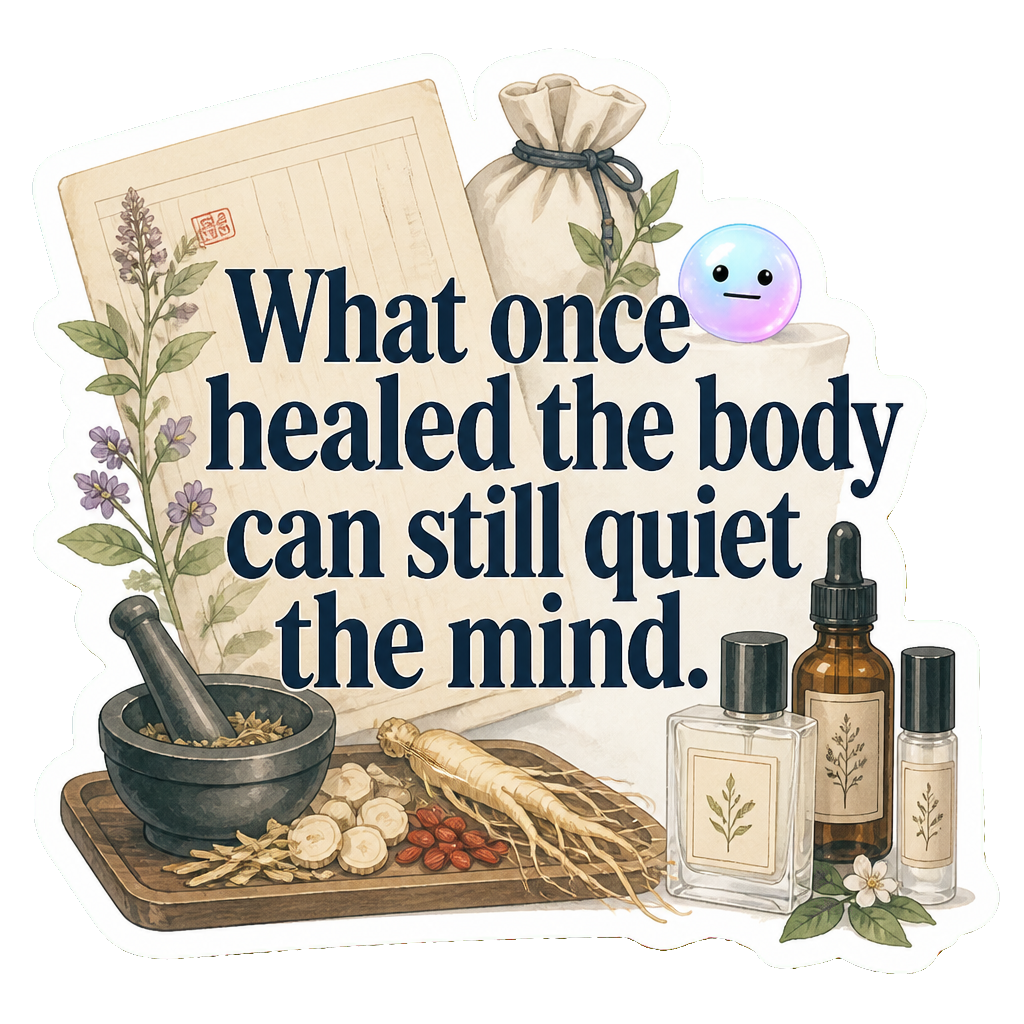
What were the traditional herb-scented beeswax candles burned in Joseon-era Korean households called?
What is the name of the traditional embroidered perfume pouches hung in ancient Korean homes to ward off insects and purify the air?
Hanbang vapor: In the Joseon Dynasty, court ladies sat over steaming pots of boiled medicinal herbs like mugwort to infuse their clothes and hair with healthy, aromatic steam.
Traditional Korean medicine that utilizes herbal remedies and holistic health practices to restore bodily balance. In 1973, Amorepacific pioneered this herbal approach commercially by launching South Korea's first ginseng cosmetic line.