Chapter 1
How the brain builds memories
Chapter 2
The tricks our minds play
Chapter 3
When false memories feel real
Chapter 4
The high stakes of memory errors
Ch 4 · The high stakes of memory errors
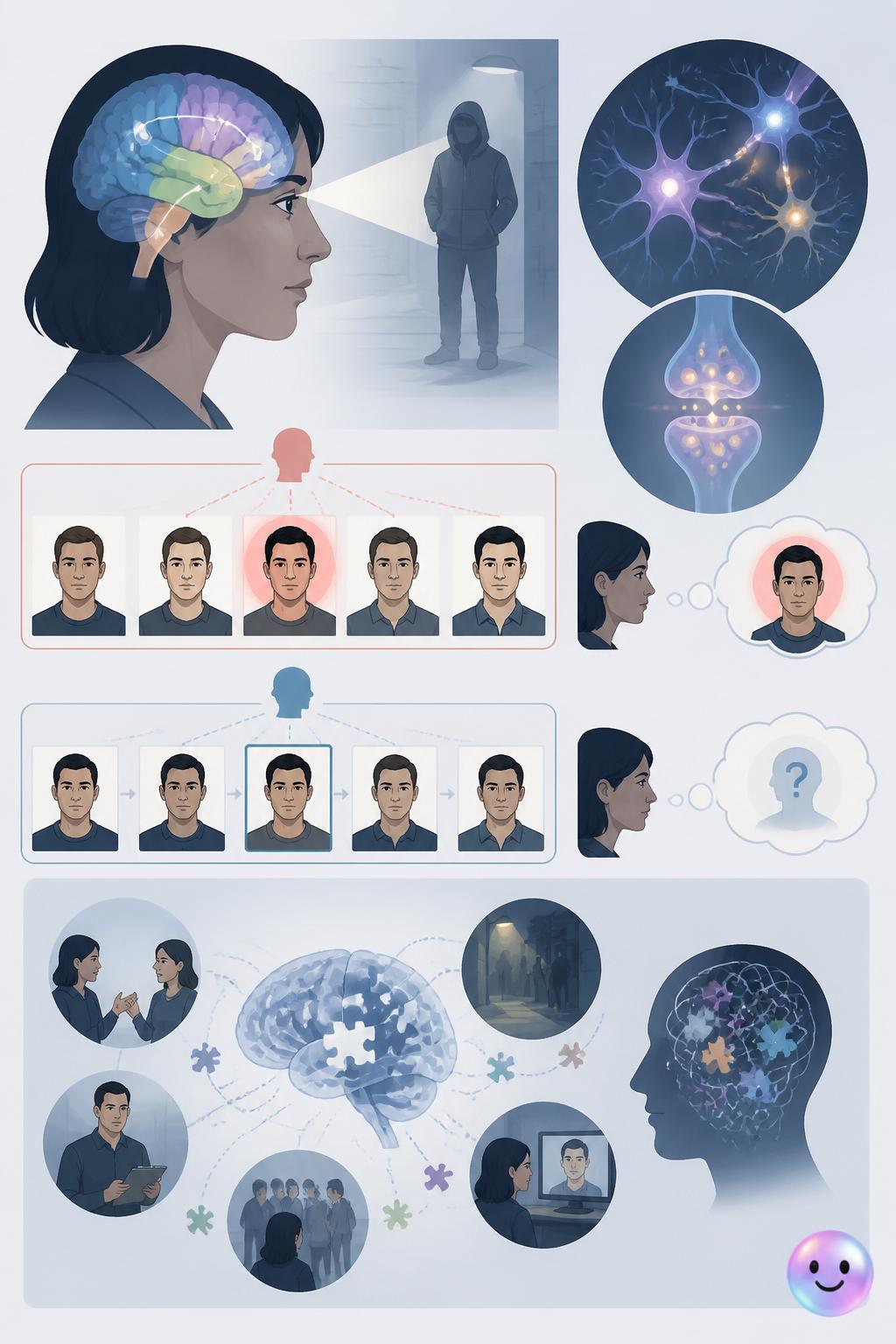
renaissanceman Traditional police lineups can accidentally pressure witnesses into choosing the wrong suspect.
Quiz
Why does writing down an event immediately after it happens protect the memory's accuracy?
Quiz
According to the Innocence Project, eyewitness misidentification contributed to what percentage of wrongful convictions overturned by DNA?
BETA
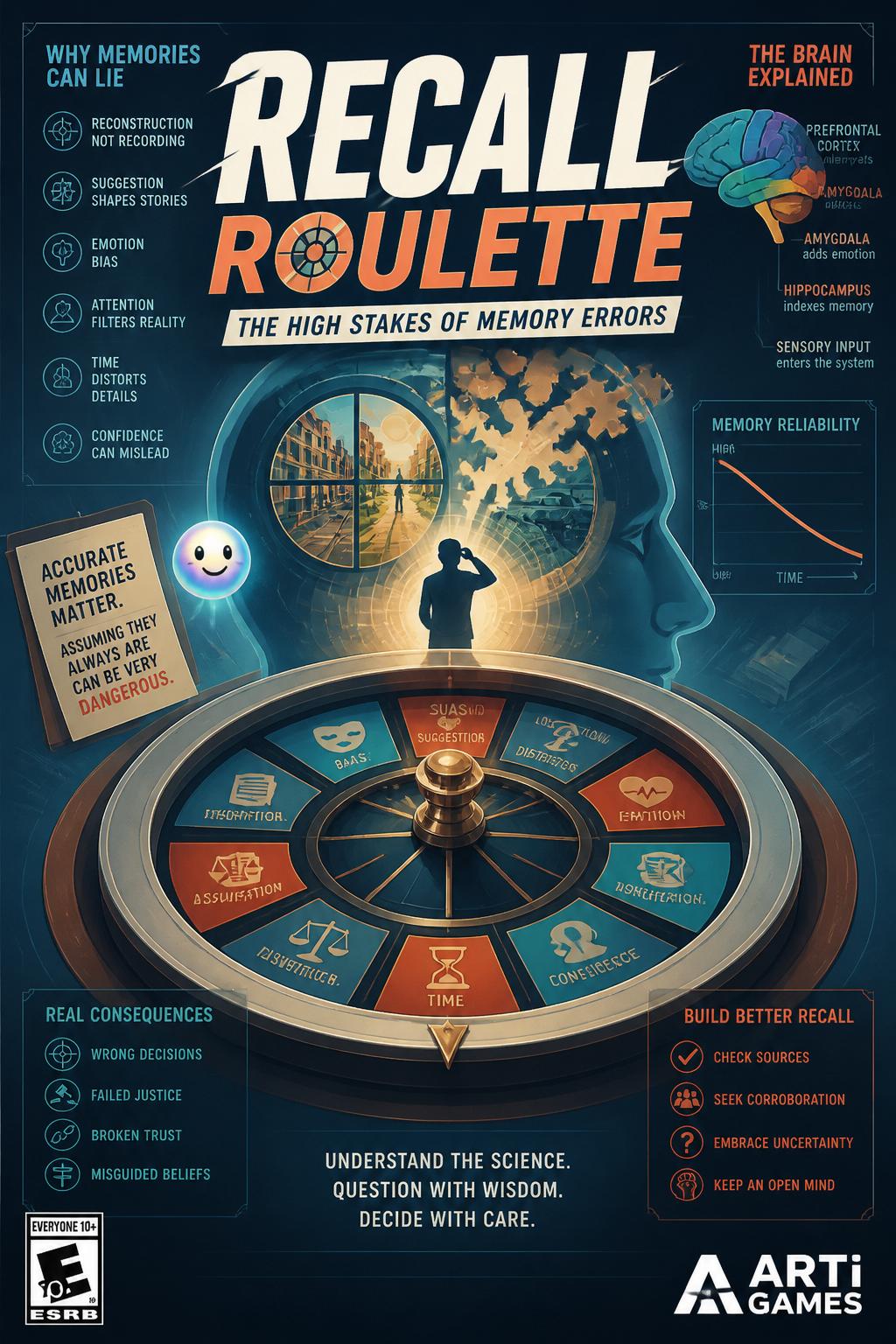
renaissanceman Spin the roulette wheel to discover why trusting your memory can be dangerous.
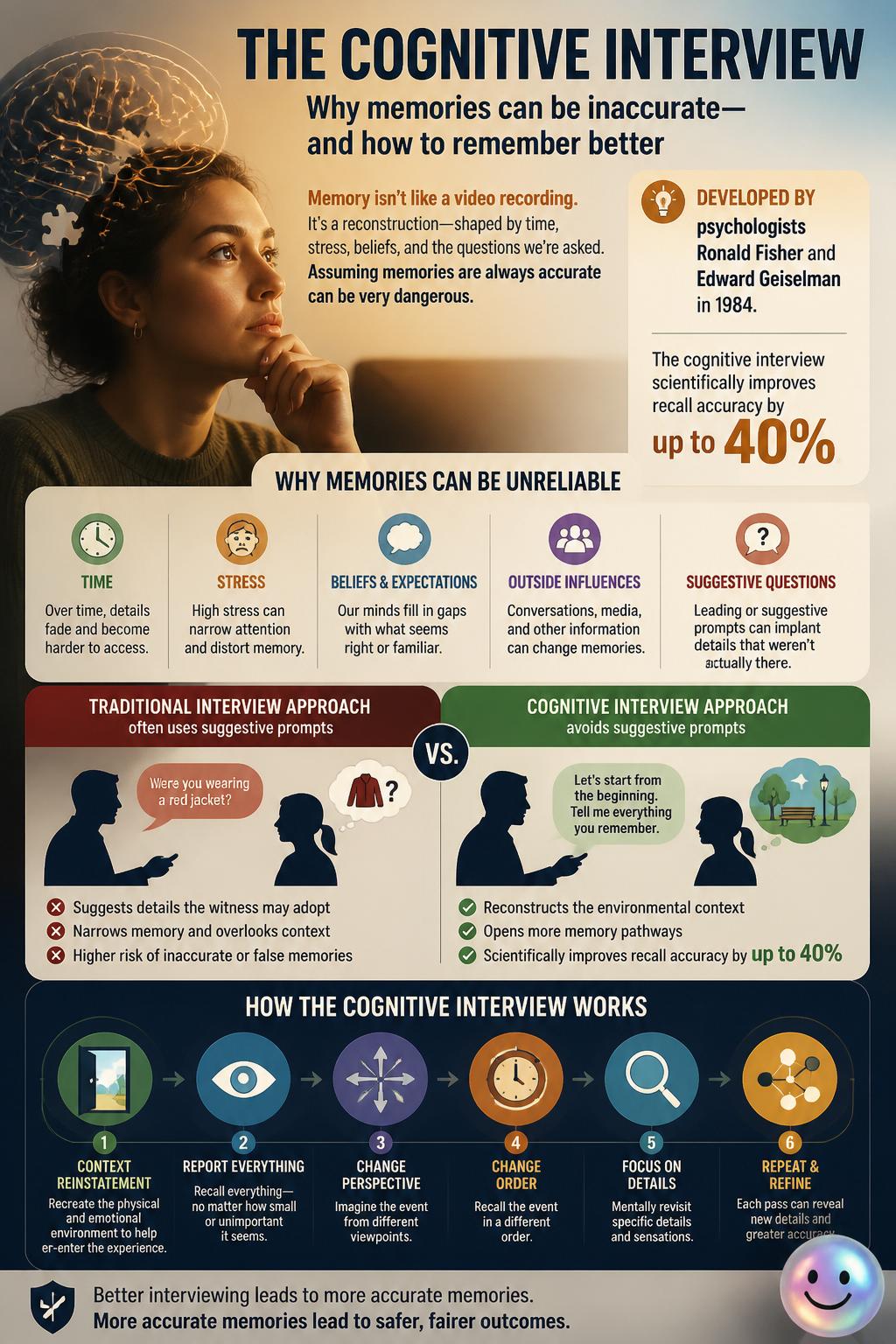
renaissanceman Specialized questioning techniques can help witnesses retrieve accurate details without altering memories.
Quiz
Which memory retrieval technique asks witnesses to mentally place themselves back at the physical scene of the event?
Quiz
What type of lineup presents suspects one at a time to prevent witnesses from making relative comparisons?
Quiz
What year was the Innocence Project founded to help exonerate wrongfully convicted individuals using DNA evidence?
renaissanceman Memory Errors
Rewriting the past, / the details don't last, / new memory cast!
Quiz
Why are simultaneous lineups (showing all suspects at once) dangerous for memory recall?
Quiz
Who co-developed the highly effective 'cognitive interview' technique in 1984 to help police gather accurate witness statements?
Fun Fact
DNA exonerations: Over 70% of wrongful convictions overturned by DNA testing in the United States involved inaccurate eyewitness testimony.
Glossary
misidentification (noun)
The act of identifying someone or something incorrectly. In 1984, Jennifer Thompson's mistaken identification of Ronald Cotton led to his wrongful conviction and imprisonment.
The act of identifying someone or something incorrectly. In 1984, Jennifer Thompson's mistaken identification of Ronald Cotton led to his wrongful conviction and imprisonment.