Racing to the edges of the Earth
The spark of modern science and industry
Melodies, movies, and the birth of show business
Art, activism, and the changing social order

schopenhauer In 1909, Baekeland patented a heat-resistant material created through chemical synthesis. This revolutionary substance did not melt, quickly transforming early electrical engineering and household products.
Approximately how many Model T cars did Ford sell during its first full year in 1909?
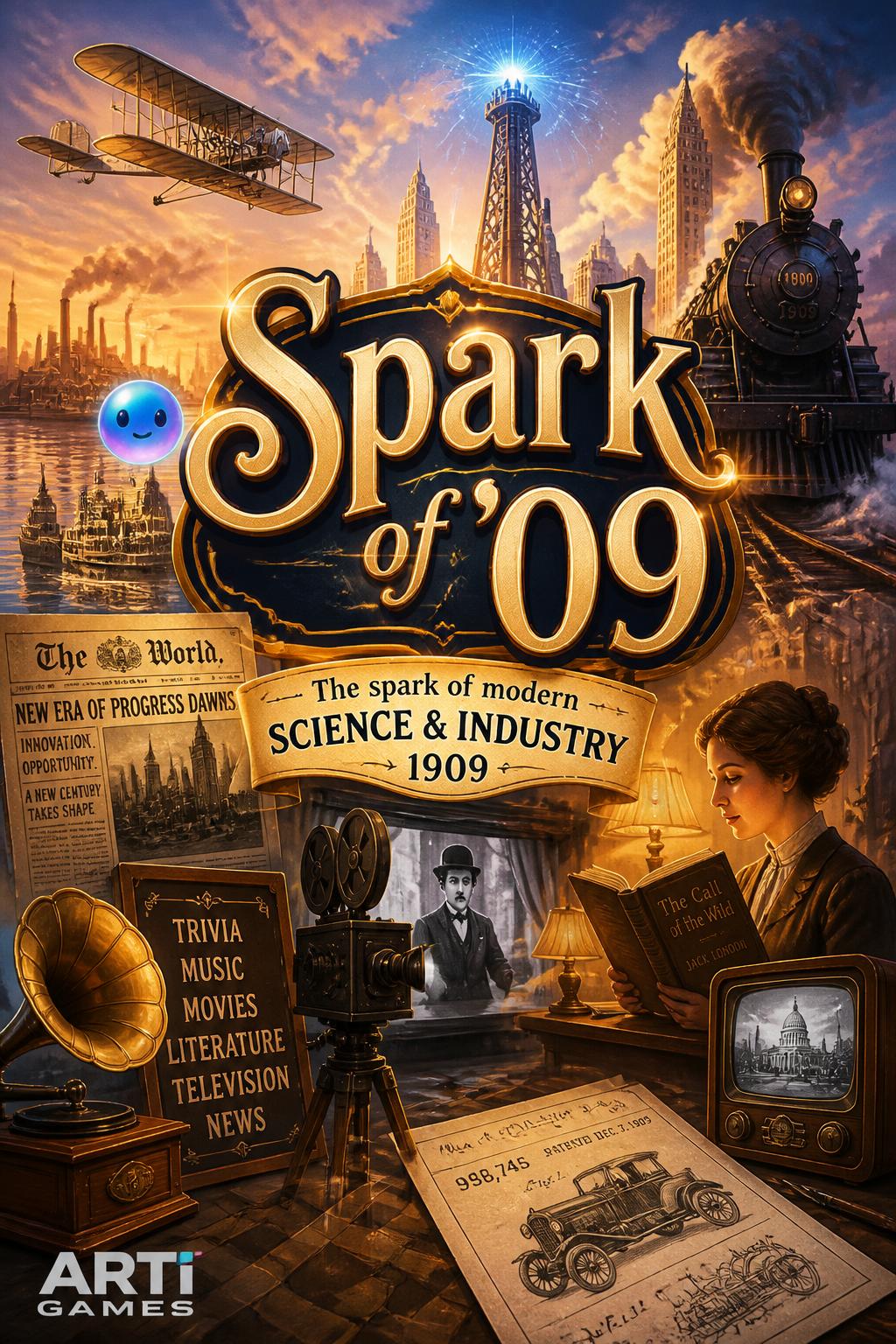
schopenhauer Match the trivia clues to discover how the year 1909 sparked the modern world.
schopenhauer In July 1909, Fritz Haber successfully synthesized ammonia from air. Carl Bosch scaled up this chemical process, creating mass fertilizers that now feed billions of people.
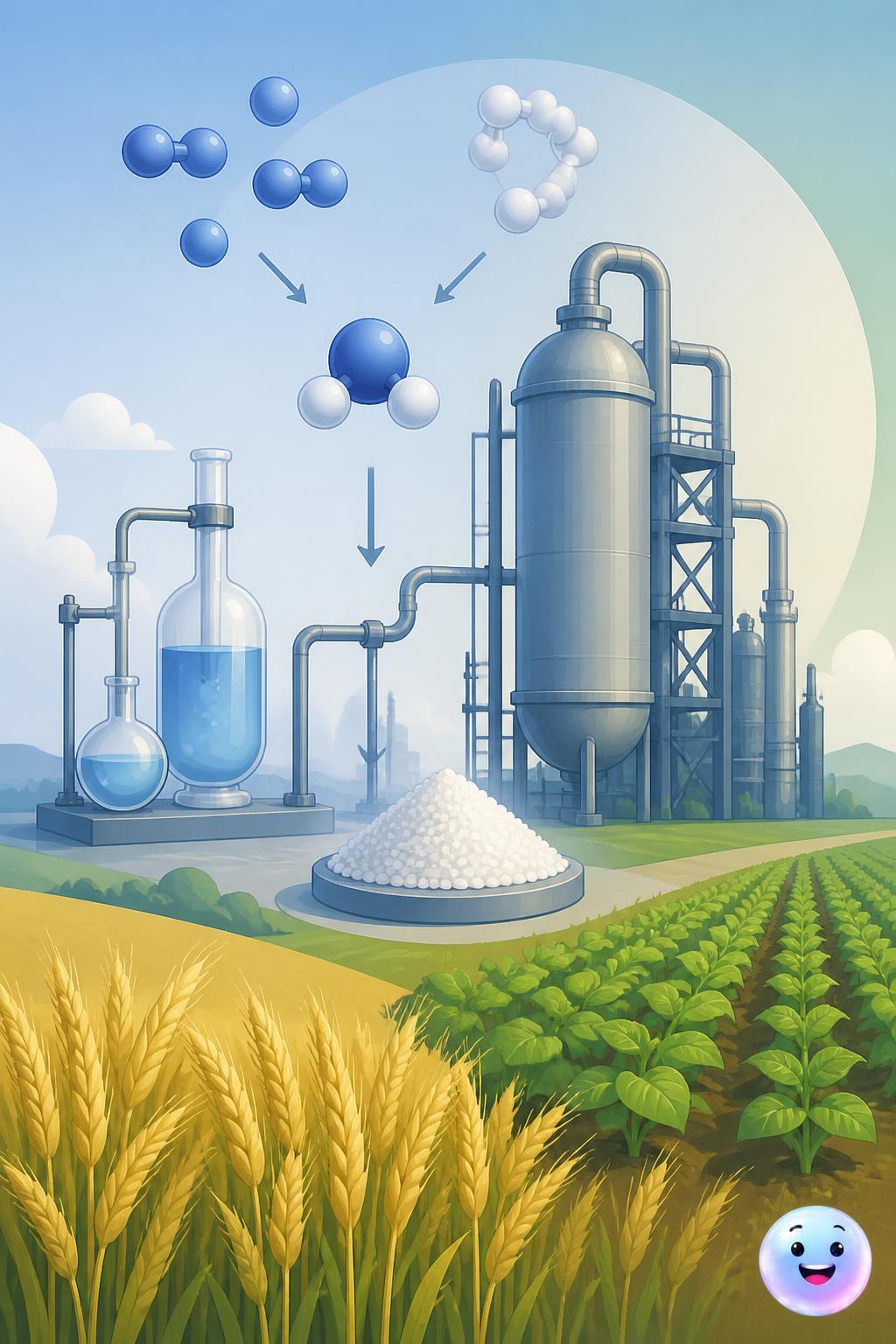
schopenhauer Fritz Haber successfully demonstrated the synthesis of ammonia, laying the foundation for modern chemical fertilizers.
What country was chemist Leo Baekeland originally from before moving to America?
Plastic billiard balls: Bakelite was originally invented while Leo Baekeland was trying to find a synthetic replacement for shellac, which was used to coat billiard balls.
schopenhauer In 1909, Johannsen coined the terms gene, genotype, and phenotype. This vocabulary separated physical traits from genetic blueprints, paving the way for modern genetics.
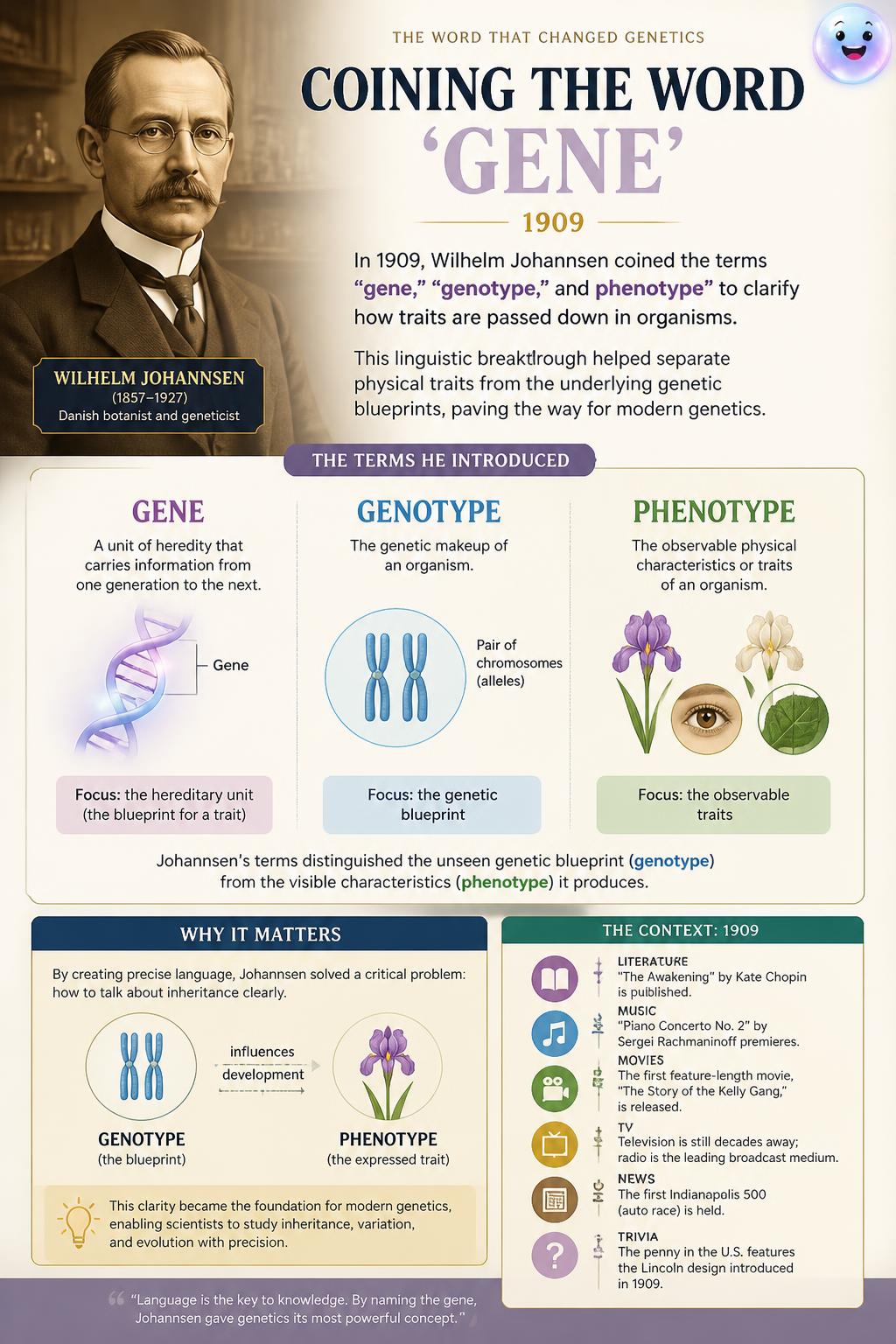
schopenhauer Danish botanist Wilhelm Johannsen introduced the word 'gene' to describe the basic unit of heredity.
Which chemical process, demonstrated in 1909, allowed for mass-produced fertilizers?
A lightweight, heat-resistant, and nonconductive synthetic plastic made from formaldehyde and phenol. In 1909, Leo Baekeland patented this material, launching a new era of global manufacturing and synthetic products.
schopenhauer In 1909, the Ford Motor Company simplified parts to build over 10,000 Model T cars. Henry Ford turned a luxury toy into an affordable necessity for everyday families.