
The salt mines of Hallstatt
Starting around 800 BCE, miners preserved by salt worked deep underground in Hallstatt, Austria. This 'white gold' was traded across Europe, funding a wealthy, artistic elite that defined the Hallstatt culture.
Chapter 1
The dawn of metal and the Bronze Age shift
Chapter 2
Fortresses of stone and the Iron Age clash
Chapter 3
Whispers from the bog and sacred spaces
Chapter 4
Daily life, trading networks, and tribal art
Ch 2 · Fortresses of stone and the Iron Age clash
renaissanceman Iron Age Vitrified Forts
Ancient builders, with fire and might, Melted stone walls, glowing so bright!
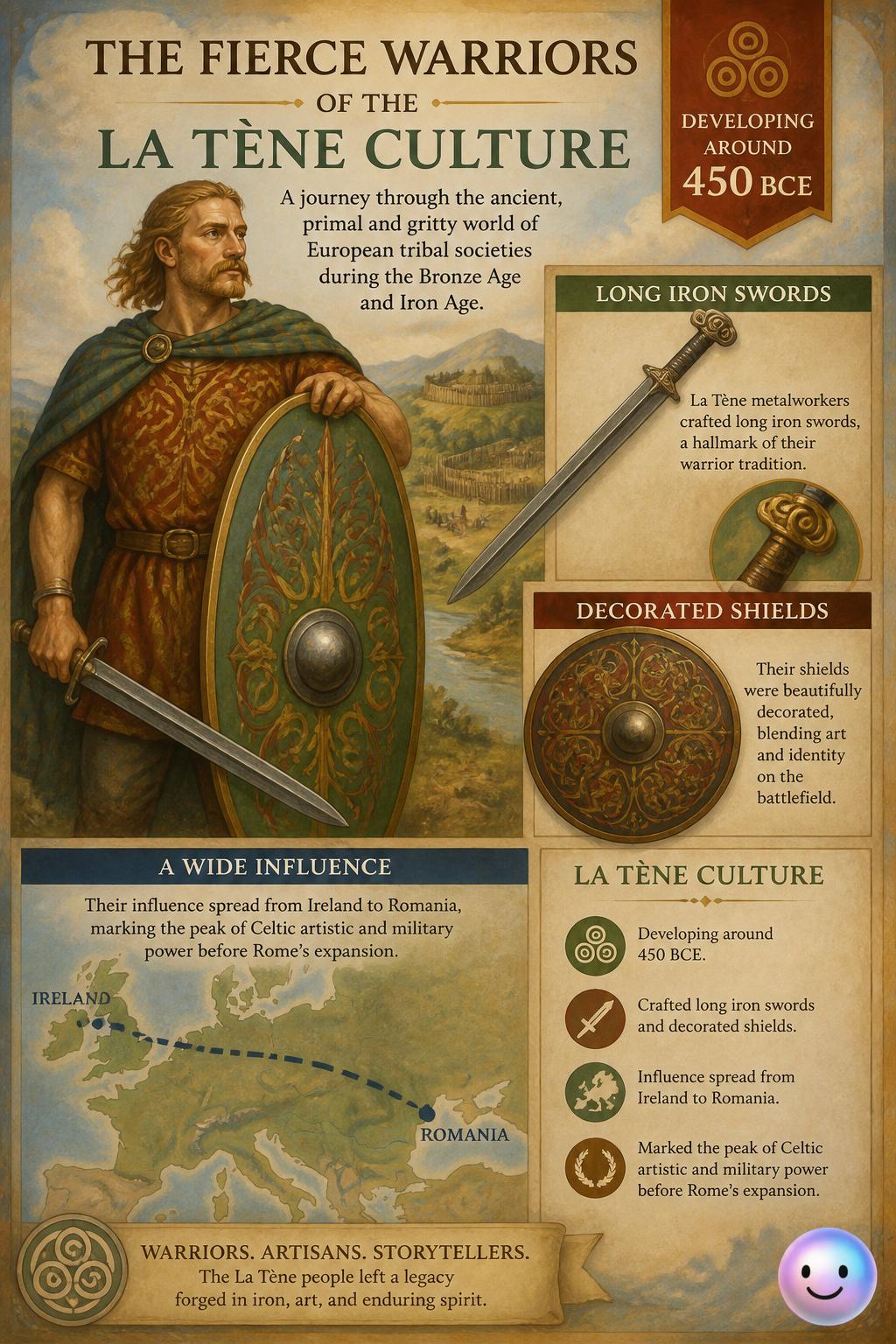
renaissanceman Originating in Switzerland, the La Tène culture introduced advanced iron weapons and distinctive swirling art styles.
Fun Fact
Iron Age Salt: Miners in Hallstatt, Austria, used organic backpacks made of wood and hide, which were perfectly preserved for 2,800 years by the salt.
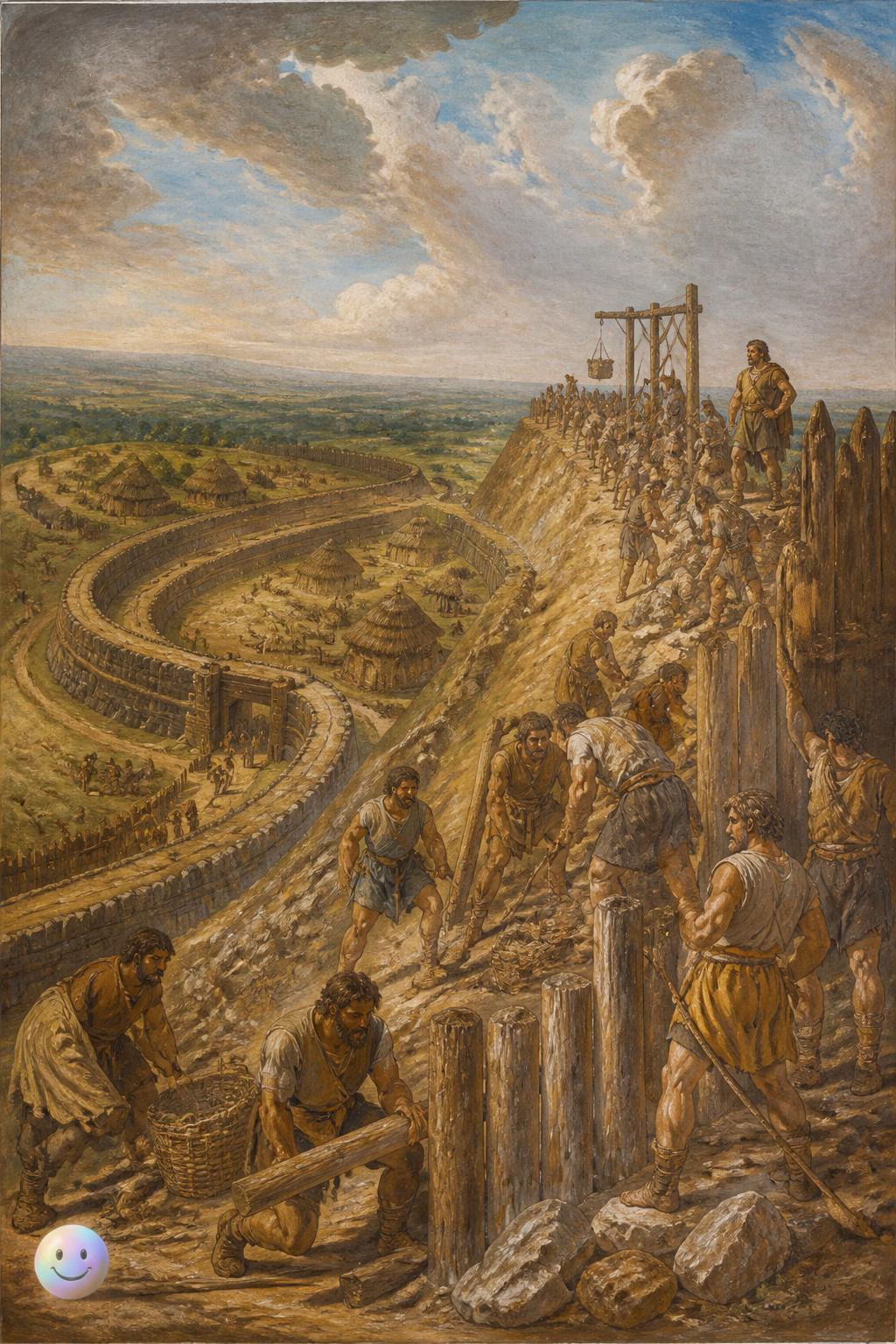
renaissanceman Iron Age tribes constructed massive earthen hillforts to protect their communities from rival raids.
Glossary
hillfort (noun)
A fortified hilltop settlement, typically dating from the Bronze or Iron Age, enclosed by ramparts of earth or stone. Roman legions breached the stone ramparts of Britain's Maiden Castle during the invasion of 43 AD.
A fortified hilltop settlement, typically dating from the Bronze or Iron Age, enclosed by ramparts of earth or stone. Roman legions breached the stone ramparts of Britain's Maiden Castle during the invasion of 43 AD.

BETA
renaissanceman Build a hilltop stronghold to learn how ancient European tribes defended their territory.
Quiz
Which culture is famous for introducing long iron swords and swirling abstract art?