The invisible string pulling the city
Bells, brakes, and runaway cars
The citizens who fought the buses
sonia Gripmen tap specific codes to navigate streets safely. Today, these transit workers compete in an annual rhythmic bell-ringing contest at Union Square.
sonia Operators grip wheel brakes and smoking Douglas fir track brakes to slow down. For emergencies, a steel blade wedges into the street slot, requiring a blowtorch to remove.
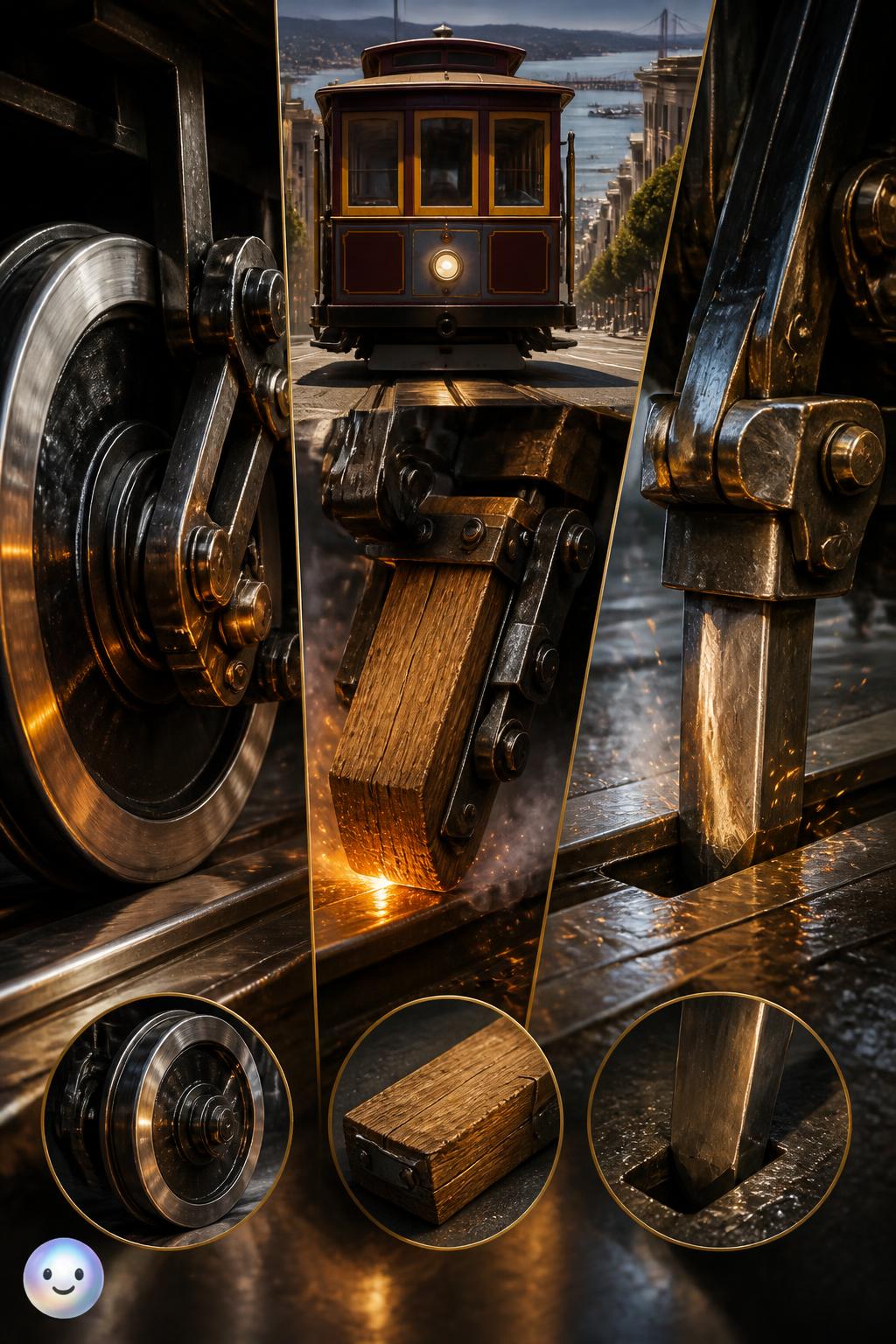
sonia Cable cars rely on three separate physical braking systems, including a desperate emergency brake that welds itself to the tracks.
Douglas fir brakes: Cable cars use wooden brake pads that smell like burning pine trees when stopping on steep hills.
sonia In the 1870s, cable car grip operators worked in open dummy cars while passengers sat in closed trailers. Modern single-ended cars combine these designs into one vehicle.
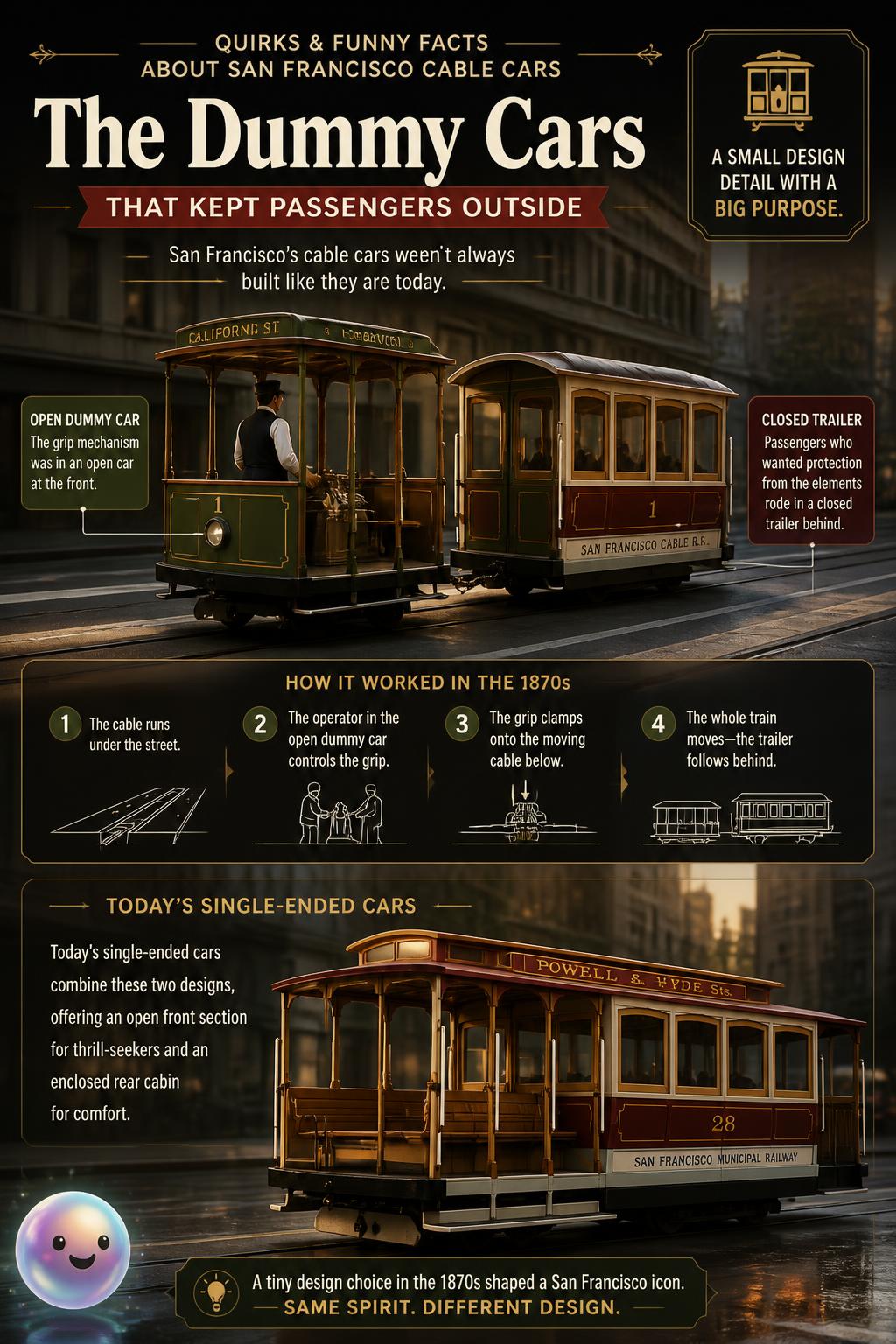
sonia Early cable cars featured an open-air front section called the 'dummy' where passengers sat around the gripman.
In early cable car designs, what was the open-front section holding the grip mechanism called?
An operator who controls the movement of a cable car by manipulating its gripping mechanism. In 1949, gripman Alexander Nielsen won San Francisco's first official bell-ringing competition in Union Square.
sonia Riders grip brass poles while standing on exterior running boards. This thrilling tradition started during nineteenth-century transit overcrowding and remains a popular tourist experience today
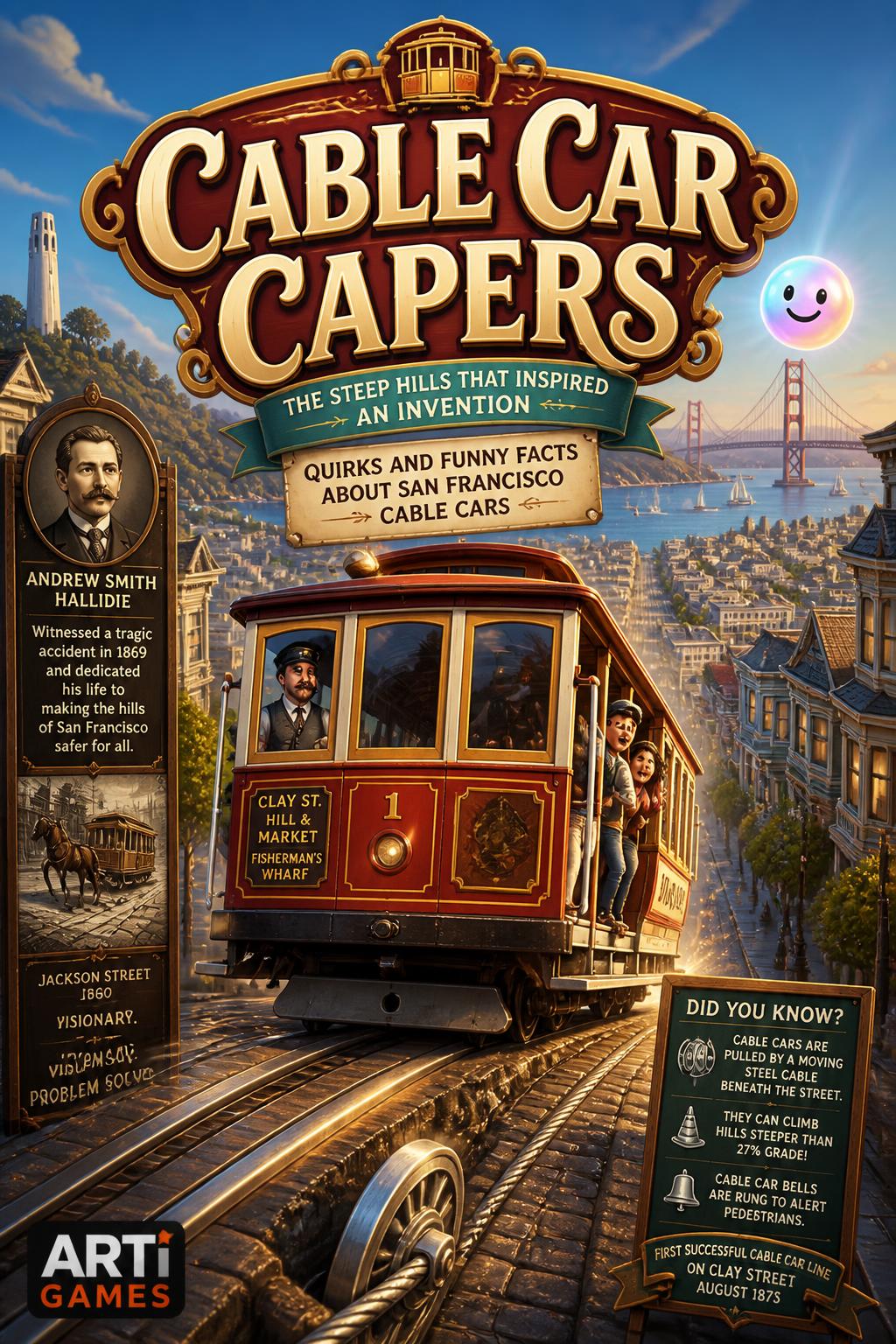
sonia Solve wacky transit mishaps to discover the funniest facts about San Francisco's cable cars.