The Egyptian journey to Aaru
The Tibetan transition through Bardos
Mapping the two afterlifes
What is the fundamental difference in how the two cultures viewed the physical body after death?
Who translated the Bardo Thodol in 1927 and named it the 'Tibetan Book of the Dead'?
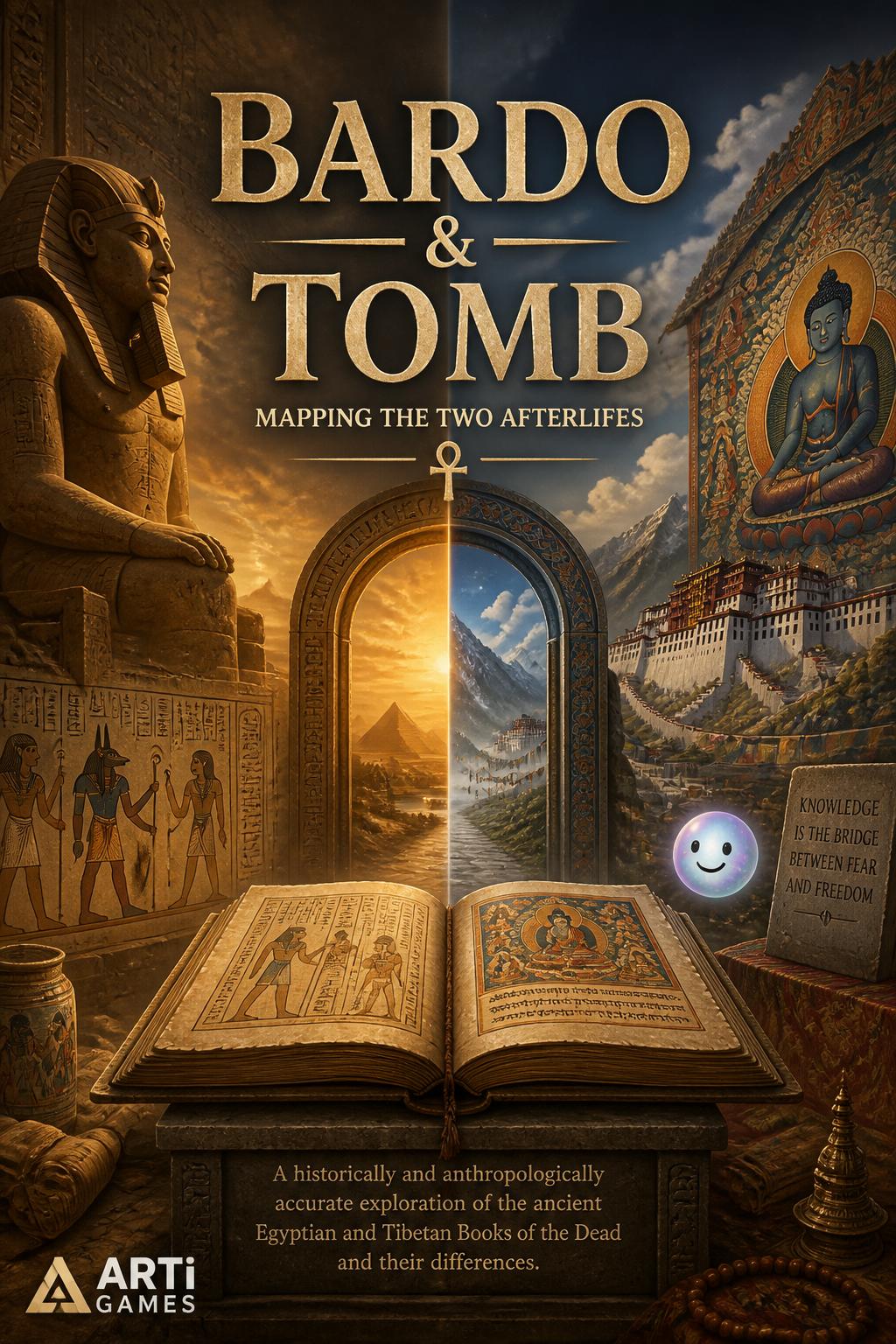
renaissanceman Decode sacred scrolls to discover how Egyptian and Tibetan books of the dead differ.
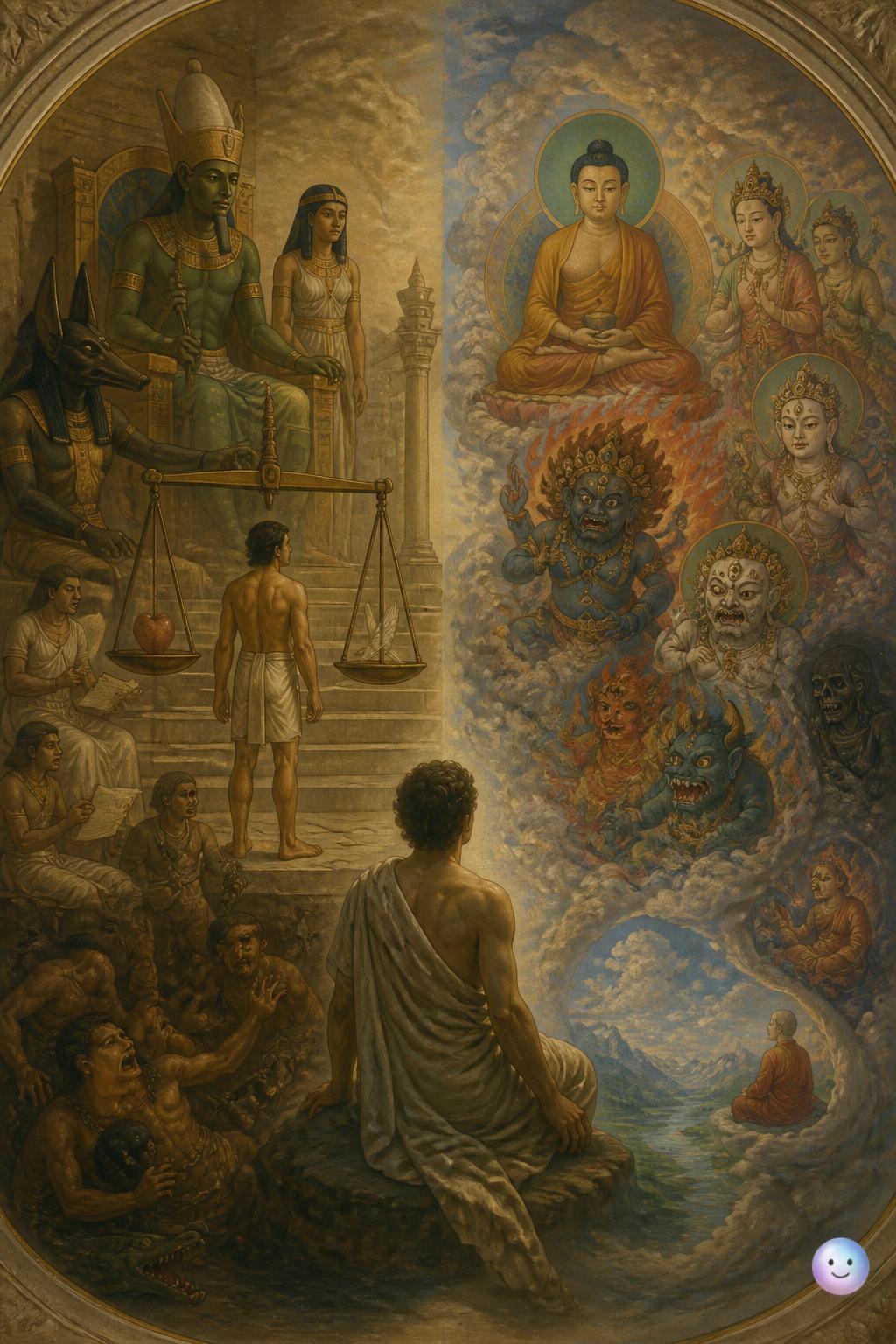
renaissanceman The Egyptian afterlife was a trial of moral judgment, whereas the Tibetan afterlife was a test of psychological recognition.
What traditional Tibetan practice involves offering the deceased's physical body to vultures?
renaissanceman Mapping the Two Afterlifes
Leave the wheel behind, leave the wheel behind, / Weigh the heart or free your mind.
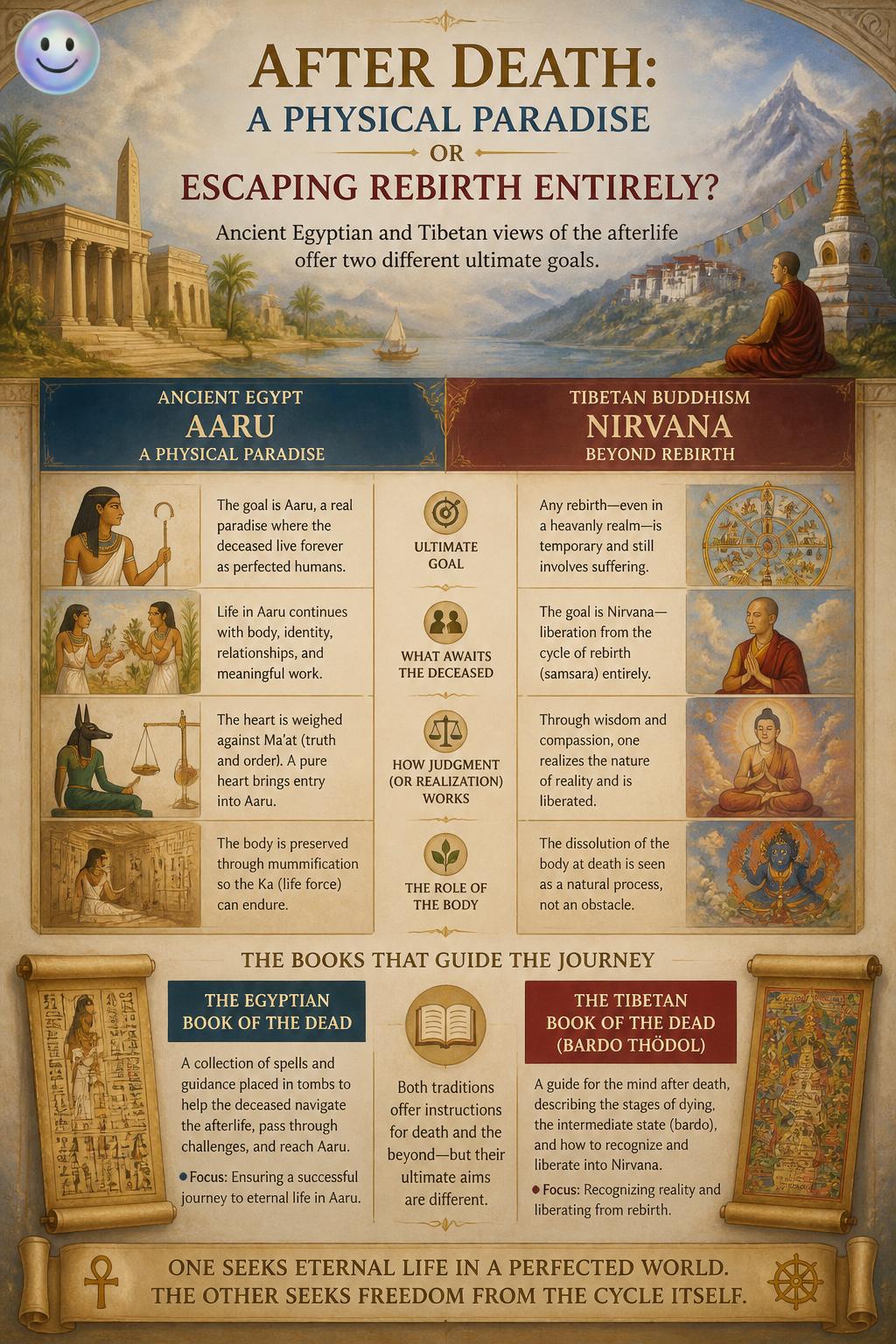
renaissanceman Egyptians aimed for a permanent, physical heaven, while Tibetan Buddhists sought to escape the cycle of rebirth entirely.
Which German Egyptologist coined the popular title 'Book of the Dead' for the Egyptian scrolls in 1842?
Book title origins: Neither the Egyptian nor Tibetan texts were originally called 'Books of the Dead'; Western translators invented these titles to attract readers in the 1800s and 1900s.
Which Swiss psychologist wrote a famous commentary on the Tibetan Book of the Dead, praising its psychological depth?
An intermediate or transitional state of existence between death and rebirth in Buddhist philosophy. The Bardo Thodol details three distinct transitional phases, contrasting with the twelve cavernous divisions of Egypt's Duat.