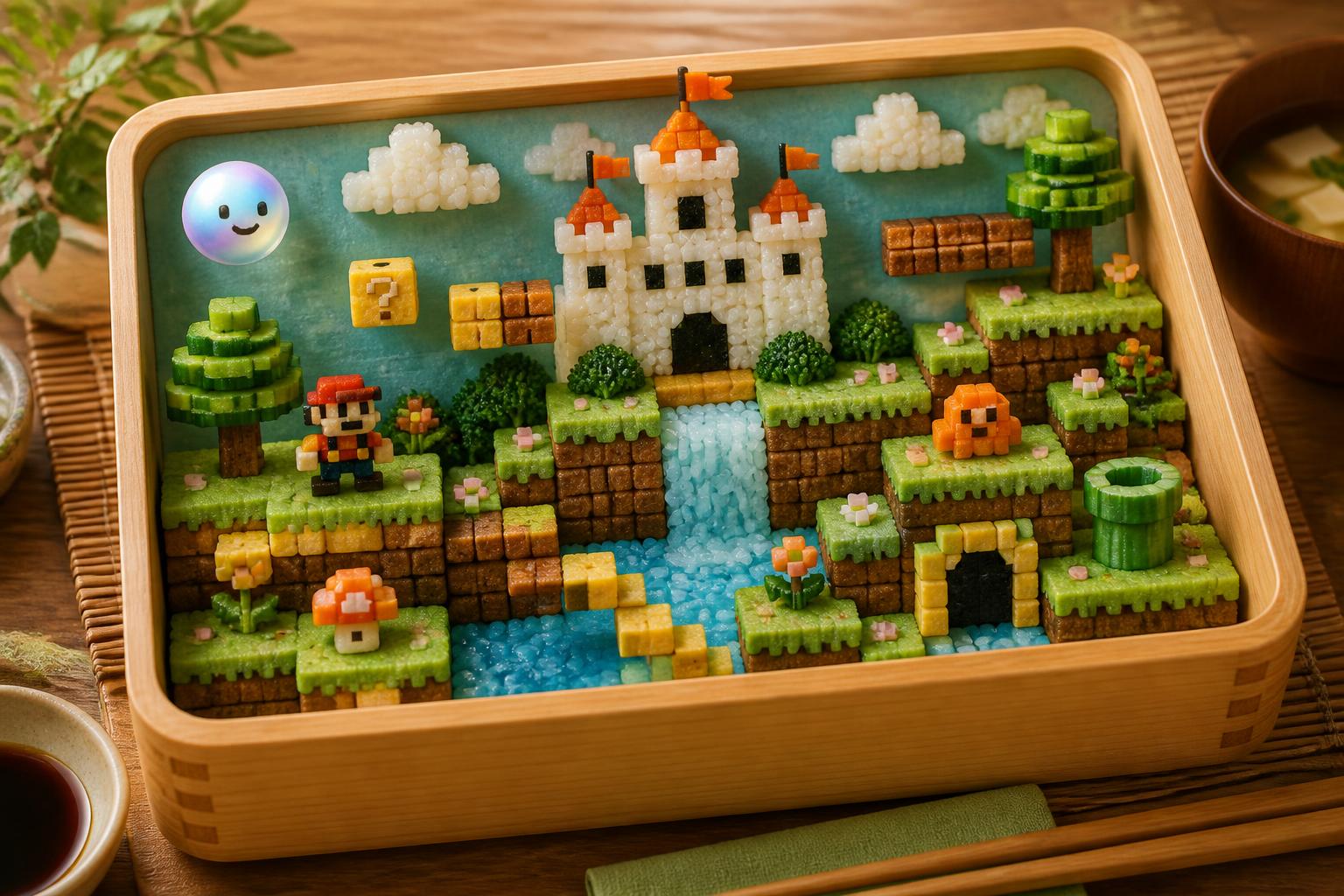

A sweet, layered Japanese rolled omelet cooked in a rectangular pan to form a fluffy, golden block. In retro-themed bento art, this delicious ingredient acts as a vibrant yellow pixel, perfect for rendering classic game screens, glowing power-ups, or vintage hardware color palettes.
The grid and the grain
Hardware color palettes and edible dyes
Layering depth from parallax scrolling to bento levels
Sprite collision and structural food engineering
A sweet, layered Japanese rolled omelet cooked in a rectangular pan to form a fluffy, golden block. In retro-themed bento art, this delicious ingredient acts as a vibrant yellow pixel, perfect for rendering classic game screens, glowing power-ups, or vintage hardware color palettes.
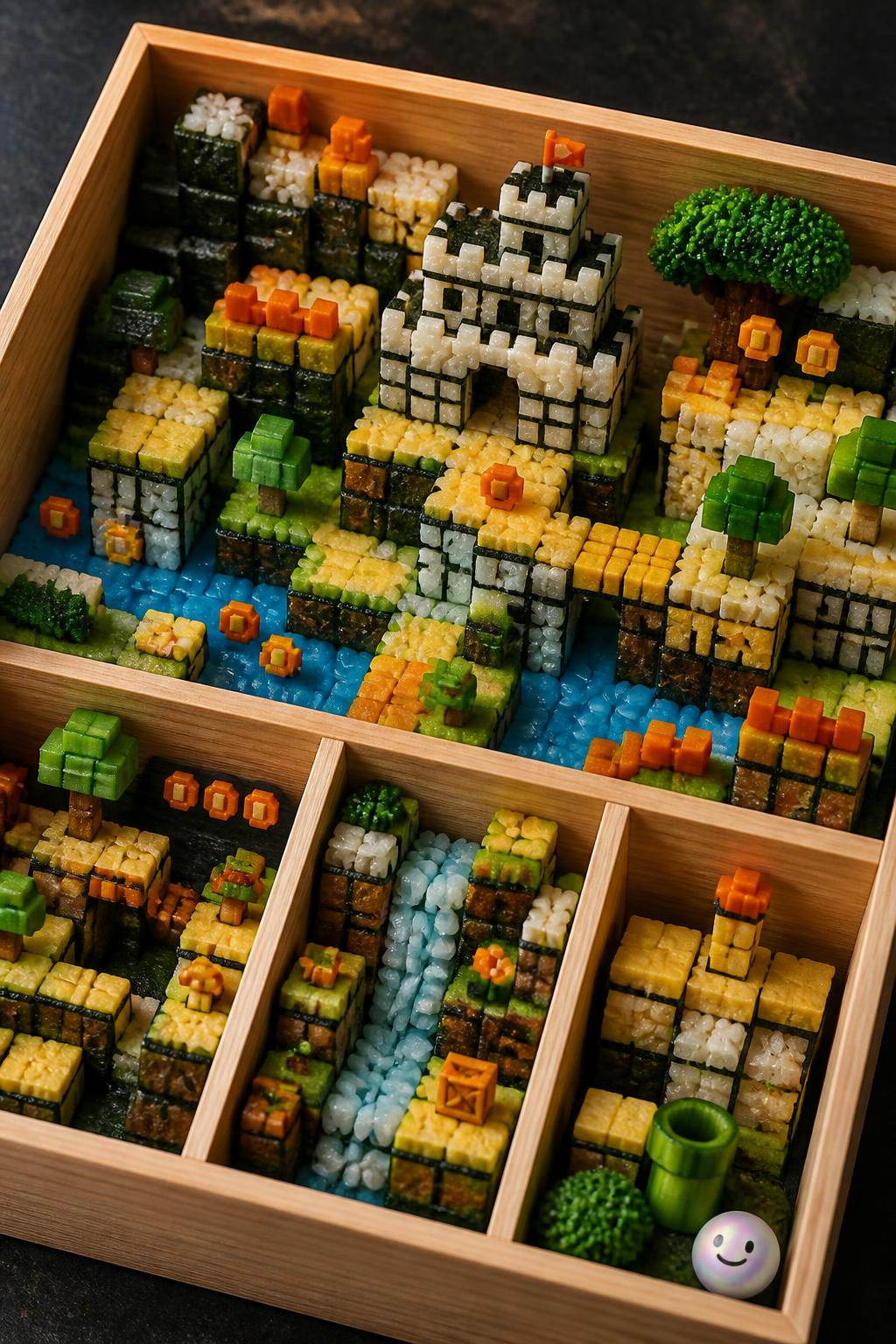
choko Retro Palettes and Edible Dyes
Blue pea flower for Famicom skies, matcha green for the Game Boy screen.

choko True blue was historically difficult to produce both on screens and on dinner plates.
Blue food: Blue is the rarest color in both retro game palettes and natural foods, often requiring clever hacks like red cabbage to produce.

choko The 16-bit era brought a massive expansion in color capabilities, transforming visual storytelling.
A range of colors used by an artist or characteristic of a particular medium. Kyaraben artists use natural ingredients like spirulina and purple sweet potato to replicate restricted 8-bit system colors.
What ingredient is often used as a solid white background layer to make colorful food shapes pop?

choko Assemble bento boxes dish by dish to discover the secrets of retro game pixel architecture.
Which vegetable juice is most commonly used in kyaraben to dye rice a vibrant pink or red?
What sweet Japanese rolled omelet is commonly used to represent bright yellow game elements?
Which console launched in 1989 boasting a 512-color palette to compete with Nintendo?