Optical illusions and how the brain paints the world
Synesthesia and the sensory crossover in art
The subconscious mind as an artistic co-pilot
How creating art rewires the brain
YOUR GOAL
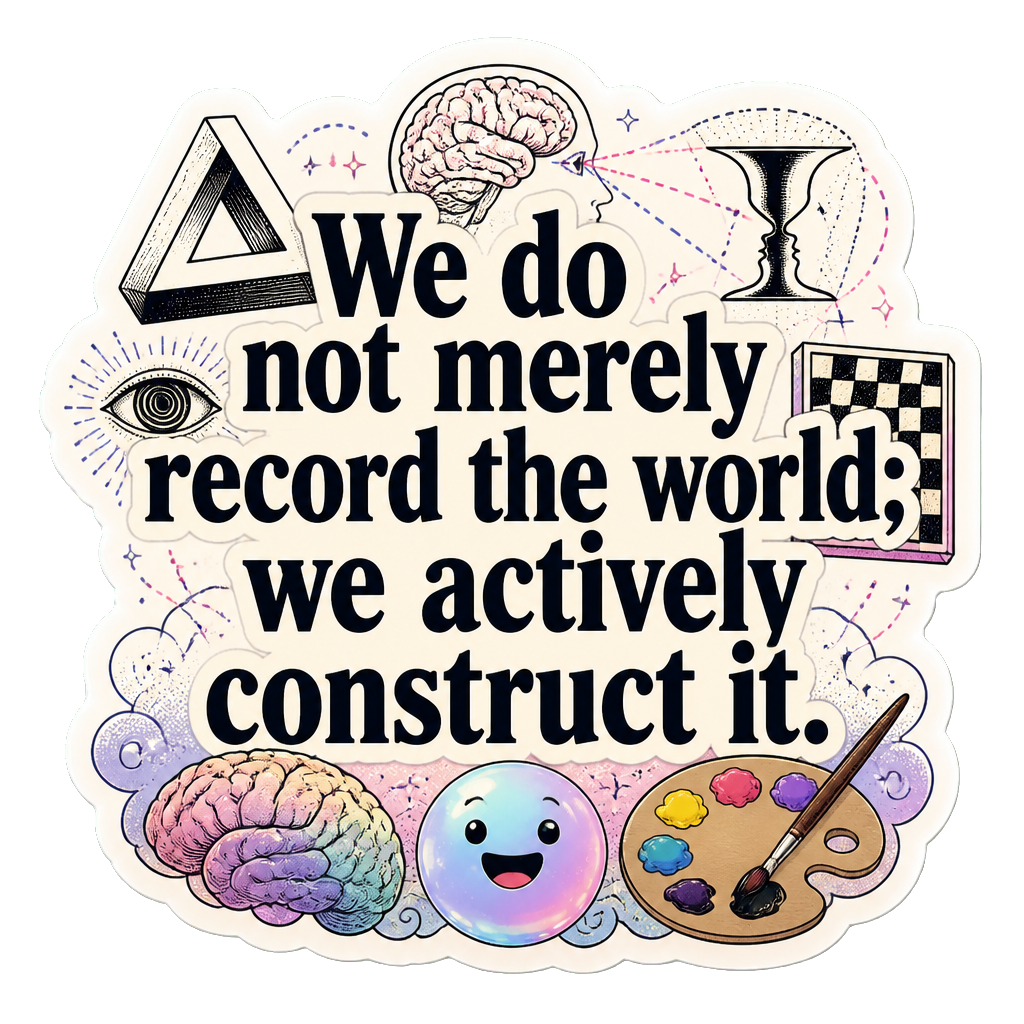
Master of The canvas in your head

choko Illusory Motion in Art
When my eyes make tiny jumps, the frozen lines start to dance!
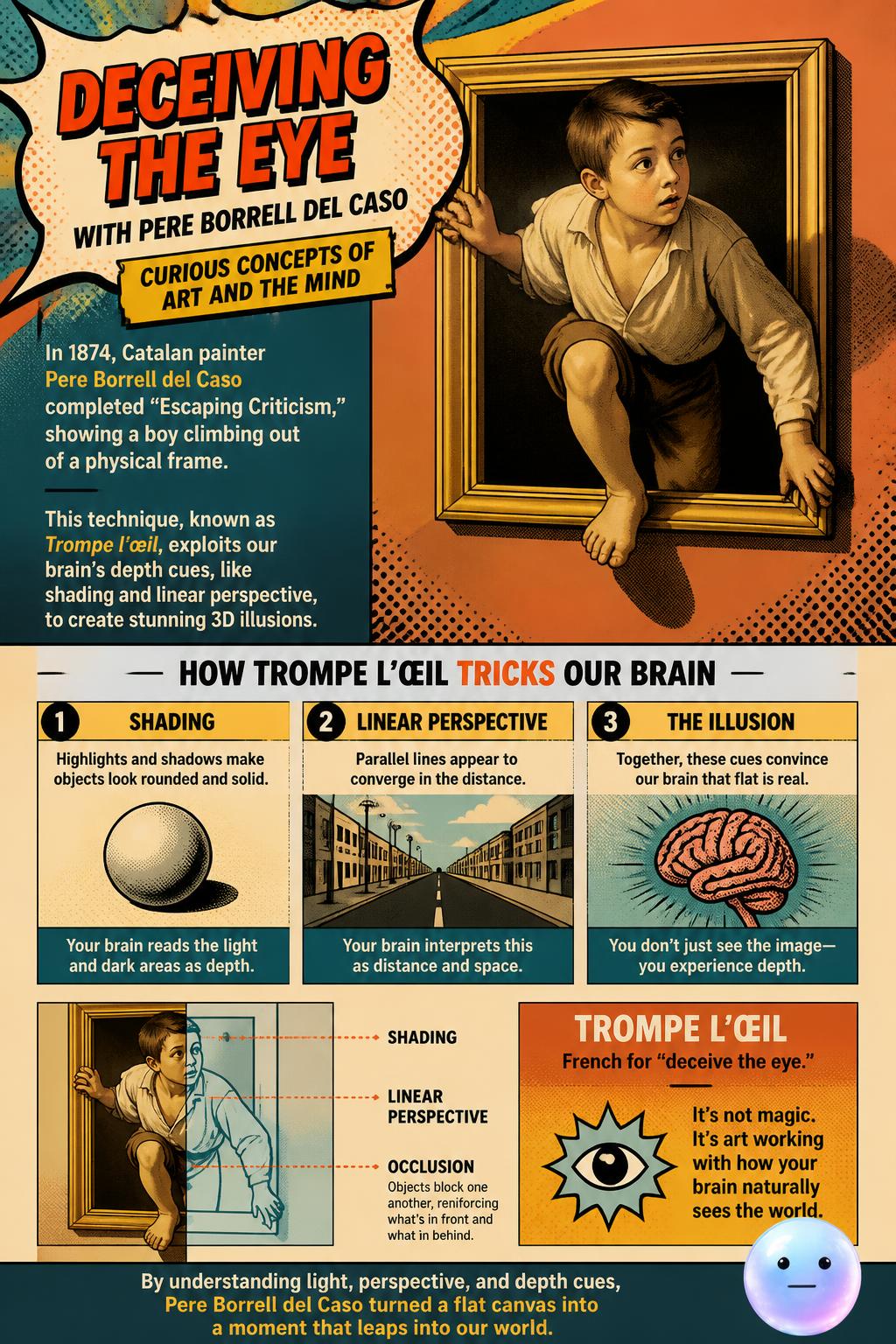
choko Escaping Criticism sends a boy climbing out of a physical frame by exploiting depth cues like shading and linear perspective.
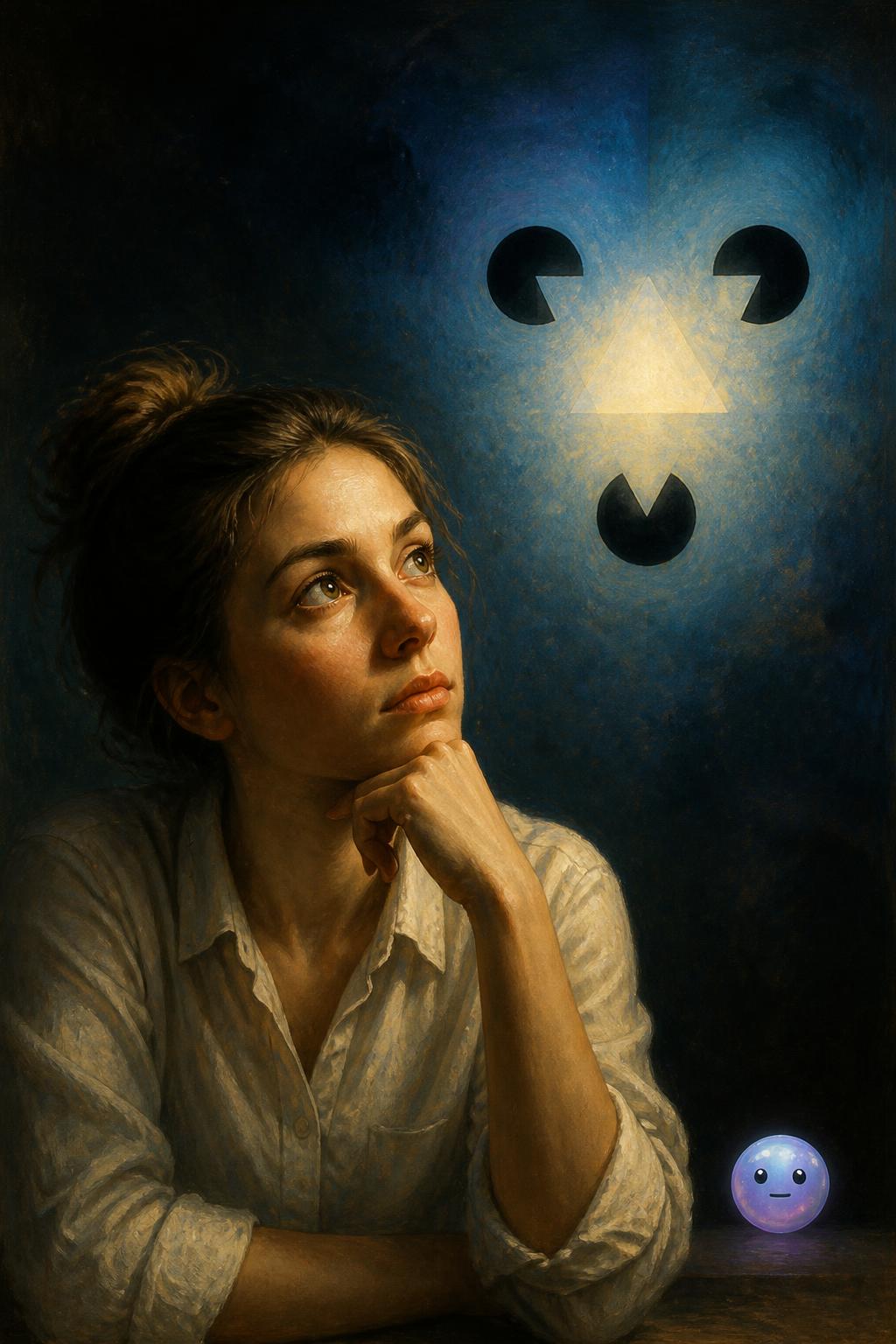
choko The Kanizsa Triangle shows how Gestalt principles make minds see non-existent borders
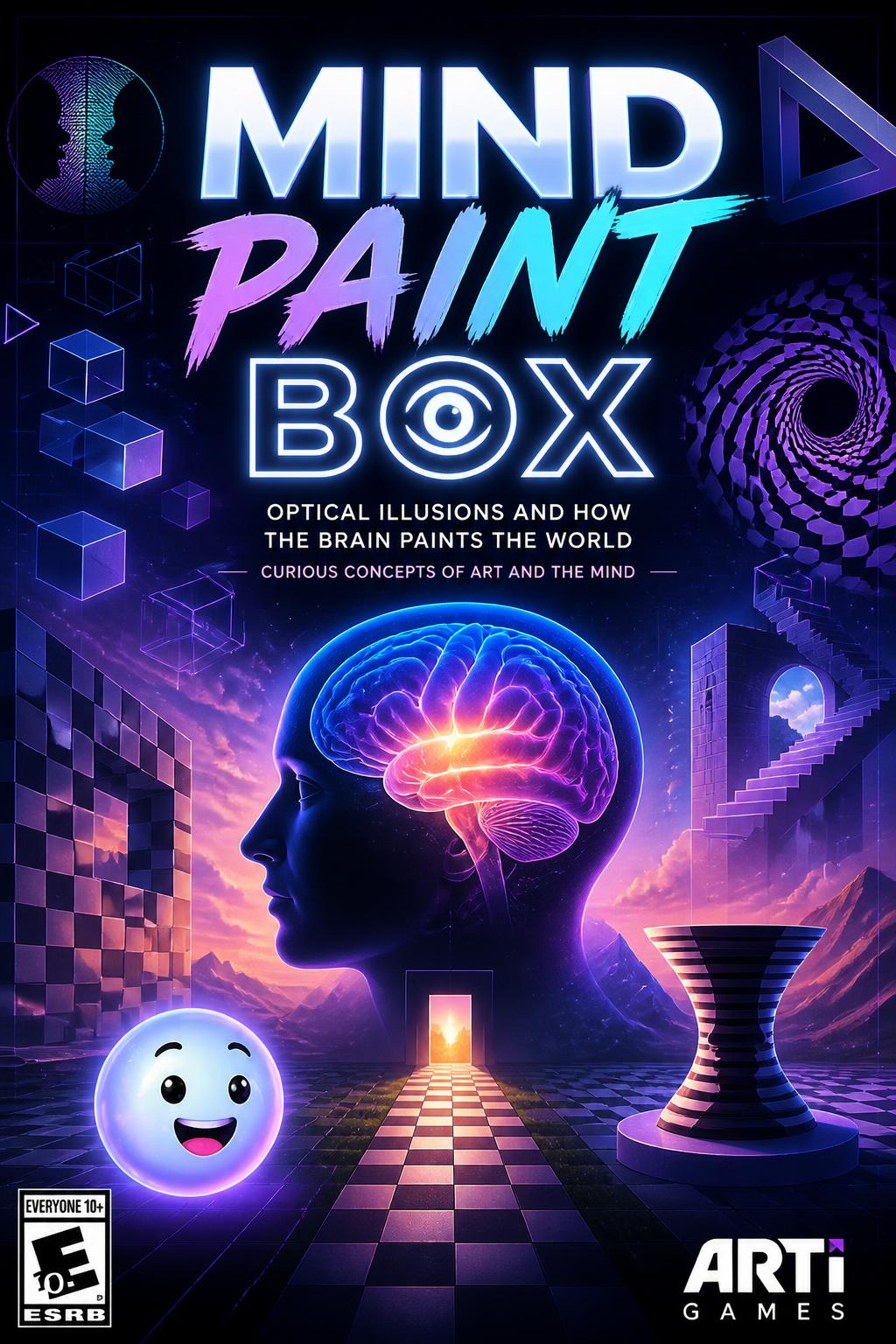
Optical illusions: The brain processes visual signals about 100 milliseconds slower than they happen, so illusions actually show the brain trying to predict the immediate future!
A deceptive or misleading intellectual or visual impression. In 1955, Gaetano Kanizsa designed a visual puzzle where the brain perceives an illusory white triangle.
In which year did Catalan artist Pere Borrell del Caso paint his famous trompe l'œil masterpiece 'Escaping Criticism'?
What specific shapes are arranged in the Kanizsa Triangle illusion to trick the brain into seeing a central triangle?
Which school of psychology explains why our brains fill in the gaps of the Kanizsa Triangle to see a complete shape?
Why does the human brain struggle to immediately spot the impossibility in M.C. Escher's 'Waterfall'?
Which mathematical concept did M.C. Escher rely on to design his mind-bending 1961 lithograph 'Waterfall'?
Which modern art movement is British painter Bridget Riley famous for pioneering in the early 1960s?