Chapter 1
What was on the medieval menu
Chapter 2
Faith, relics, and everyday worship
Chapter 3
The gritty reality of medieval warfare
Chapter 4
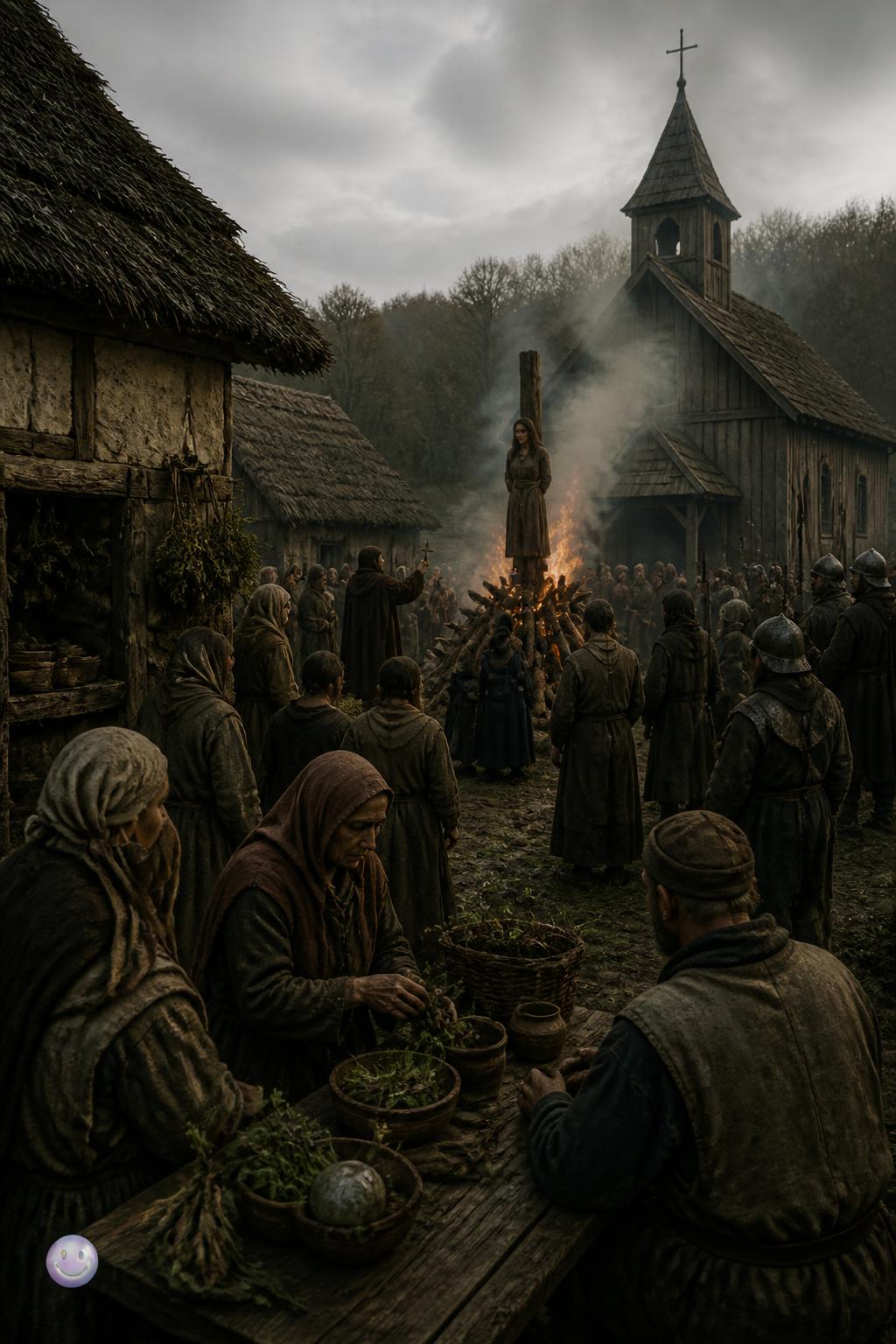
Magic, medicine, and the witch trials
Ch 4 · Magic, medicine, and the witch trials
renaissanceman The massive witch trials were not a medieval phenomenon, but peaked later during the Renaissance and Early Modern periods.
Quiz
During which historical era did the peak of European witch trials actually occur?
Quiz
In what year did the Catholic Church ban priests from participating in trials by ordeal?
Quiz
Who wrote the infamous 1486 book 'Malleus Maleficarum' (Hammer of Witches)?
Fun Fact
Placebo effect: Medieval doctors sometimes prescribed 'theriac,' a complex medicine with up to 64 ingredients, including snake skin and opium, which actually did ease pain.
renaissanceman Wise women successfully treated headaches with willow bark, while medieval medicine relied on balancing four humors.
Quiz
Which technological invention helped spread the 'Malleus Maleficarum' rapidly across Europe?
Quiz
Which medical theory dominated medieval healthcare, focusing on balancing bodily fluids?
Quiz
What natural ingredient in willow bark did medieval wise women use to treat pain?
Glossary
maleficium (noun)
An act of malevolent magic or sorcery intended to cause harm. In 1486, Heinrich Kramer's treatise Malleus Maleficarum codified the term to prosecute suspected sorcerers during European trials.
An act of malevolent magic or sorcery intended to cause harm. In 1486, Heinrich Kramer's treatise Malleus Maleficarum codified the term to prosecute suspected sorcerers during European trials.
Quiz
What did the 8th-century Council of Paderborn declare about the belief in witchcraft?