
What is a major risk of using a "Shared Kernel" relationship between
What is a major risk of using a "Shared Kernel" relationship between two software teams?
The blueprint of shared language
Drawing the borders
The building blocks of the model
Putting DDD to work

sonia Bounded Contexts prevent system bugs by giving a word like Account exactly one clear meaning.
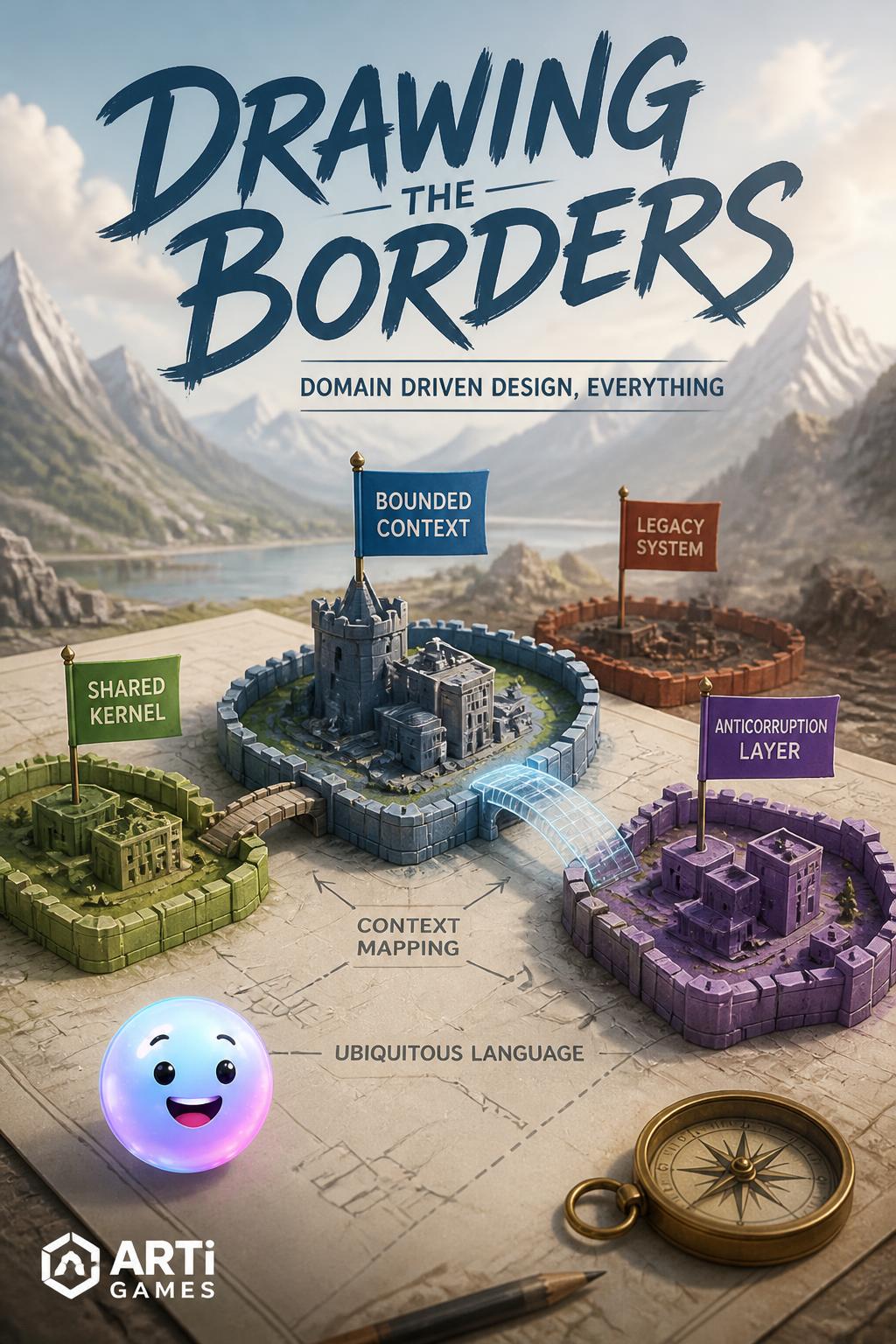
sonia Drag the boundary line to isolate terms and learn bounded contexts in Domain-Driven Design.
If the "Billing" team must strictly follow whatever data formats the "Catalog" team provides, what is the Catalog team's position in DDD context mapping?
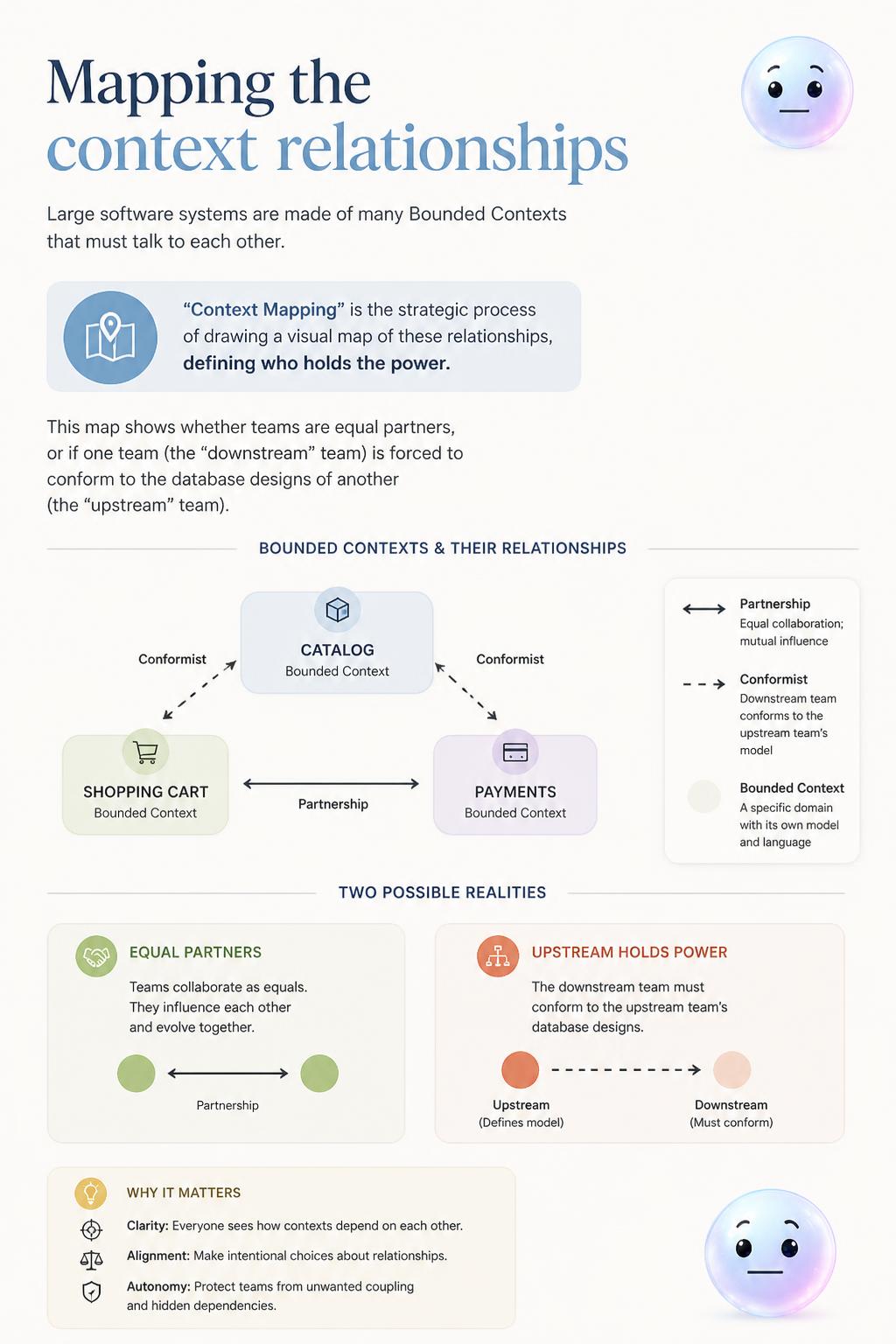
sonia Context Mapping visually defines the power dynamics between Bounded Contexts, revealing if software teams collaborate as equals or conform to others.
In Domain-Driven Design context mapping, what do the terms "Upstream" and "Downstream" describe?
Which of the following best describes why a single, company-wide "enterprise data model" is often avoided in Domain-Driven Design?

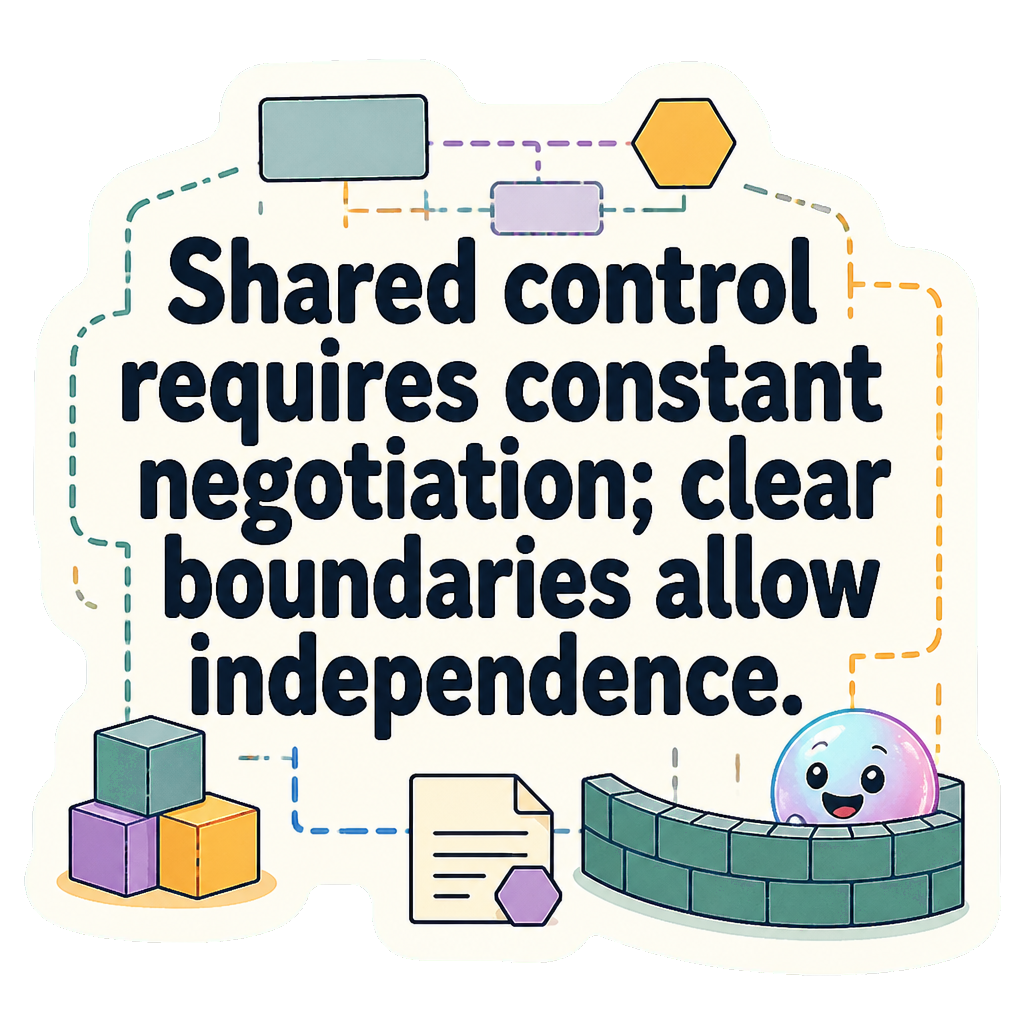
sonia A shared kernel prevents duplicate work but requires teams to coordinate every change.
What is a major risk of using a "Shared Kernel" relationship between two software teams?
The boundary advantage: Amazon's famous 'two-pizza teams' rule works beautifully with Bounded Contexts, as each small team can own a single, independent boundary without stepping on other teams' toes!
What visual tool do Domain-Driven Design practitioners use to show the boundaries and relationships of an entire software organization?
sonia The Anticorruption Layer
Build the Anticorruption Layer—(oh-oh, keep it clean!) / Translate the legacy code—(yeah, save our domain!)
A boundary within software development where a specific domain model and its terminology are consistently defined and applied. Eric Evans introduced this boundary in 2003 to isolate distinct business models and prevent conflicting terminology.
In Domain-Driven Design, what happens when a team adopts a "Conformist" relationship with an upstream team?