The spark of imitation
The triangle of wanting
The scapegoat mechanism
The algorithmic mirror
sloane Billionaire Peter Thiel invested in Facebook because he recognized that humans naturally copy each other.
According to modern critics, how do social media notifications exploit human psychology?
What happens when social media algorithms show you content based on what your peers are engaging with?

sloane Swipe viral trends to discover why social media makes us want the same things.
sloane Instagram and TikTok design feeds to show our peers' lives, supercharging our impulse to imitate them.
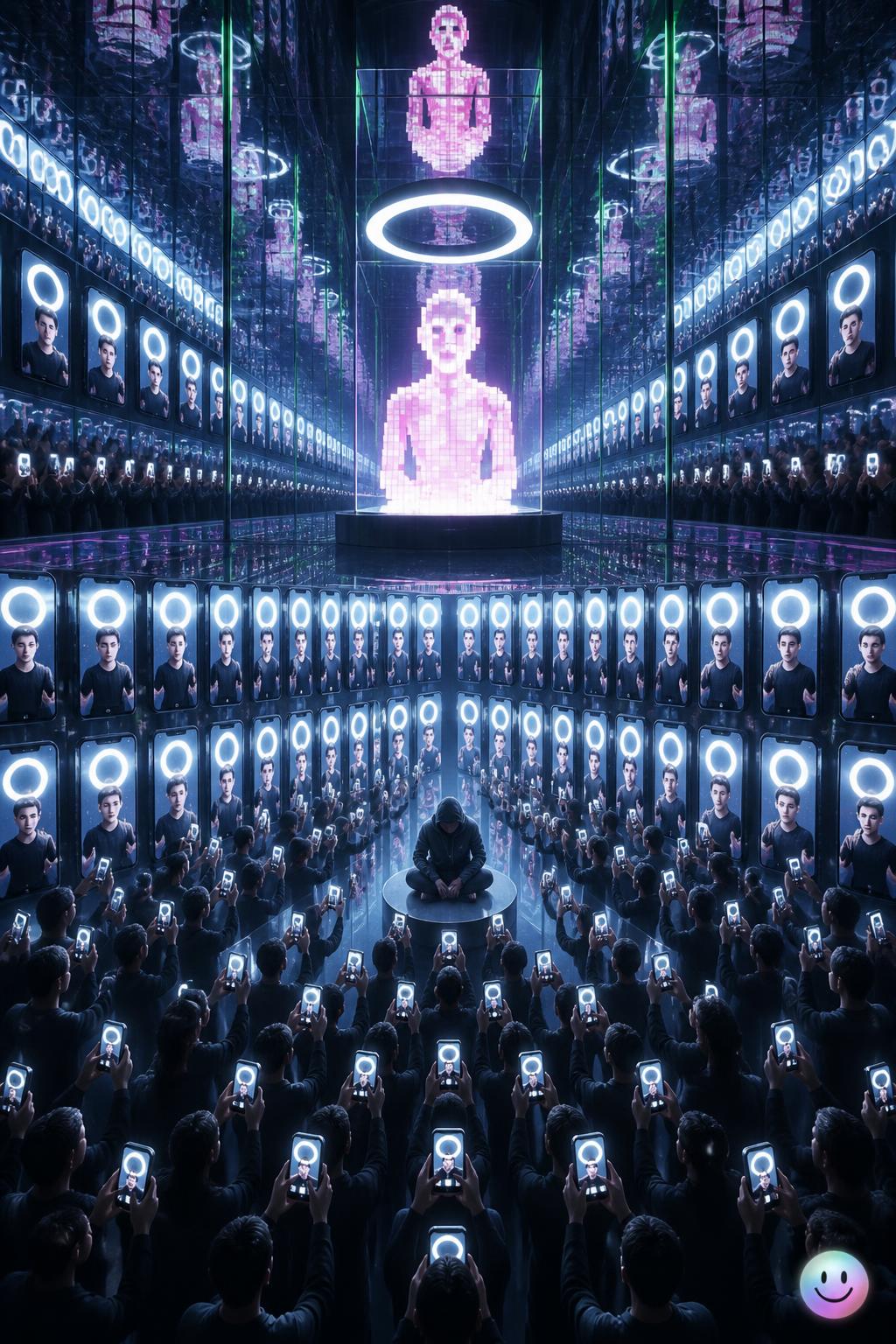
sloane Social media platforms do not just connect us; they display our models' desires in real-time.
What is the most effective way to break free from a negative loop of mimetic desire?
What term describes the anxiety of missing out on experiences that others are visibly enjoying online?
sloane Social media likes let algorithms and crowds choose what we want, bypassing our own judgment.
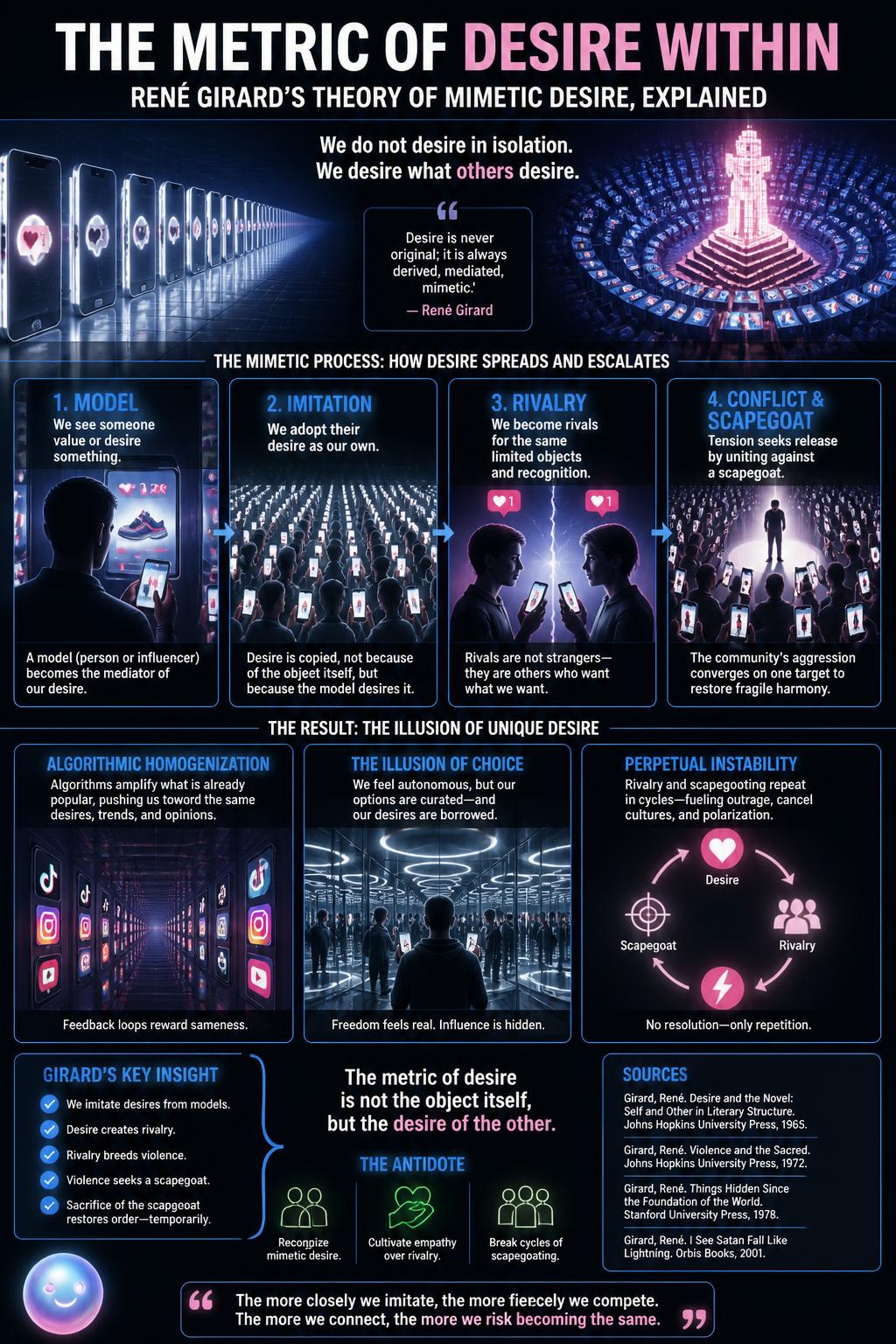
sloane Likes, retweets, and view counts serve as digital scorecards that tell us what to want.
Why did Peter Thiel believe Facebook would be highly successful based on René Girard's theories?
What digital feature acts as a direct, quantifiable measurement of mimetic value on social media?
The Stanford connection: Peter Thiel studied under René Girard at Stanford University in the late 1980s, which deeply influenced his early venture capital investments.
sloane We can break social media's mimetic loop by recognizing who we copy and choosing offline hobbies.
In what decade did René Girard teach at Stanford University, where he influenced future technology leaders?
Which famous venture capitalist and early Facebook investor was a direct student of René Girard at Stanford University?
A digital system that analyzes a user's online behavior to reflect their preferences and identity back to them. Social platforms leverage this feedback loop to accelerate the imitative rivalries theorized by philosopher René Girard.