Chapter 1
From the streets to the salon
Chapter 2
Sacred traditions in modern museums
Chapter 3
Contemporary canvas crossovers
Chapter 4
The challenge of the living canvas
Ch 2 · Sacred traditions in modern museums
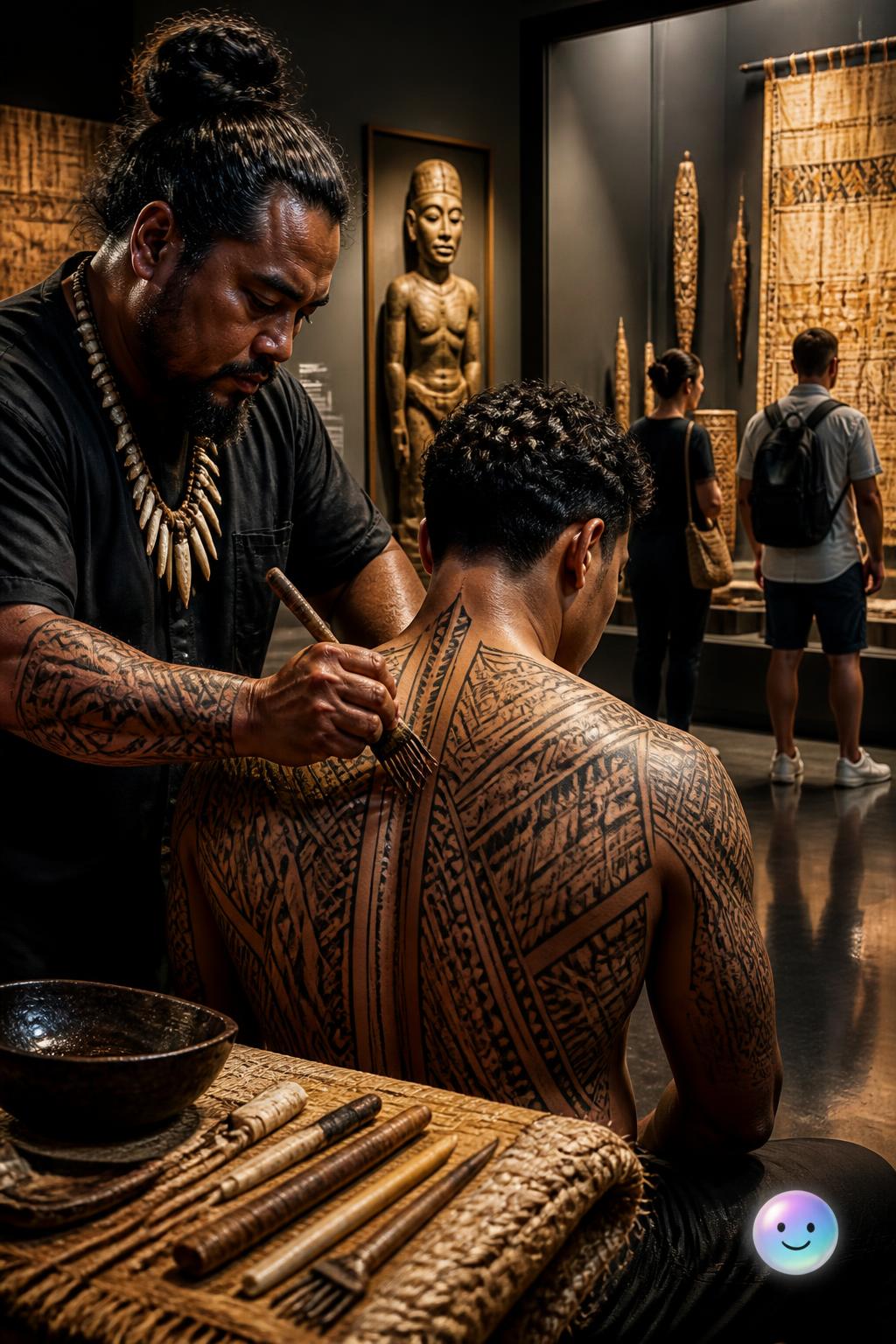
choko Traditional Pacific tattooing is celebrated in global exhibitions as a sacred, living cultural archive.
Quiz
What traditional Japanese woodblock print style heavily influenced the visual narratives of Irezumi?
Quiz
During which historical Japanese era did traditional Irezumi develop alongside woodblock prints?
Quiz
What tool did traditional Maori artists use to carve ancestral patterns directly into the skin?
BETA
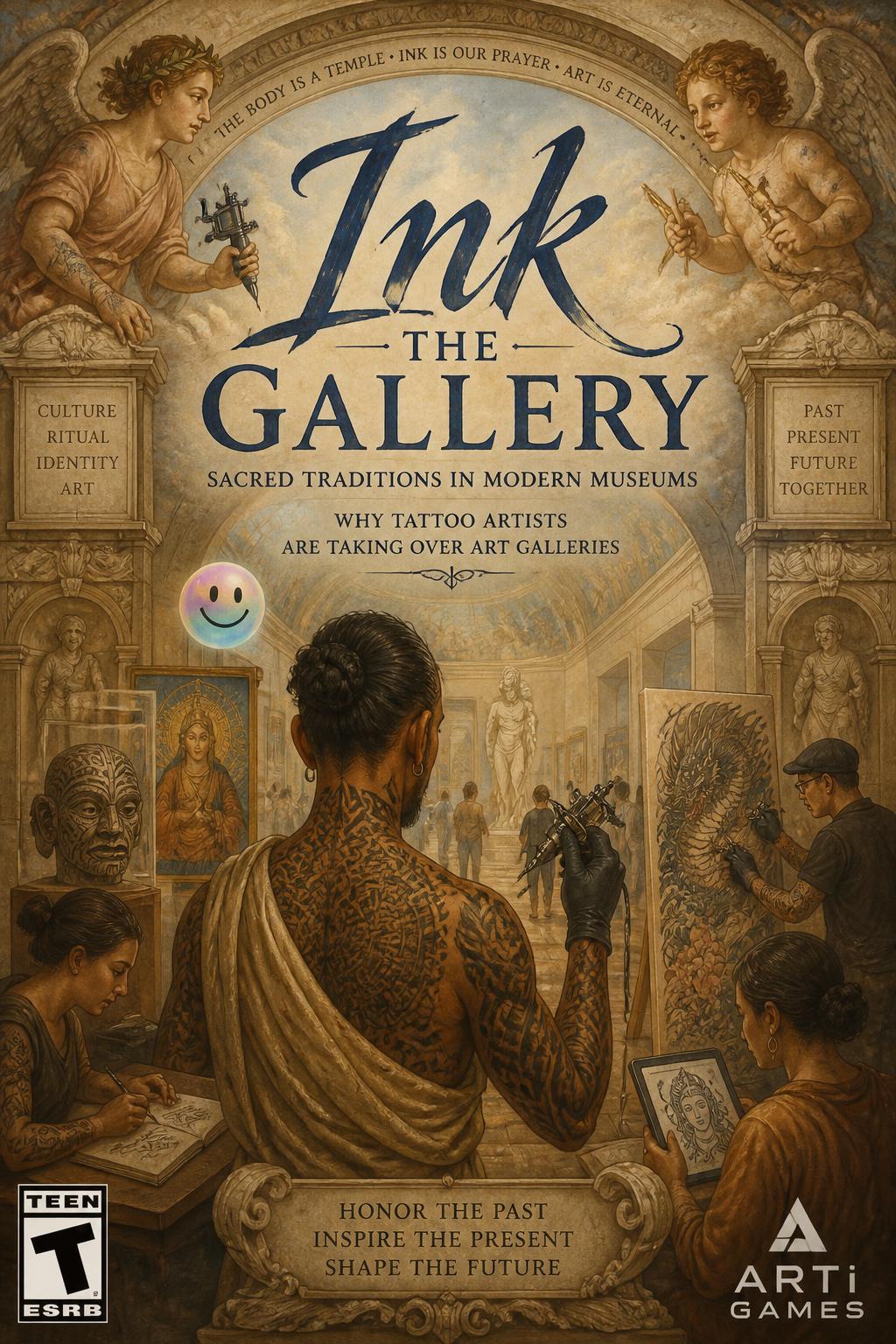
choko Hang tattoo masterpieces in the gallery to discover how body art became fine art.
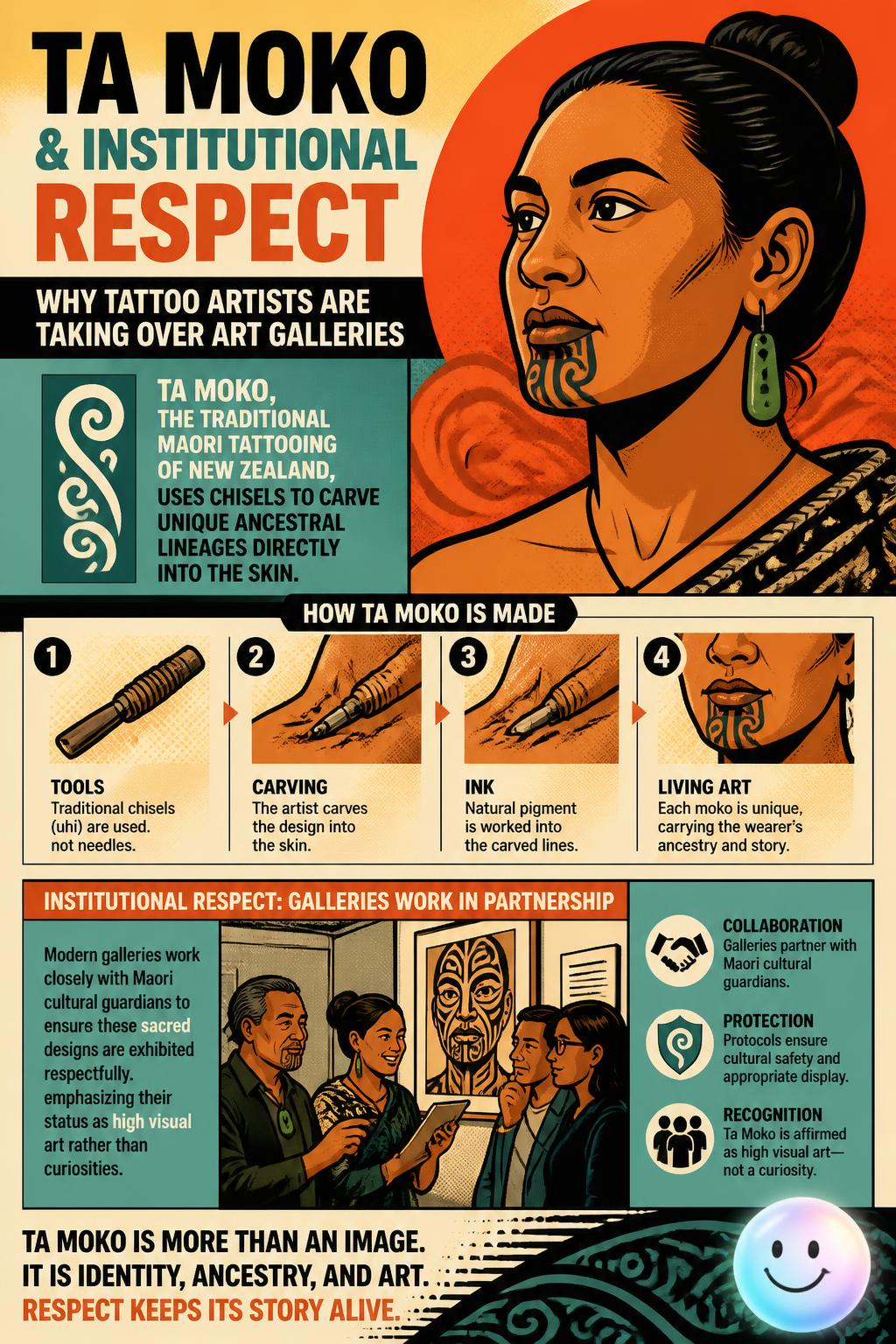
choko The deeply sacred facial carvings of the Maori are now protected and celebrated in art institutions.
Quiz
Which Paris museum hosted a major exhibition celebrating indigenous tattooing practices from around the world?
Quiz
What is the traditional facial and body tattooing of the Maori people of New Zealand called?
Quiz
What is the modern name for the ancient, machine-free tattooing technique that uses a single manual needle?
choko Sacred Traditions in Museums
We're inking the sacred line, right on the museum floor!
choko Explore the global resurgence of hand-poke tattooing and discover why stick-and-poke artists are taking over contemporary art galleries.
Quiz
For how many years has the traditional Samoan tatau been practiced using bone and shell tools?
Quiz
Which master Japanese tattoo artist has had his full-body Irezumi works documented and celebrated by global museums?
Fun Fact
Oldest tattooed mummy: Ötzi the Iceman, who lived around 3300 BCE, has 61 tattoos made of soot, located primarily on his joints to treat pain.
Glossary
repatriation (noun)
The return of cultural artifacts or human remains to their country of origin. Since the 1980s, museums have returned sacred, tattooed Māori remains to New Zealand.