The birth of a science
How we learn and remember
The social animal
The brain's hardware
aphrodite1313 Galileo Galilei launches the scientific revolution by testing ancient physics theories

airica Balance the id, ego, and superego to discover how Freud mapped the human mind.

The Unconscious Mind: During academic psychology's birth, Sigmund Freud revolutionized the field by proposing that most of our thoughts and feelings are completely hidden from us.
The molecule containing the genetic instructions that shape not only our physical traits but also influence our behaviors, learning, and minds. In academic psychology, decoding this 'operating system' marked the birth of behavioral genetics, helping us understand how our biological blueprint influences who we are. Think of it as the ultimate instruction manual written in a four-letter code, helping psychologists figure out how much of our personality is shaped by nature versus nurture.

With neuroscience calling the unconscious a 'prediction machine,' what is yours constantly anticipating?
During the late 19th century, as academic psychology was establishing itself as a formal science, Sigmund Freud introduced his theory of the unconscious mind. How did Freud's view of the mind challenge the focus of early experimental psychologists?
Which early psychological school focused on analyzing the basic structural elements of consciousness?
What therapeutic method did Sigmund Freud develop to explore the unconscious mind?
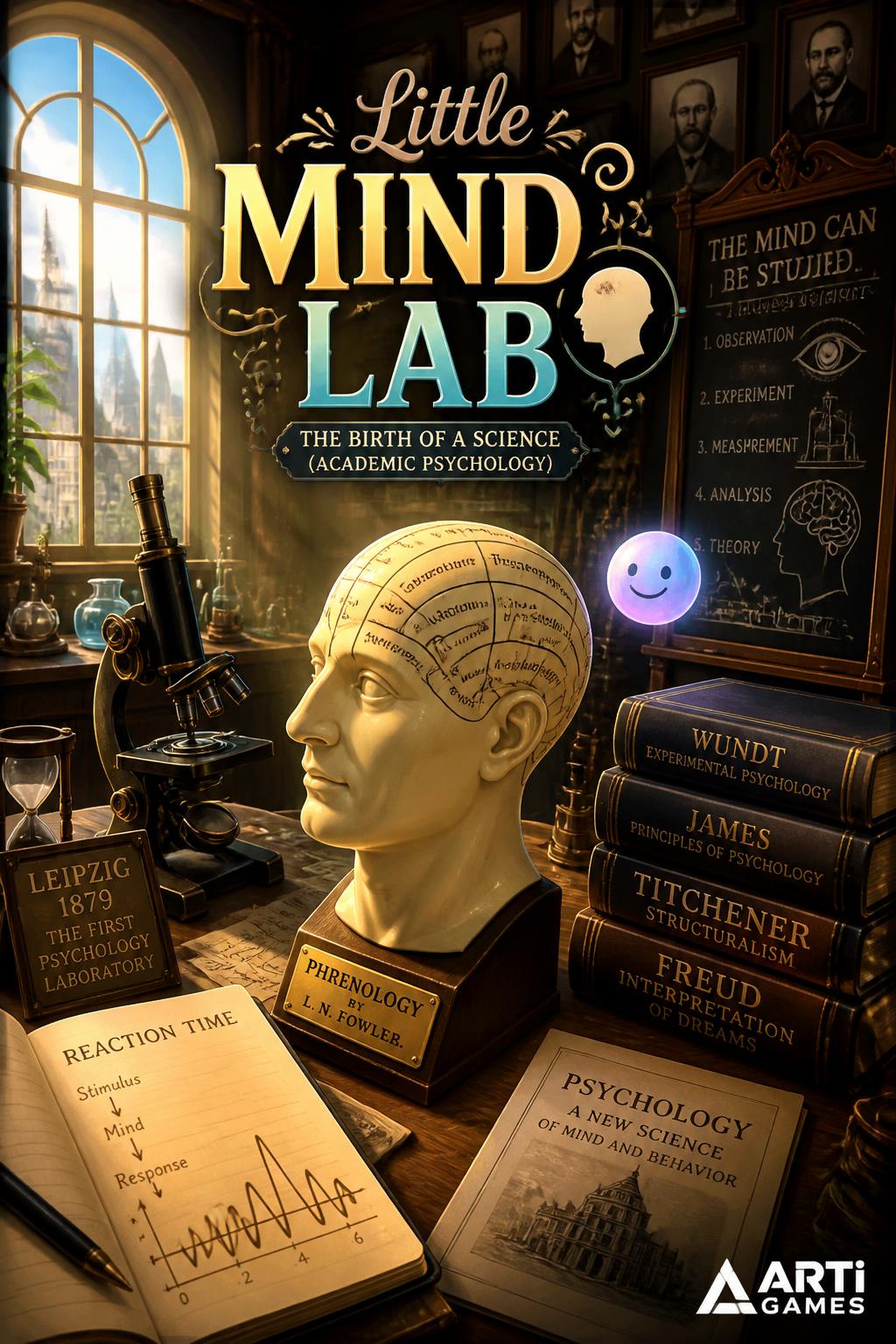
thewriter Decode classic psychology experiments to learn how the human mind makes decisions.
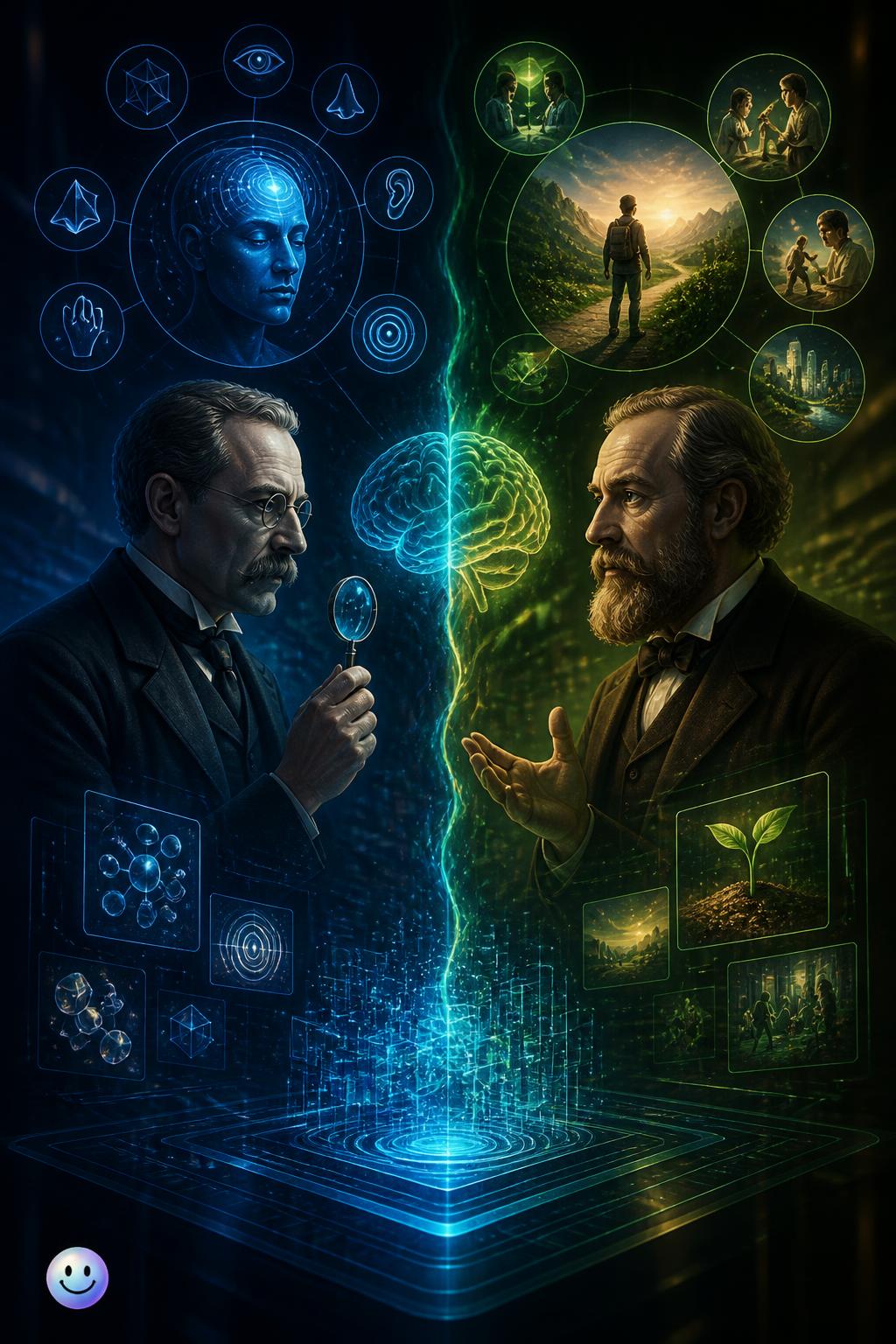
thewriter Early psychologists clashed over whether to study the structure of the mind or its practical functions.
Who wrote the highly influential 1890 textbook 'Principles of Psychology' to champion functionalism?
In what year did Wilhelm Wundt establish the first formal psychology laboratory in Germany?
thewriter The Birth of Academic Psychology
They measured human thoughts inside a Leipzig room, And watched a brand new science suddenly bloom.
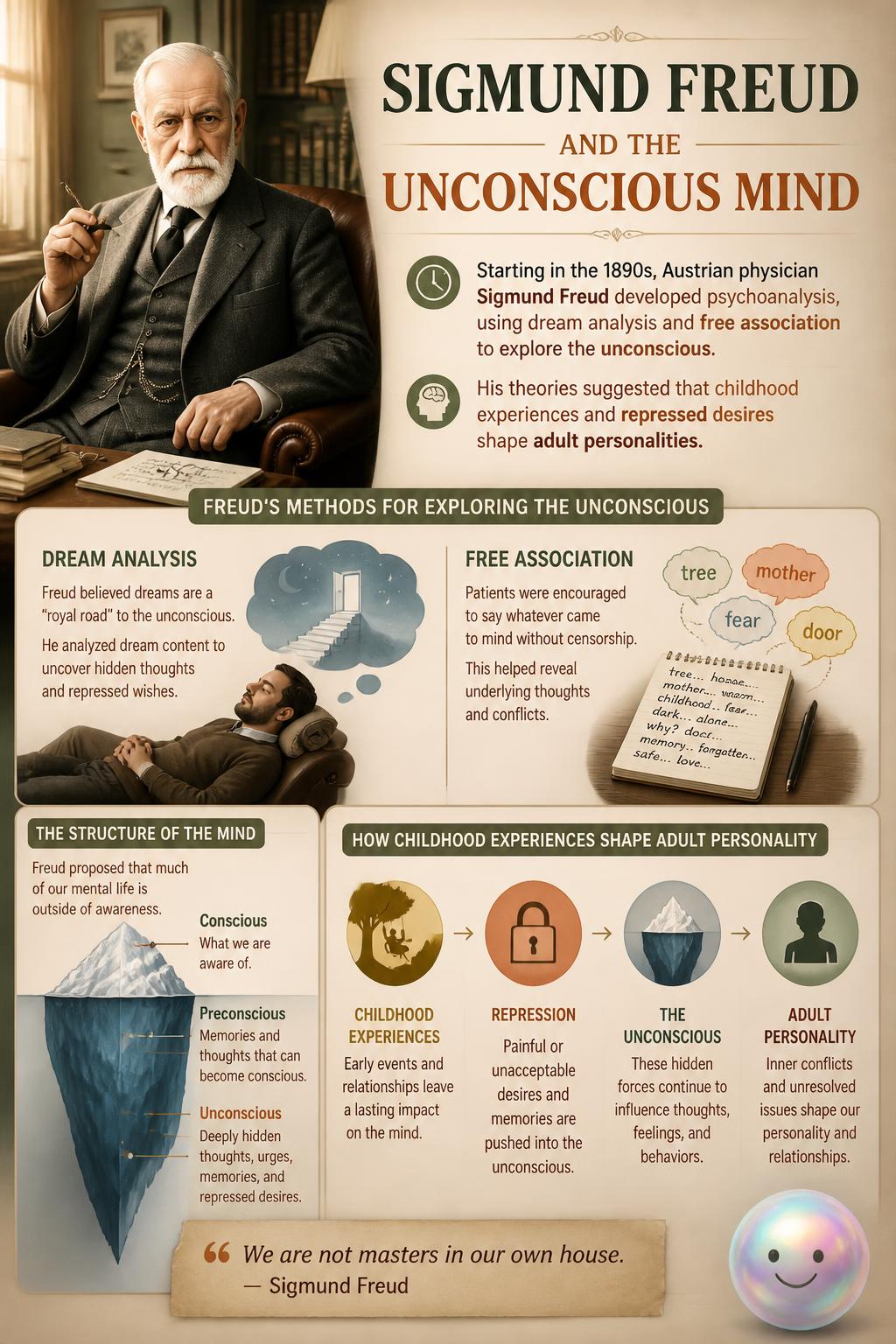
thewriter Psychoanalysis introduced the revolutionary idea that hidden, unconscious desires drive human behavior.
First psychology lab: Wilhelm Wundt's 1879 laboratory in Germany was so small it originally shared space with a philosophy lecture hall.
Which researcher is widely considered the founder of behaviorism in the United States?
Which psychologist invented the operant conditioning chamber to study rewards and punishments?
The examination or observation of one's own mental and emotional processes. Wilhelm Wundt used this method in 1879 at Leipzig University to establish psychology as an independent science.