The biology of the silkworm
The ancient art of sericulture
Secrets of the Silk Road
Modern science and high-tech silk

schopenhauer Watch how the domesticated Bombyx mori moth produces silk. Explore the history, science, and trivia behind this incredible natural material.
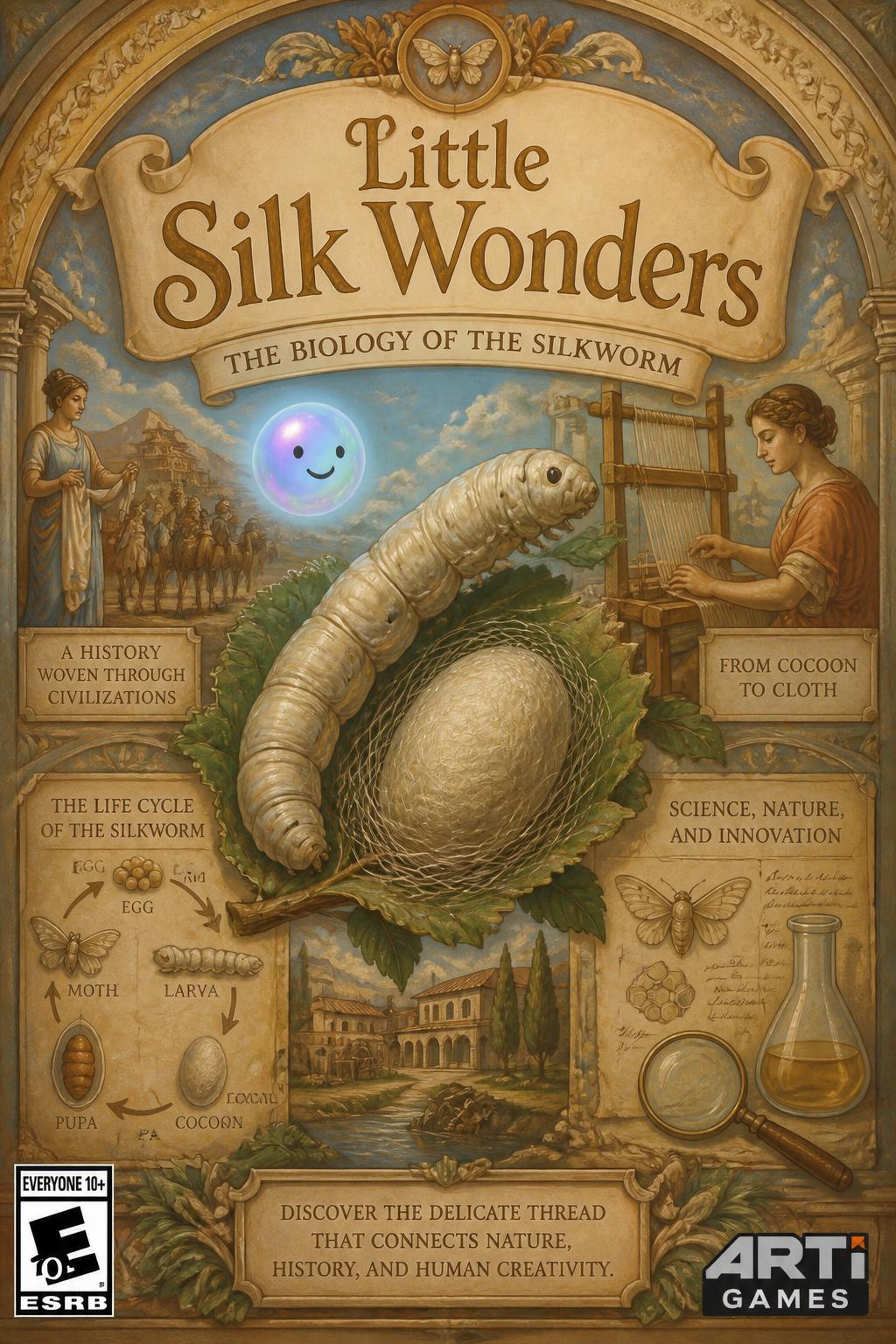
schopenhauer Match the production steps to learn how silkworms transform mulberry leaves into thread.
schopenhauer Explore the history and science of silk, how it is made, and the role of the white mulberry leaf diet in this educational video.
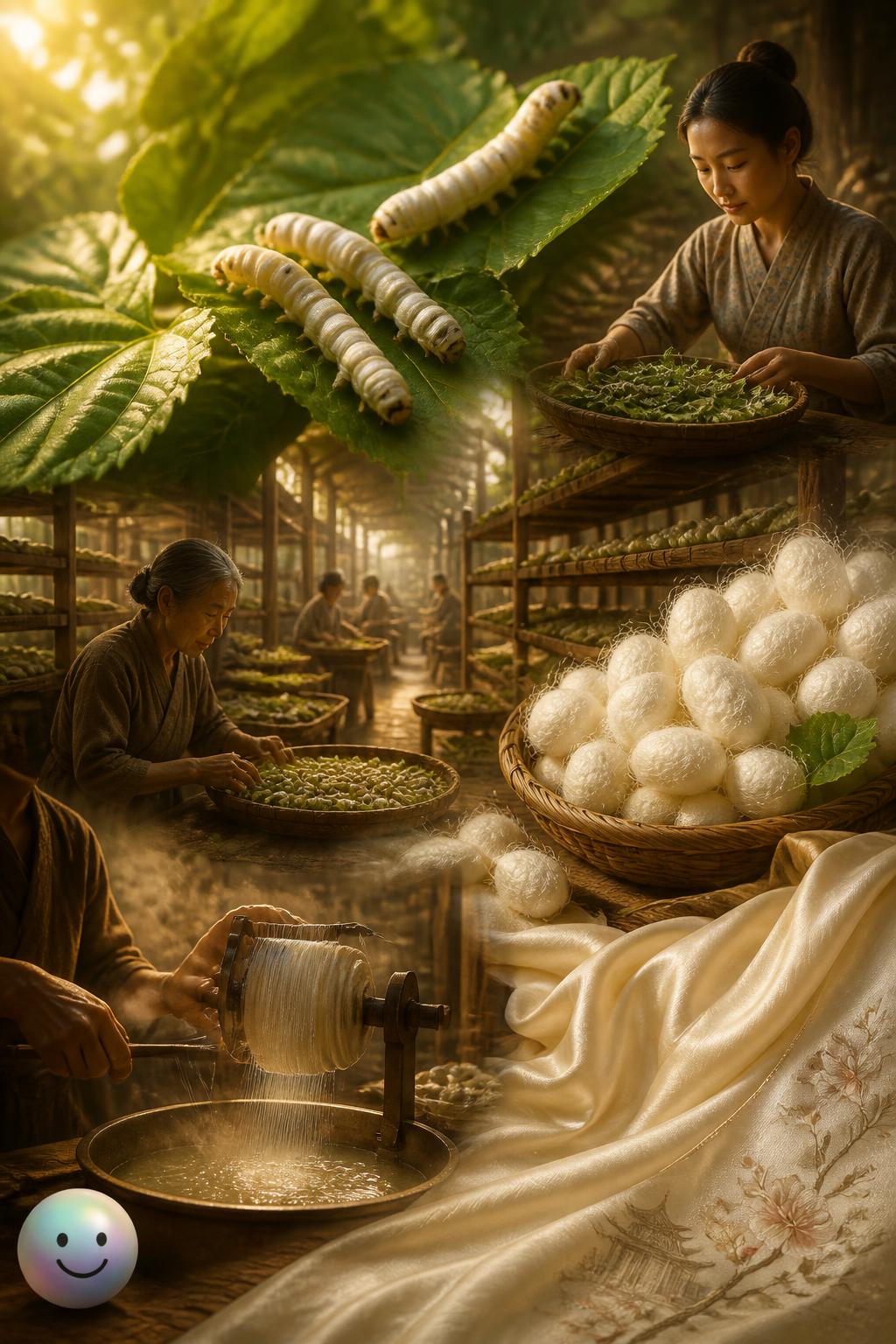
schopenhauer Silkworms eat only fresh white mulberry leaves to produce high-quality silk.
Approximately how long is the single continuous thread of a single silkworm cocoon?
schopenhauer The Silkworm
I spin a single thread of shining grace, A thousand meters in this cozy space.
schopenhauer Watch how liquid proteins transform into solid silk threads. Explore the fascinating science, history, and trivia behind this extraordinary material.
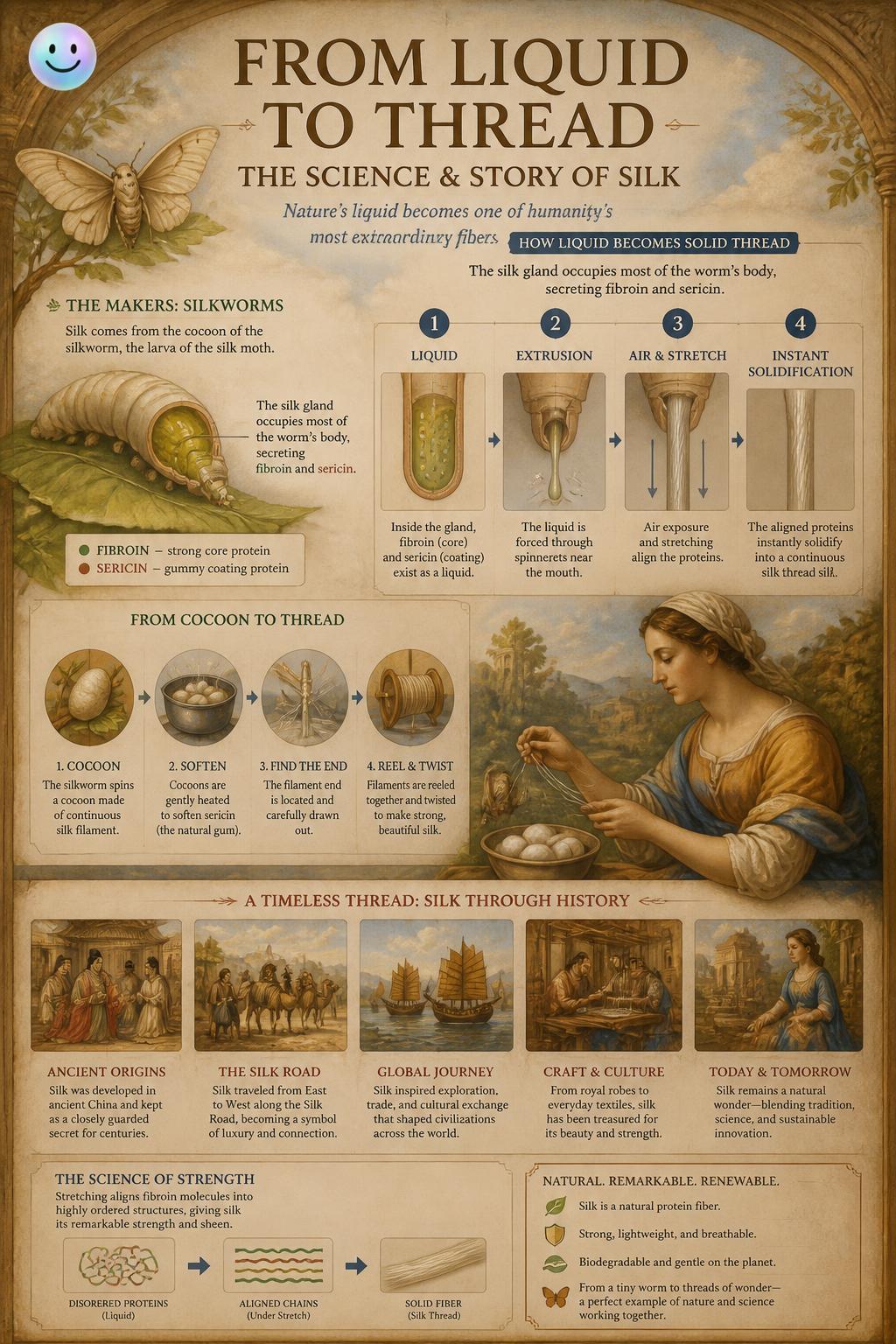
schopenhauer Silkworms spin silk using specialized salivary glands that produce liquid proteins.
What physical ability has the adult domesticated silkmoth lost due to thousands of years of selective breeding?
Silkworm super appetite: A silkworm multiplies its hatching weight by 10,000 times in just one month.
schopenhauer Watch how silk cocoons are built. Explore the fascinating science, history, and structure of silkworm cocoons in this educational video.
What is the scientific name of the fully domesticated silkmoth used in silk production?
How many times does a silkworm multiply its hatchling weight before spinning its cocoon?
The larva of a moth that spins a cocoon of fine, strong, lustrous fiber. This domesticated insect feeds exclusively on white mulberry leaves to synthesize the proteins fibroin and sericin.