The biology of the silkworm
The ancient art of sericulture
Secrets of the Silk Road
Modern science and high-tech silk

schopenhauer Discover the incredible science behind the strength of spider silk. Explore its history, how spiders make it, and fascinating historical trivia.
In what unexpected form can liquid silk proteins be used in the beauty industry?
Why is it practically impossible to farm spiders for their silk like we do silkworms?
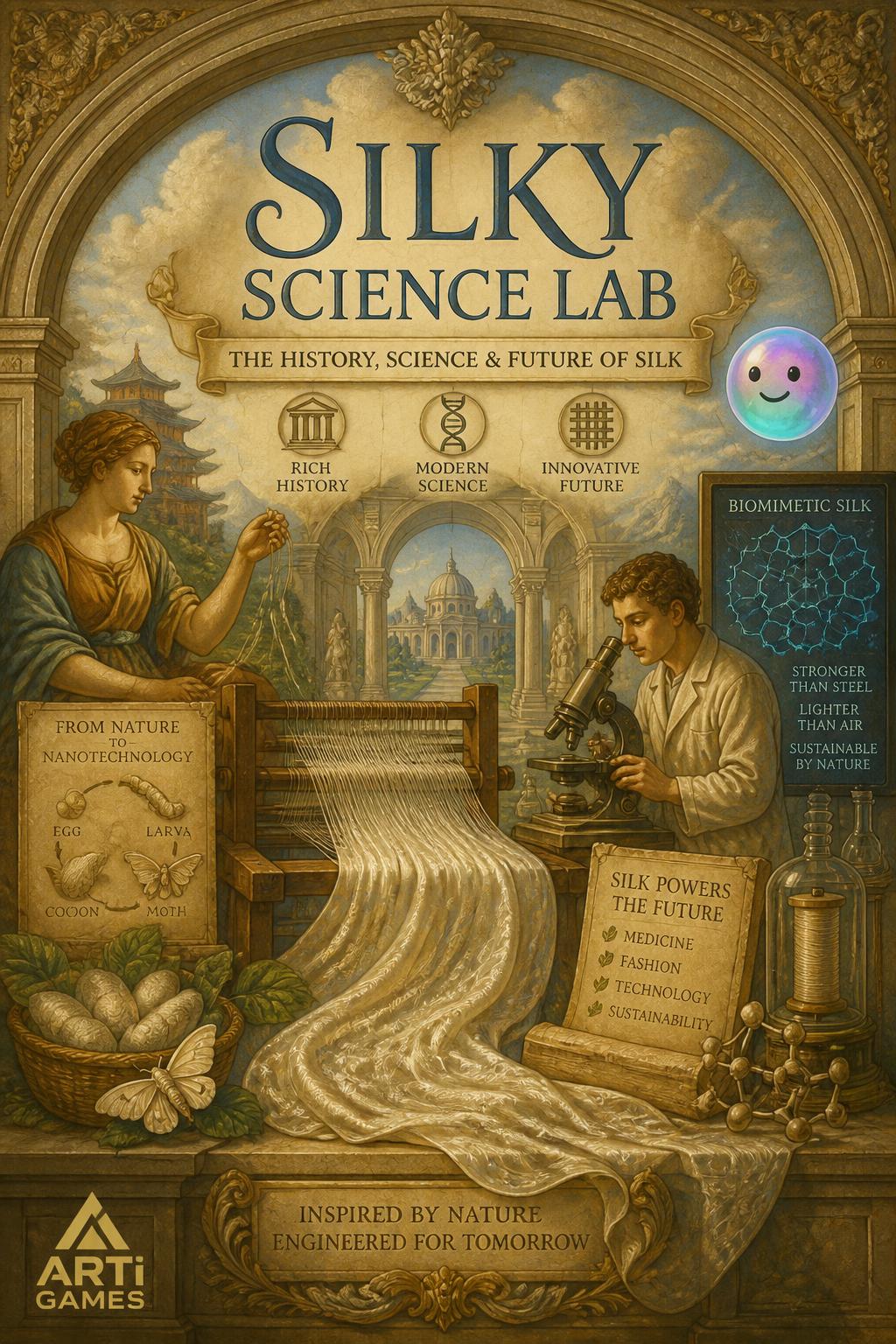
schopenhauer Drag the liquid silk proteins to learn how silkworms spin their incredibly strong cocoons.
schopenhauer Explore the history, science, and production of silk, and learn why this natural material is highly bio-compatible for medical applications.
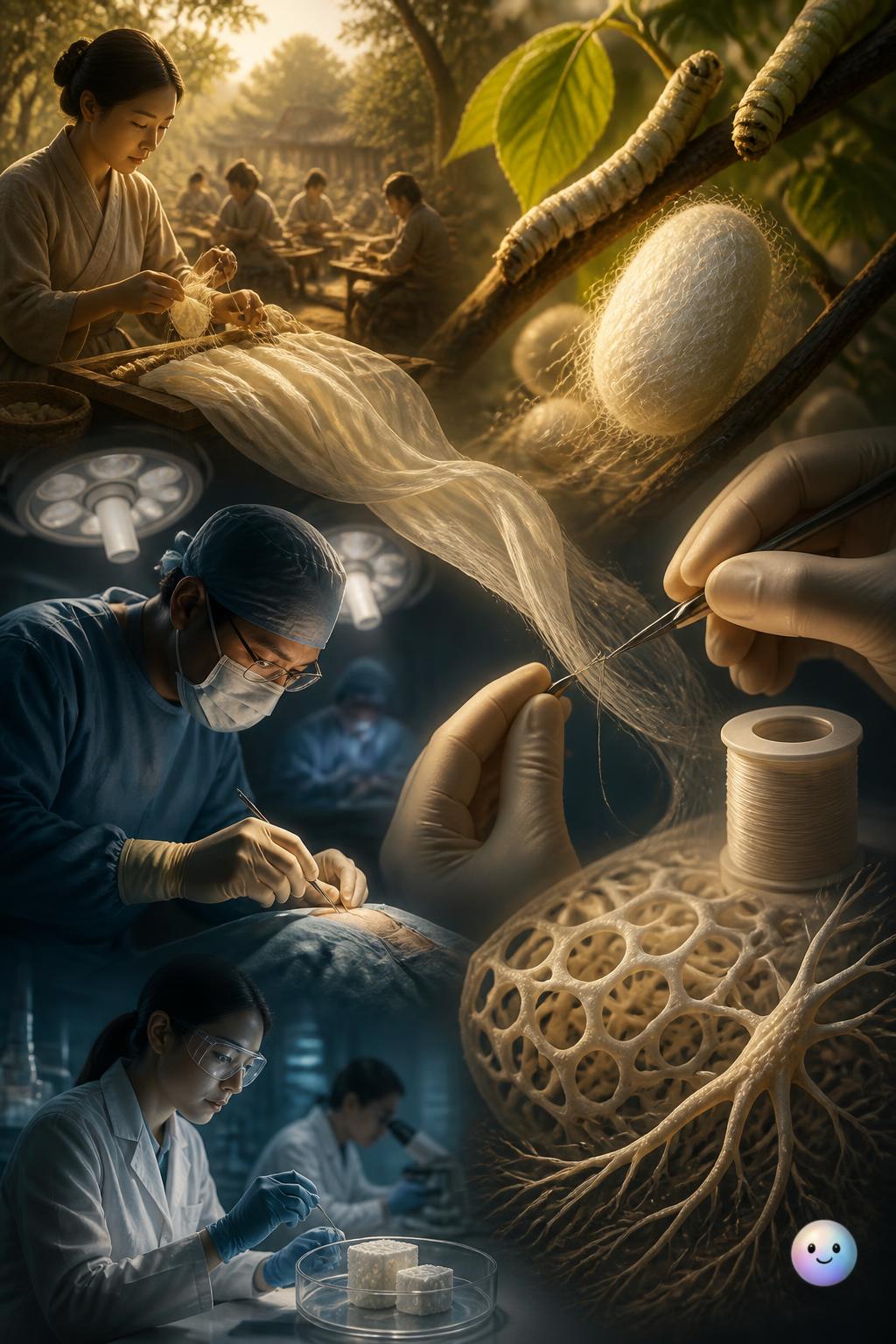
schopenhauer Silk proteins are used in medicine to build artificial skin, sutures, and implants.
Which specific silk protein is highly bio-compatible and used to make medical implants?
Why are silk sutures preferred by surgeons for certain delicate medical procedures?
schopenhauer High-tech silk
Spun into chips, bio-organic drips, silk that feels and lives!
schopenhauer Explore the history of silk making, the science of genetically modified silkworms, and how modern biotechnology is transforming this ancient textile.
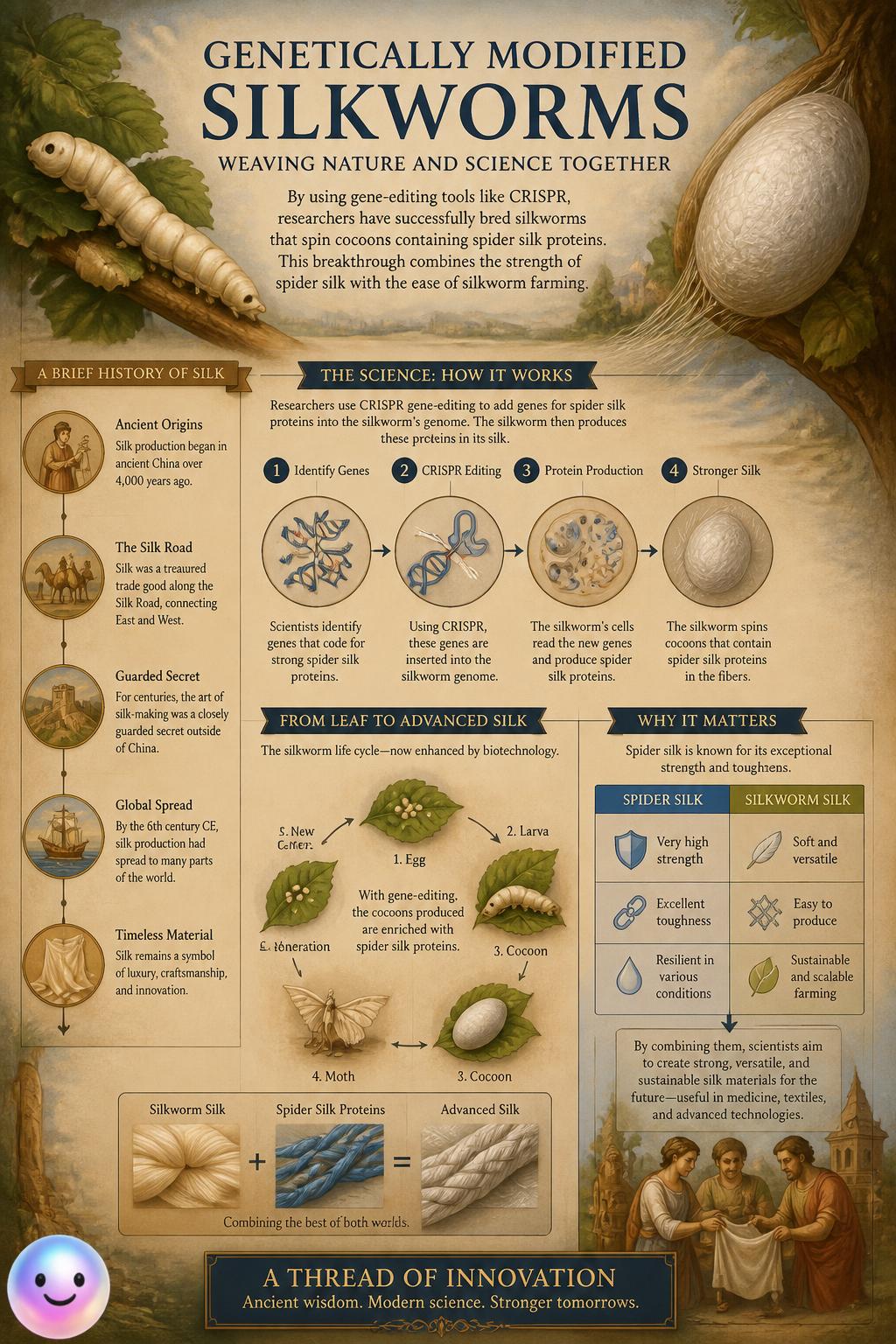
schopenhauer Scientists insert spider genes into silkworms to produce ultra-strong hybrid silks.
What organism is engineered in labs to ferment and produce animal-free silk proteins?
Spider silk strength: Dragline spider silk is five times stronger than steel of the same weight and highly elastic.
schopenhauer Watch how silk is made, explore its rich history and science, and discover how sustainable innovations are shaping the future of this luxury fabric.
What gene-editing tool do scientists use to insert spider genes into silkworms?
An insoluble protein that constitutes the principal structural component of natural silk fibers. In 2012, Tufts University researchers used this protein to develop fully biodegradable, dissolvable medical implants.