Chapter 1
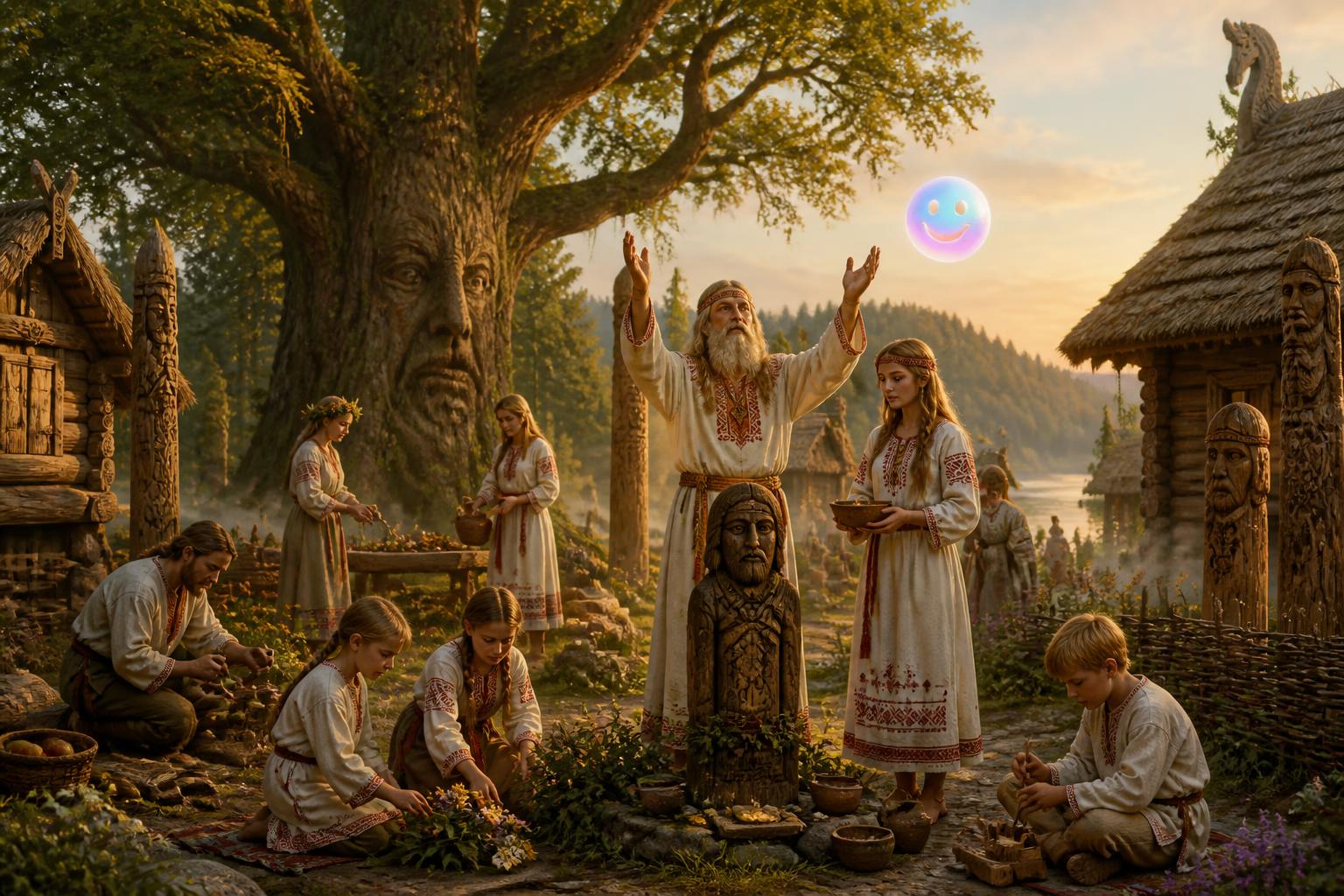
The pantheon of the open air
Chapter 2
Spirits of the hearth and harvest
Chapter 3
The rhythm of the early Slavic village
Chapter 4
Seasonal festivals and the wheel of the year
YOUR GOAL
Master of Early Slavic life and myth
Ch 4 · Seasonal festivals and the wheel of the year
renaissanceman Slavic Seasonal Festivals
Midsummer's bright glow, Kupala's fire's aglow, Wreaths float where love will flow.
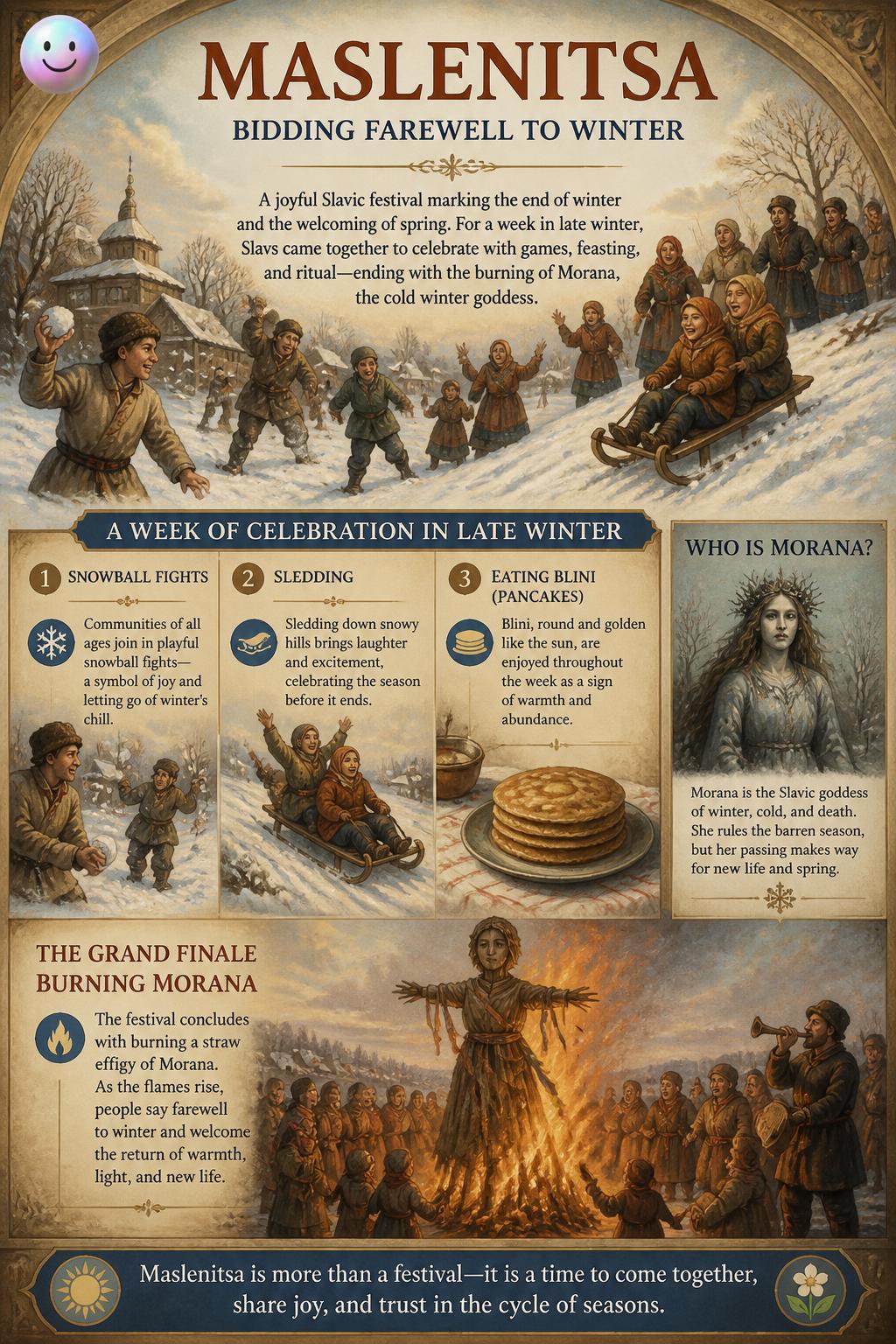
renaissanceman Maslenitsa welcomed spring with round pancakes that symbolized the warmth of the returning sun.
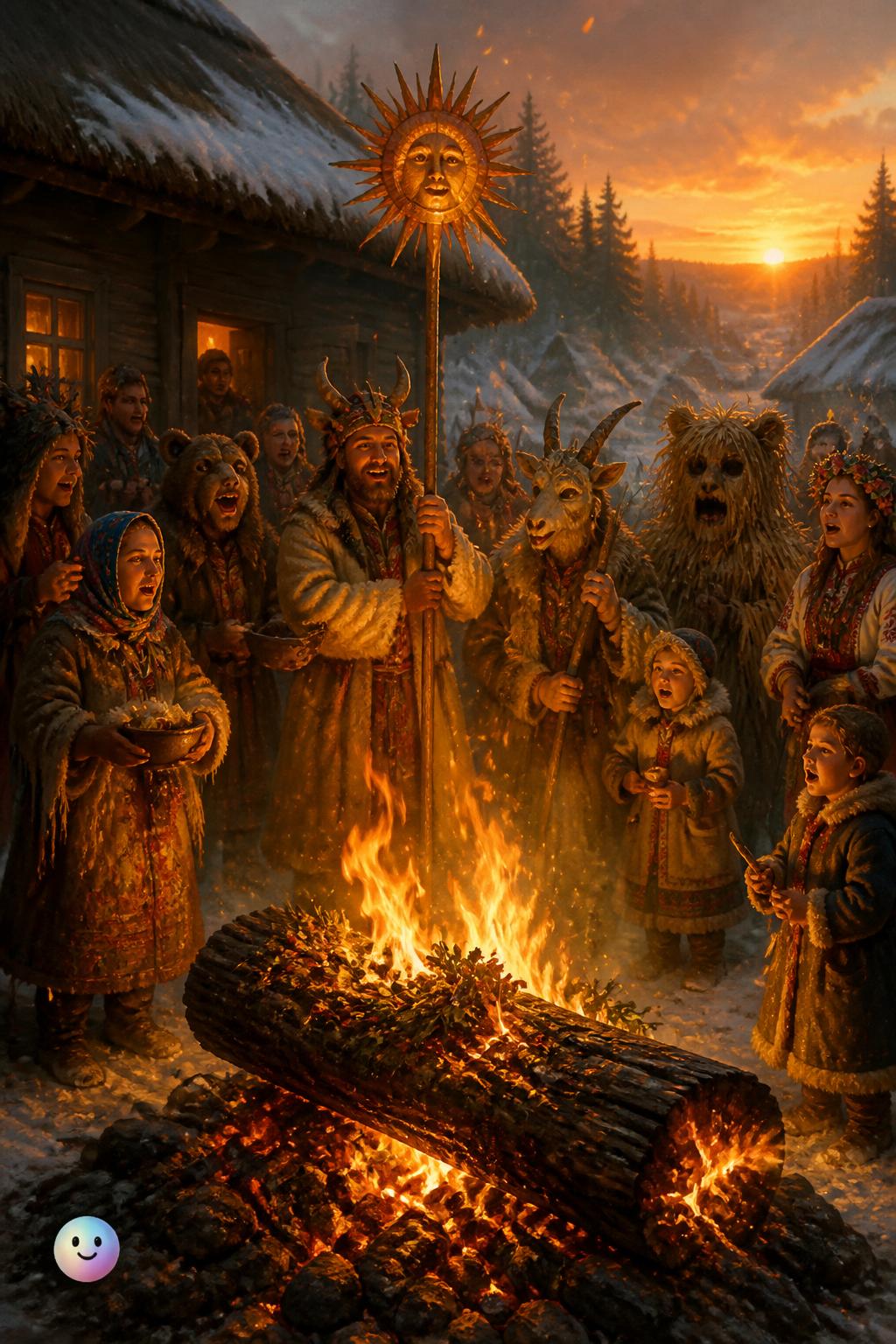
renaissanceman Koliada was the winter solstice festival marking the return of light with carols and costumes.
BETA
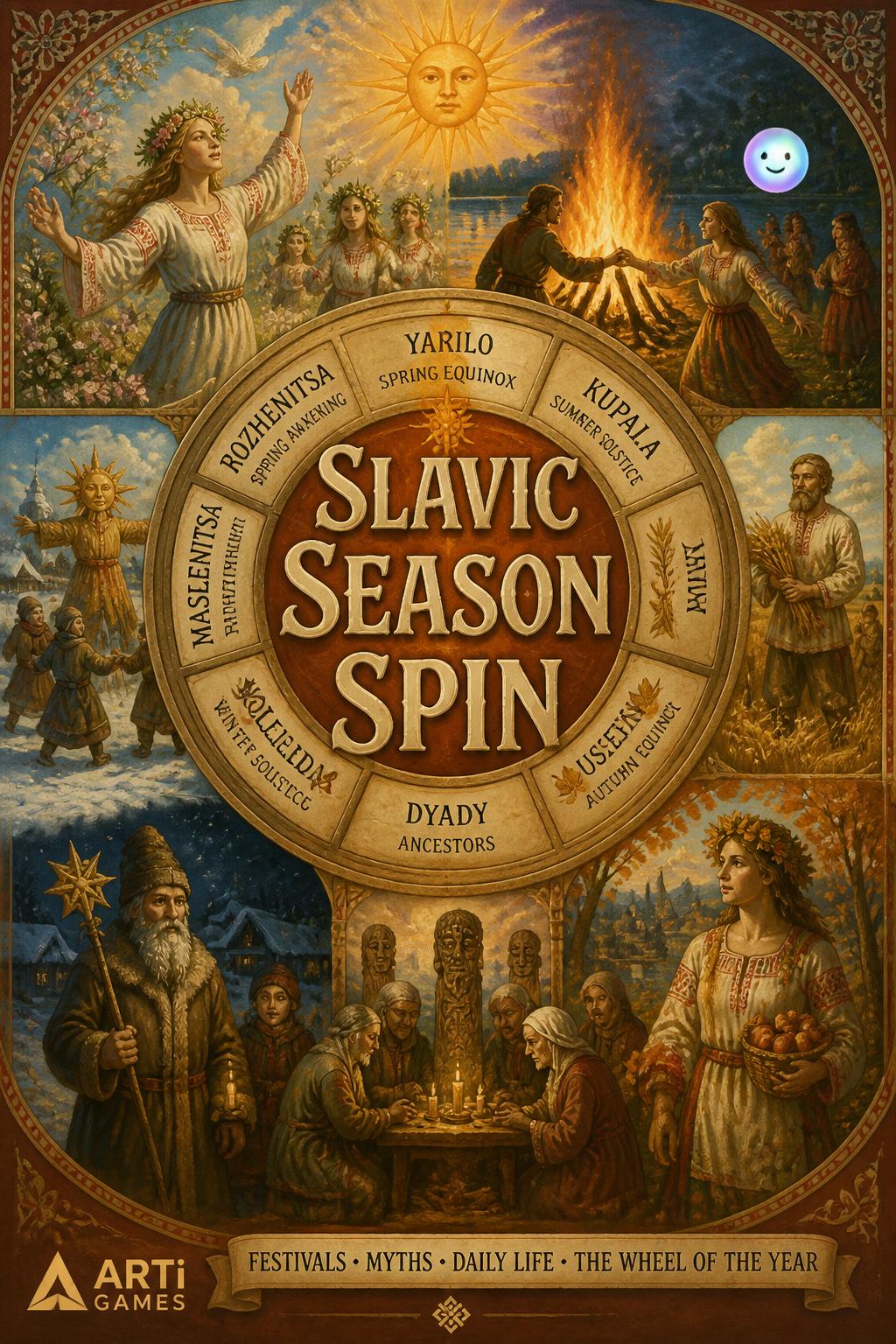
renaissanceman Spin the wheel of seasons to learn how ancient Slavic families lived and worshiped.
Fun Fact
The magic fern: Slavic folklore claimed the fern bloomed only on Kupala Night, granting anyone who found it the power to read minds.
Glossary
solstice (noun)
Either of the two times of the year when the sun reaches its highest or lowest point in the sky. Early Slavs marked these solar events with festivals like Kupala in summer and Koliada in winter.
Either of the two times of the year when the sun reaches its highest or lowest point in the sky. Early Slavs marked these solar events with festivals like Kupala in summer and Koliada in winter.
Quiz
What did young Slavic women float down rivers on Kupala Night to predict their marriage prospects?
Quiz
What term describes the 'double belief' system where Slavs practiced pagan and Christian rituals side-by-side?
Quiz
What did the round pancakes eaten during the late-winter festival of Maslenitsa symbolize?
Quiz
What sacred oak log did early Slavs burn during the winter solstice festival of Koliada?
Quiz
Which winter goddess was burned in effigy at the end of Maslenitsa to welcome spring?
Quiz
According to Slavic lore, what magical flower bloomed only on Kupala Night, granting the power to find hidden treasure?
Quiz
Which solar deity was believed to be reborn during the winter solstice festival of Koliada?
Quiz
What was the name of the early Slavic spirit world where souls traveled after death?