
Chapter 1
The global roots of nature therapy
Chapter 2
The organic chemistry of trees
Chapter 3
What happens to a body in the wild
Chapter 4
Designing your own nature ritual
Ch 2 · The organic chemistry of trees
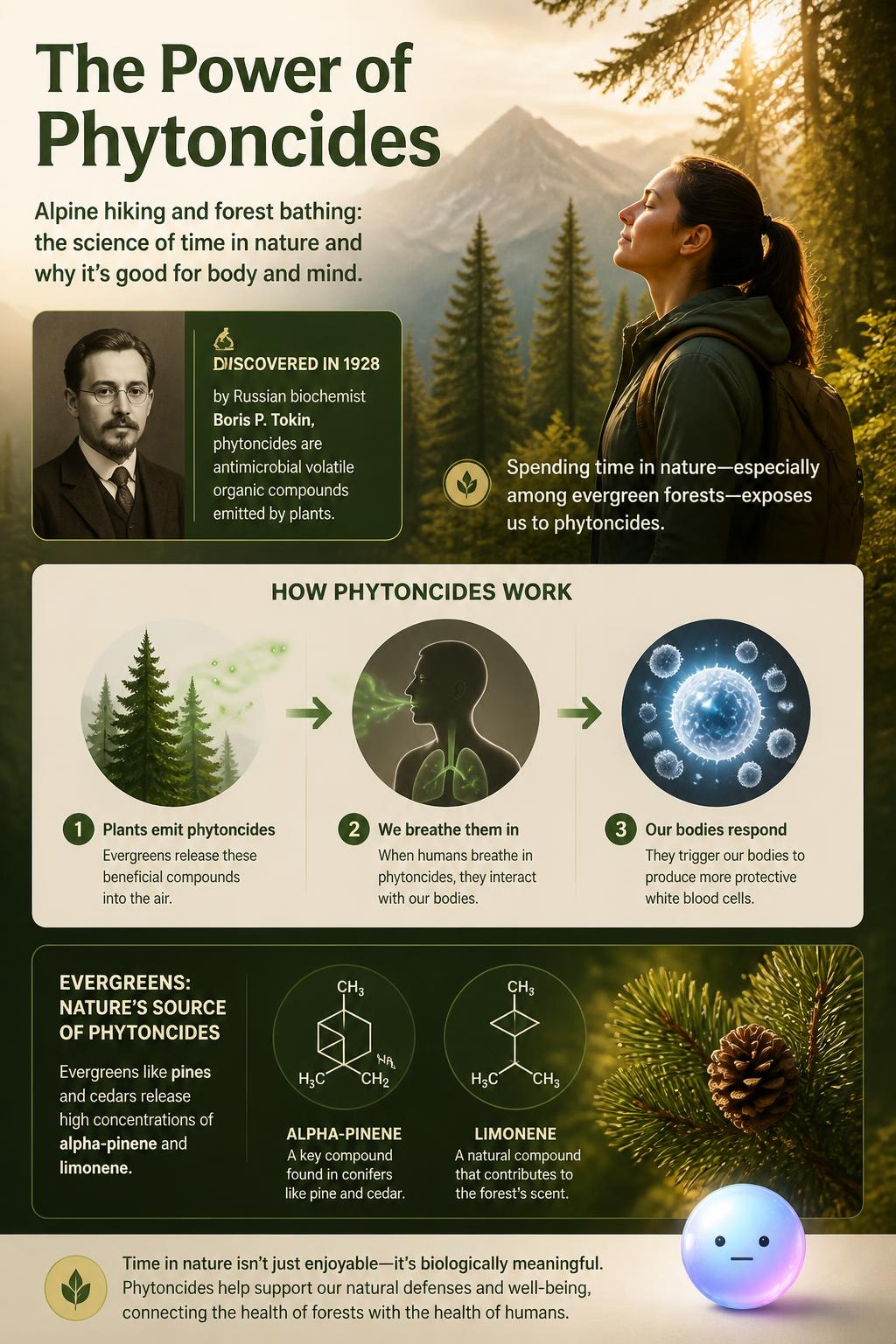
lara Evergreens like pines and cedars release antimicrobial compounds called phytoncides, including alpha-pinene and limonene, which strengthen human immunity when inhaled.
Quiz
Which of these chemical compounds is a common phytoncide released by evergreen pine trees?
Quiz
Which Russian biochemist discovered and named 'phytoncides,' the antimicrobial compounds released by plants, in 1928?


lara Inhaling Mycobacterium vaccae during forest hikes mimics the effects of modern antidepressant medications.
Quiz
What is the name of the harmless, mood-boosting soil bacterium that stimulates serotonin production in the brain?
Quiz
In a famous 2011 study at Sage Colleges, mice exposed to Mycobacterium vaccae completed which task twice as fast?
Fun Fact
Soil antidepressant: Gardening without gloves exposes you to soil bacteria that act as natural, non-addictive antidepressants with zero side effects.
Quiz
What is the term for the self-repeating, geometric patterns found in nature, such as in ferns and snowflakes?
Quiz
According to biophysics research, looking at natural fractals can reduce human stress levels by up to what percentage?
Glossary
phytoncide (noun)
A volatile organic compound emitted by plants and trees that inhibits the growth of microorganisms. In 1982, Japan's Forest Agency proposed forest bathing to help citizens inhale these restorative tree emissions.
A volatile organic compound emitted by plants and trees that inhibits the growth of microorganisms. In 1982, Japan's Forest Agency proposed forest bathing to help citizens inhale these restorative tree emissions.
Quiz
What physical phenomenon explains how splashing water near waterfalls generates high amounts of negative ions?