The bed-bound canvas
Dressing as a political act
A secret symbolic vocabulary
The sanctuary of Casa Azul
YOUR GOAL
Master of Frida Kahlo's canvas of pain and pride
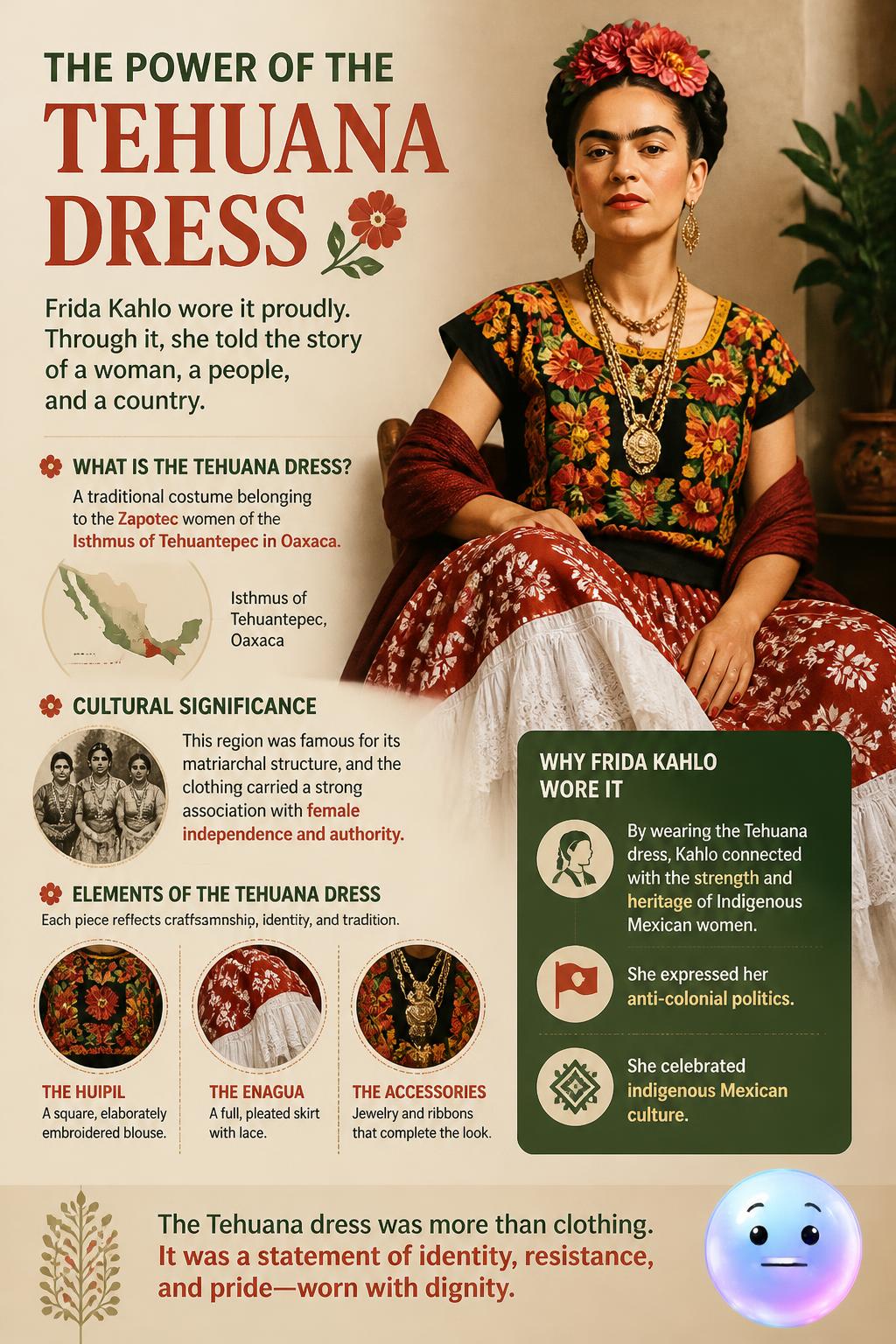
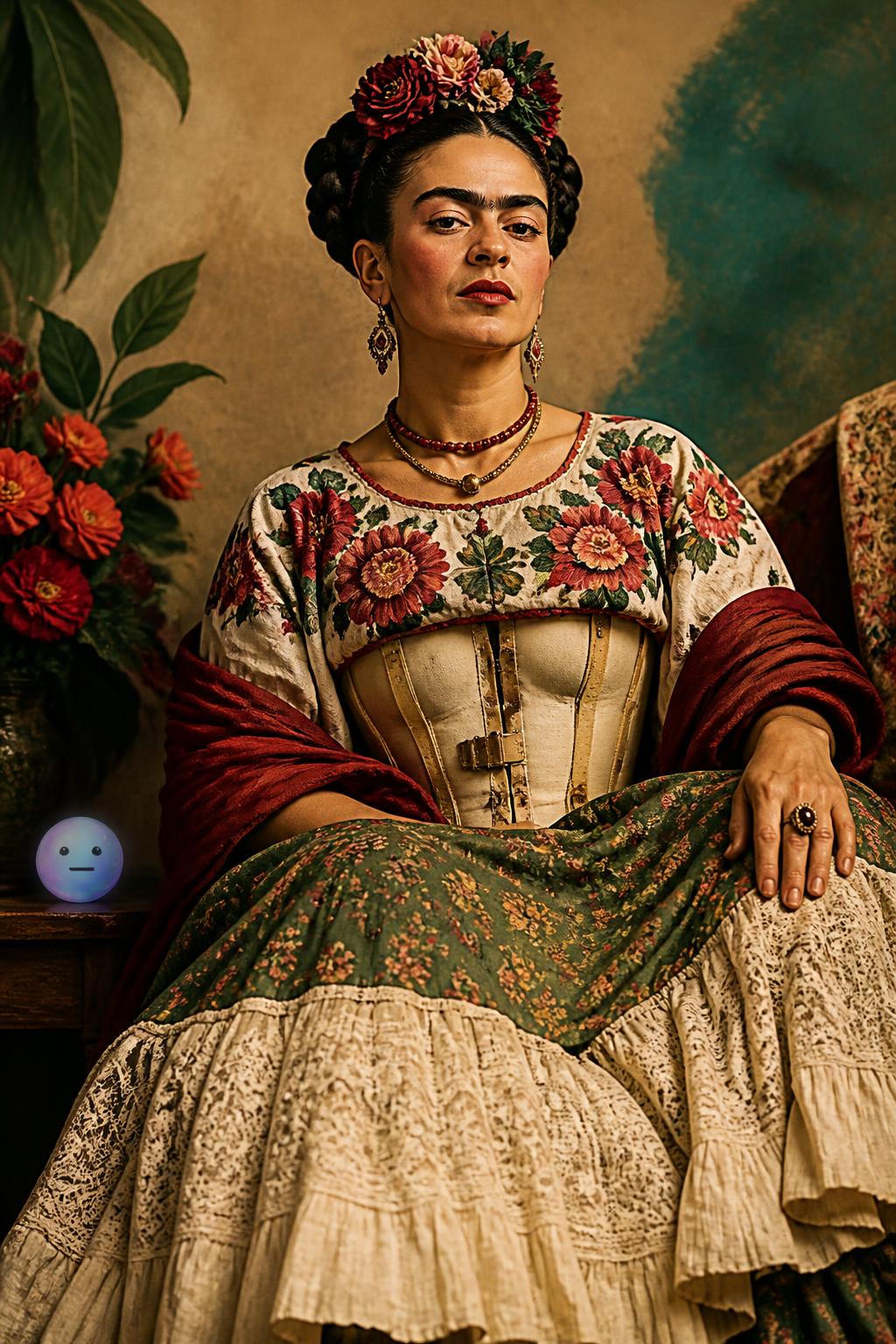
suaz She wore this traditional costume of Zapotec women from the Isthmus of Tehuantepec to express female independence and
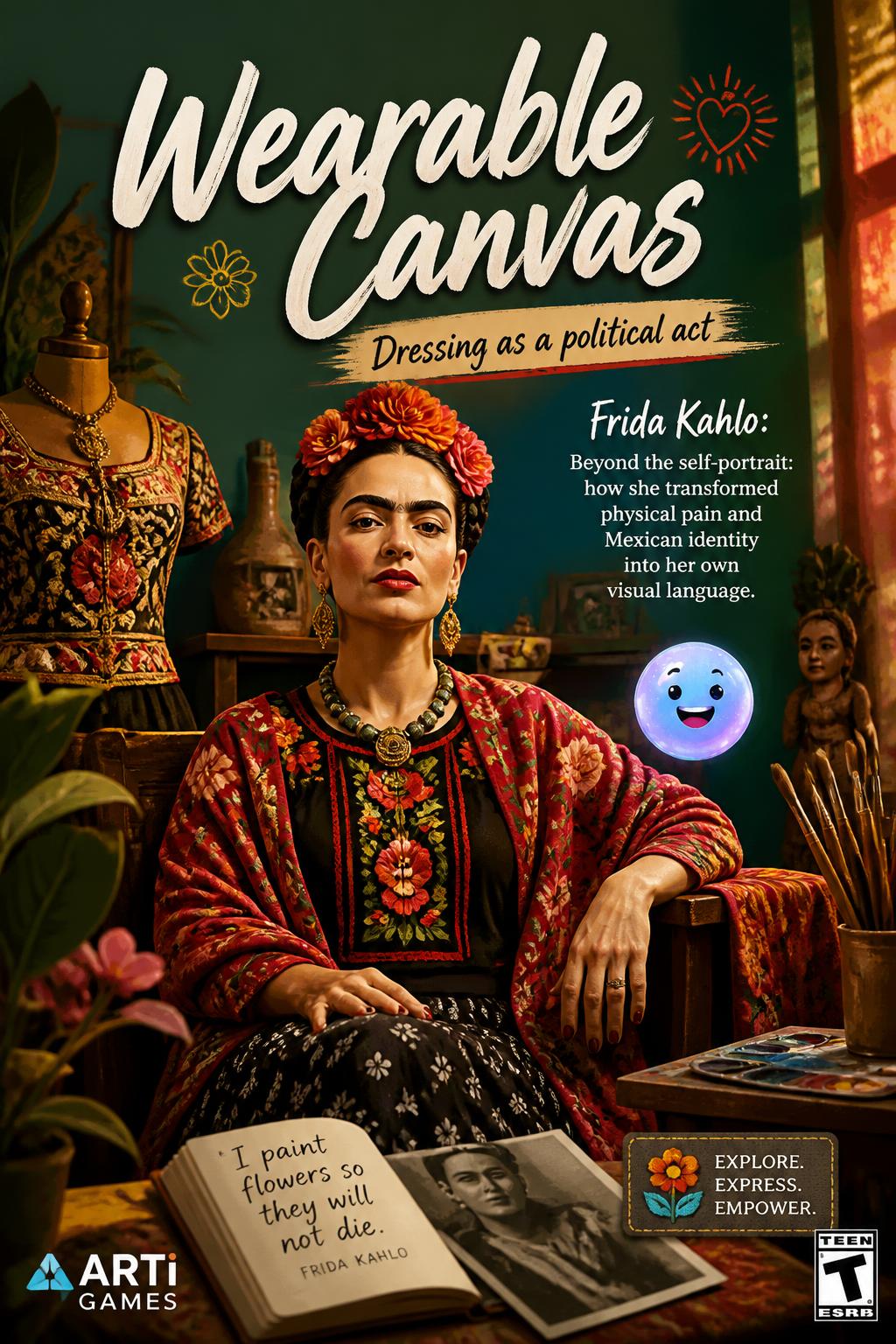
suaz Match Frida's iconic outfits to discover how she transformed pain and identity into wearable art.
Matriarchal armor: The Tehuana dress Frida Kahlo wore came from a Oaxacan society where women controlled the local economy.
A woman from the Isthmus of Tehuantepec in Mexico, or the traditional embroidered dress associated with this region. Frida Kahlo began wearing this attire in 1929 to assert her Mexican identity and conceal her injuries.
What did the Zapotec women of Tehuantepec symbolize to Frida Kahlo when she chose to wear their traditional attire?
From which specific region of Oaxaca, Mexico, does the traditional matriarchal Tehuana dress originate?
What is the traditional name of the loose, embroidered square-cut blouse that Frida Kahlo wore to cover her medical corsets?
What childhood illness left Frida Kahlo with a shorter, thinner right leg that she later hid under long Tehuana skirts?
Which flower, highly significant to the Mexican Day of the Dead, did Frida Kahlo often pick from her garden to wear in her hair?
Which traditional Mexican shawl did Frida Kahlo frequently drape over her shoulders to complement her elaborate hairstyles?
In which famous 1940 self-portrait did Frida Kahlo depict herself wearing an oversized men's suit and holding scissors?