BETA
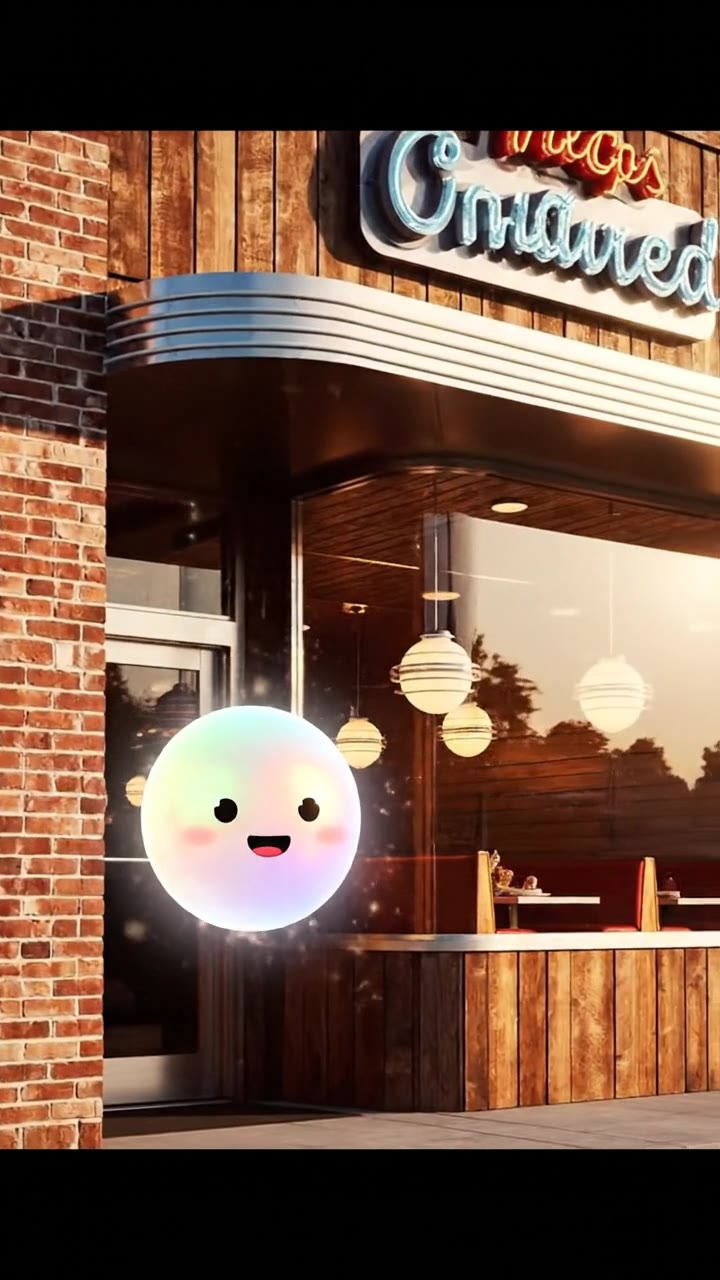
To combat the 'greasy spoon' stereotype and compete with suburban restaurants, diner manufacturers changed their designs in the mid-1960s. They abandoned the shiny, space-age stainless steel look. Instead, they adopted rustic, earth-toned materials like brick, stone, and wood, styled in Colonial or Mediterranean themes.
hank Build your own neon diner to learn how roadside lunch wagons shaped American food culture.
hank American Diner History
From wagons in the night, to chrome and neon bright, a diner's shining light!
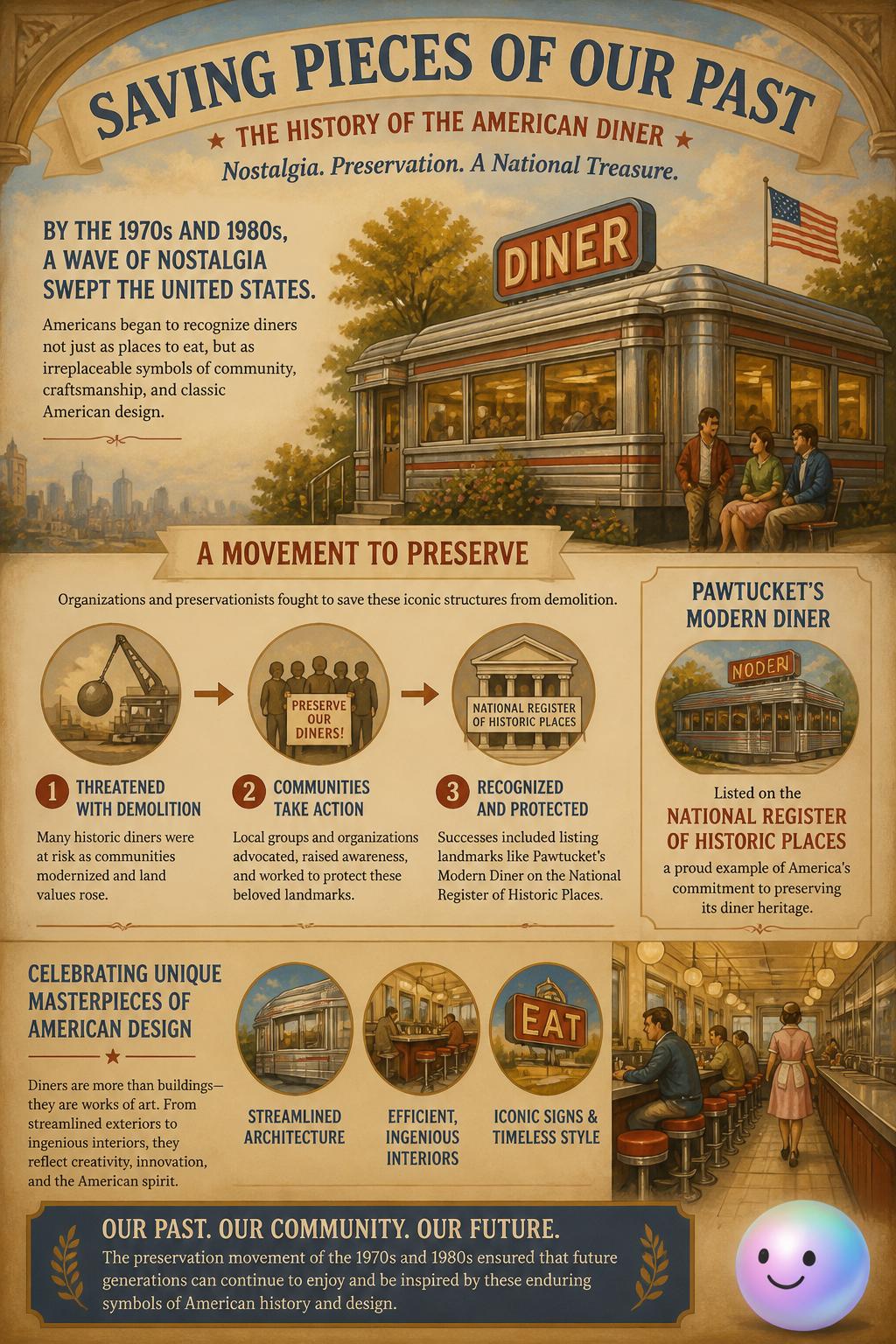
hank A cultural movement in the 1970s and 1980s recognized vintage diners as valuable architectural monuments.
Diners on screen: The famous 1982 film 'Diner' helped launch the Hollywood careers of stars like Kevin Bacon, Mickey Rourke, and Paul Reiser.
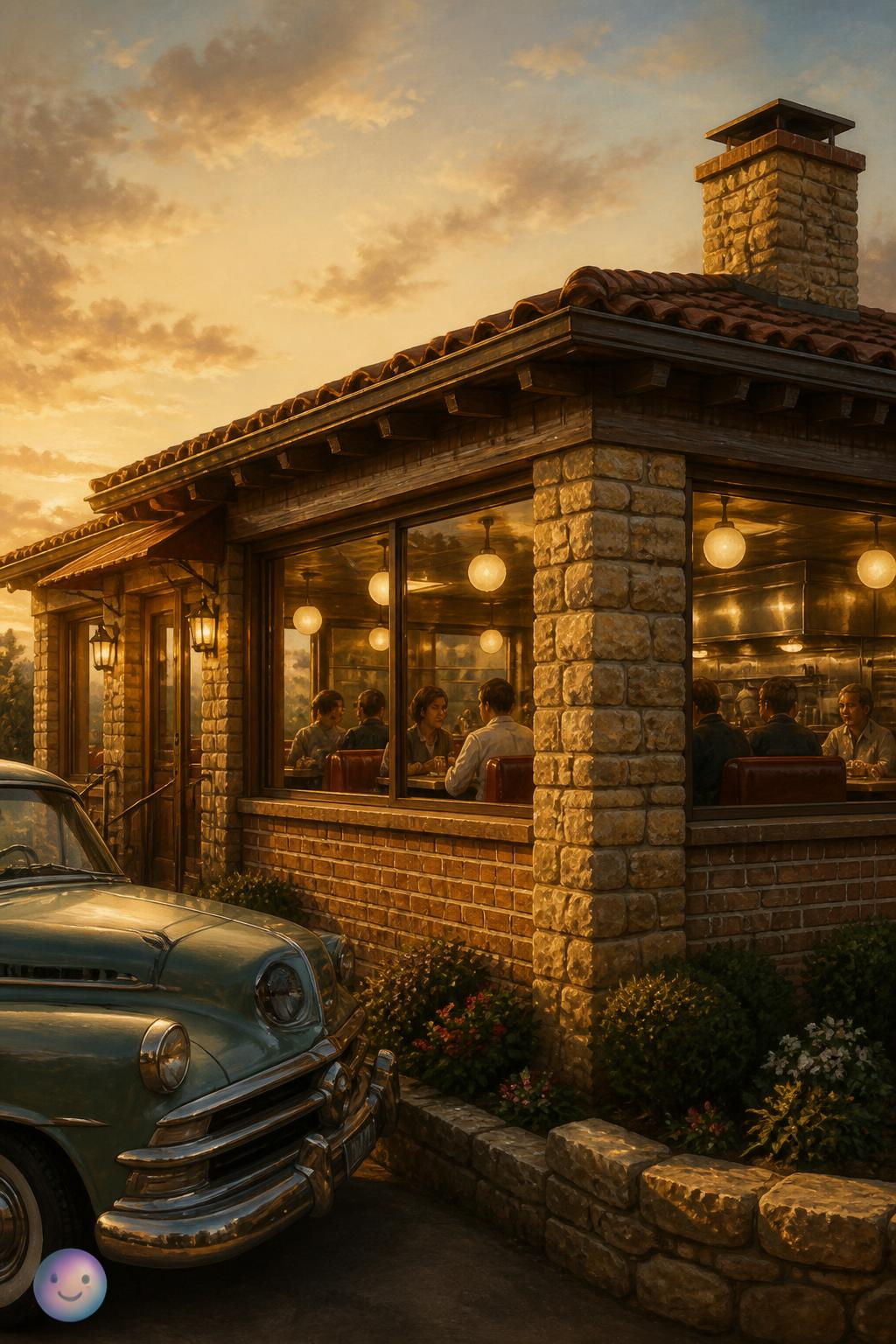
hank In the mid-1960s, diners abandoned shiny metal designs for wood, stone, and brick to look more respectable.
What was the purpose of the 'greasy spoon' nickname often given to struggling mid-century diners?
What major competitor threatened the survival of traditional diners in the 1950s and 1960s?
What post-World War II trend caused people to move away from urban centers, hurting city diners into decline?
Which of these is an example of a historic diner that was saved and listed on the National Register of Historic Places?
Which country outside of the United States has seen a popular export of retro-style American diners?
What makes retro-revival diners built in the late 20th century different from original historic diners?