The magic of friction and spruce
Secrets of the Italian masters
Leading the symphonic pack
The violin goes global
maestro Four tightly stretched steel or synthetic strings press down on the wooden bridge with fifty pounds of force. This massive pressure creates the violin's bright, carrying tone.
What is the sticky substance rubbed onto violin bow hair to create friction against the strings?
maestro Violin Friction and Spruce
Sticky rosin grips the string, and the spruce wood brings the sound!
maestro Luthiers age flexible spruce and dense maple for decades to build violins. A delicate varnish protects the instrument while allowing the seasoned wood to vibrate freely.
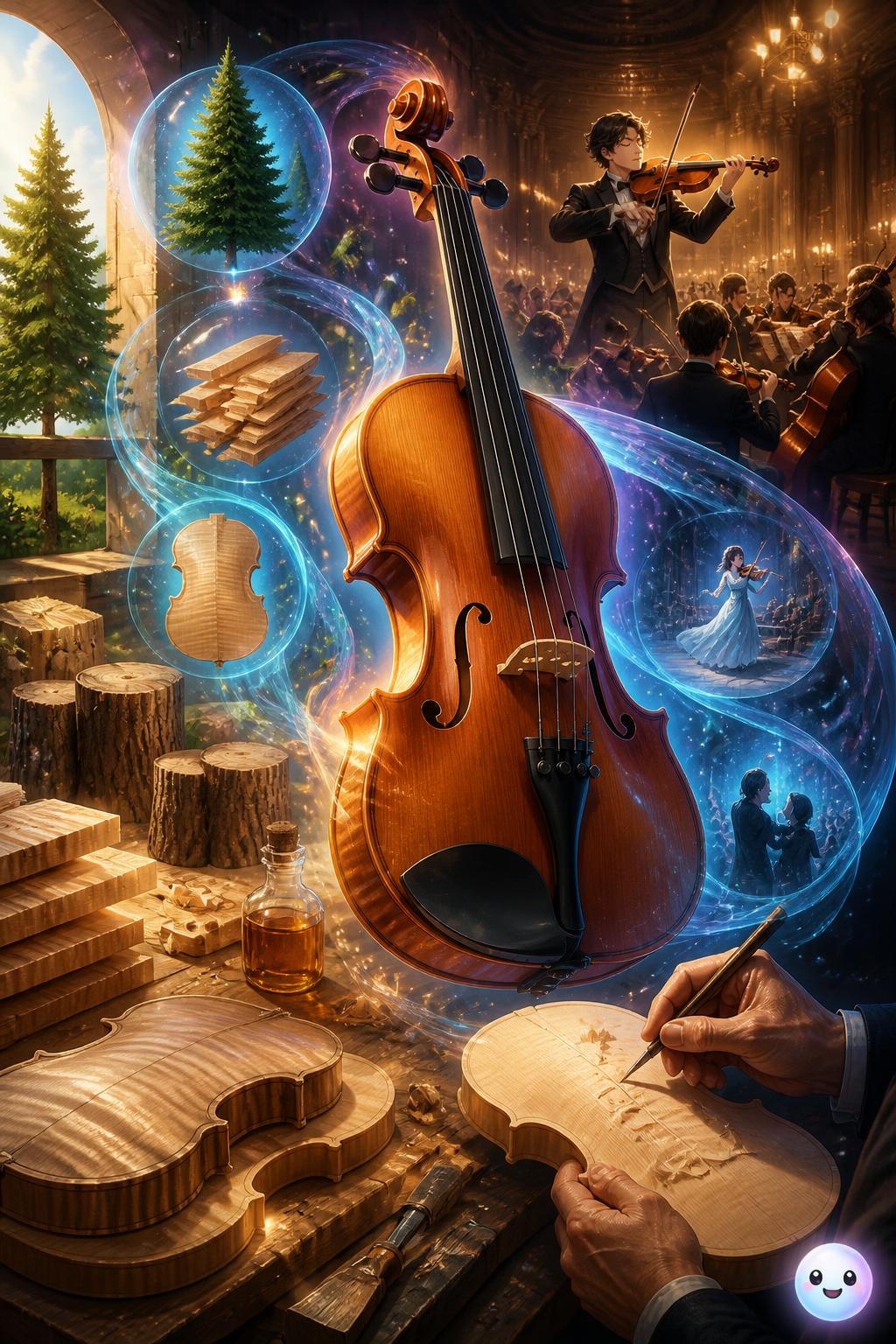
maestro A violin's body acts as a natural amplifier carved from specific resonant trees.
What material was historically used to make violin strings before modern metal and synthetic options?
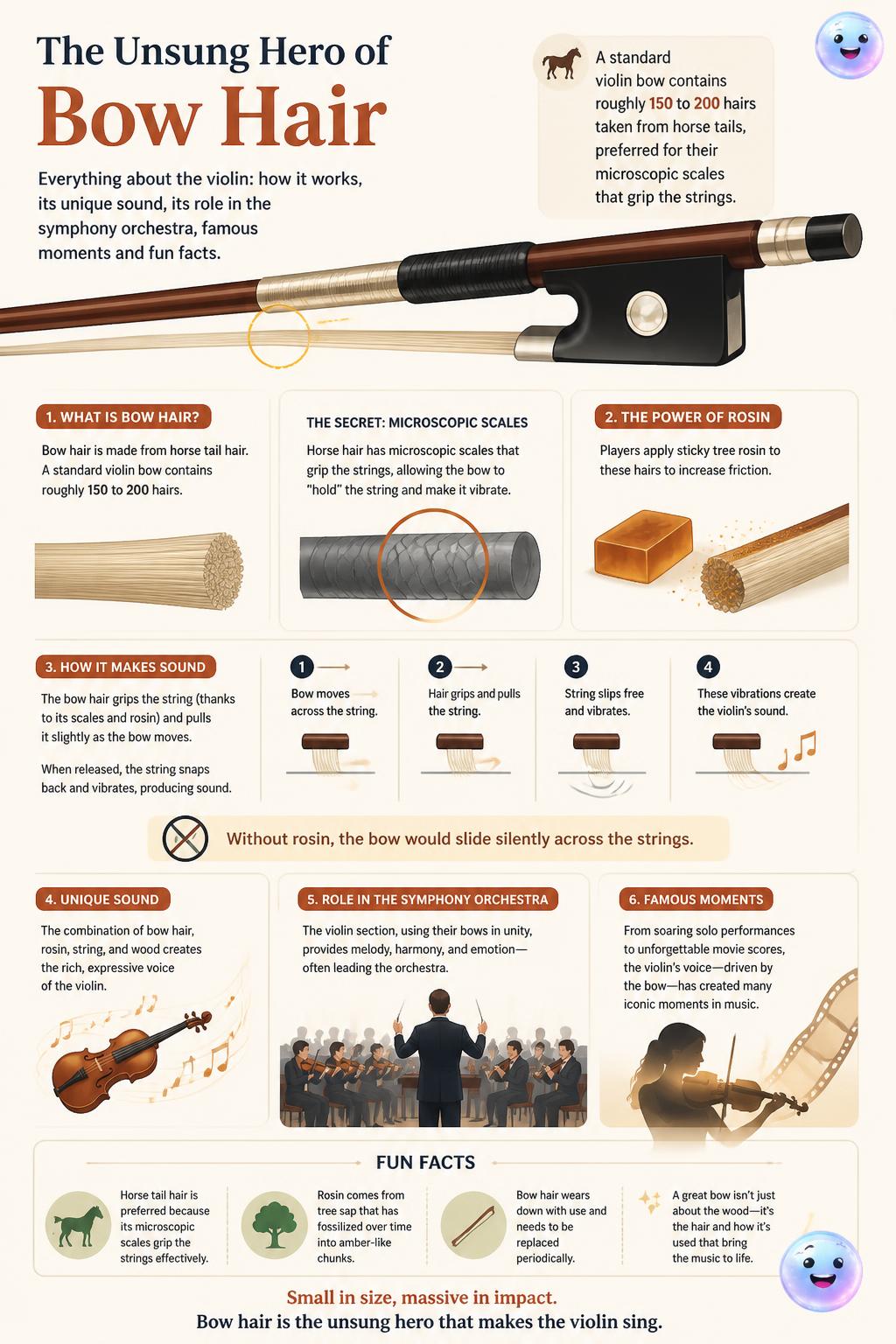
maestro Microscopic scales on horse tail hairs grip the violin strings to create sound. Applying sticky tree rosin increases this friction, preventing the bow from sliding silently.
Which type of wood is most commonly used for the top plate of a violin due to its acoustic flexibility?
Violin bows: A single violin bow uses up to 200 hairs, traditionally sourced from horses living in exceptionally cold climates for extra strength.
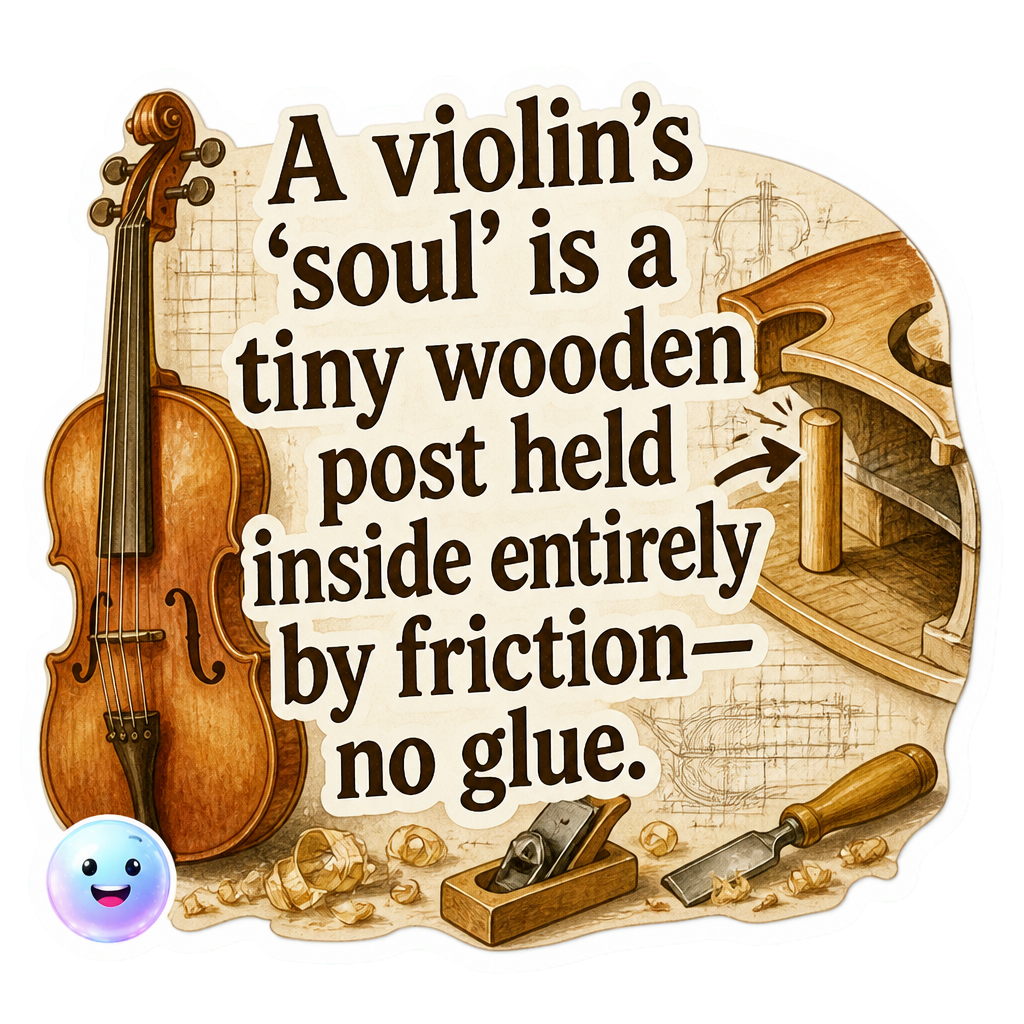
maestro A tiny spruce cylinder stands wedged between the violin's wooden plates without any glue. Held only by friction, it transmits sound vibrations to give the instrument its voice.
An evergreen coniferous tree with a conical shape and needlelike leaves, yielding lightweight wood often used for timber. Luthiers like Antonio Stradivari crafted violin soundboards from Italian spruce harvested during the cold Maunder Minimum.

maestro Drag the bow across the strings to discover how vibration creates the violin's sound.