The magic of friction and spruce
Secrets of the Italian masters
Leading the symphonic pack
The violin goes global
maestro Fiddlers use a flatter bridge for multi-string playing and rapid, rhythmic bowing without vibrato. This energetic style drives traditional dance music in Ireland, Bluegrass, and Appalachia.
Which Indian musician famously adapted the Western violin to South Indian Carnatic classical music?
maestro Drag the violin's parts into place to discover how it creates its unique sound.
maestro Since its arrival in India in the late 18th century, musicians have played this instrument sitting cross-legged. Bracing the violin against the foot helps them mimic human singing.

maestro Southern Indian musicians adapted the violin into a soulful voice for classical ragas.
What is the primary physical difference between a standard acoustic violin and a traditional folk fiddle?
Which Jewish folk music tradition from Eastern Europe heavily features expressive, vocal-like violin playing?
maestro Violinists use a finger-release technique called krekhts to mimic human sobbing. This Jewish wedding music blends joyful rhythms with sad melodies, which heavily influenced twentieth-century American jazz.
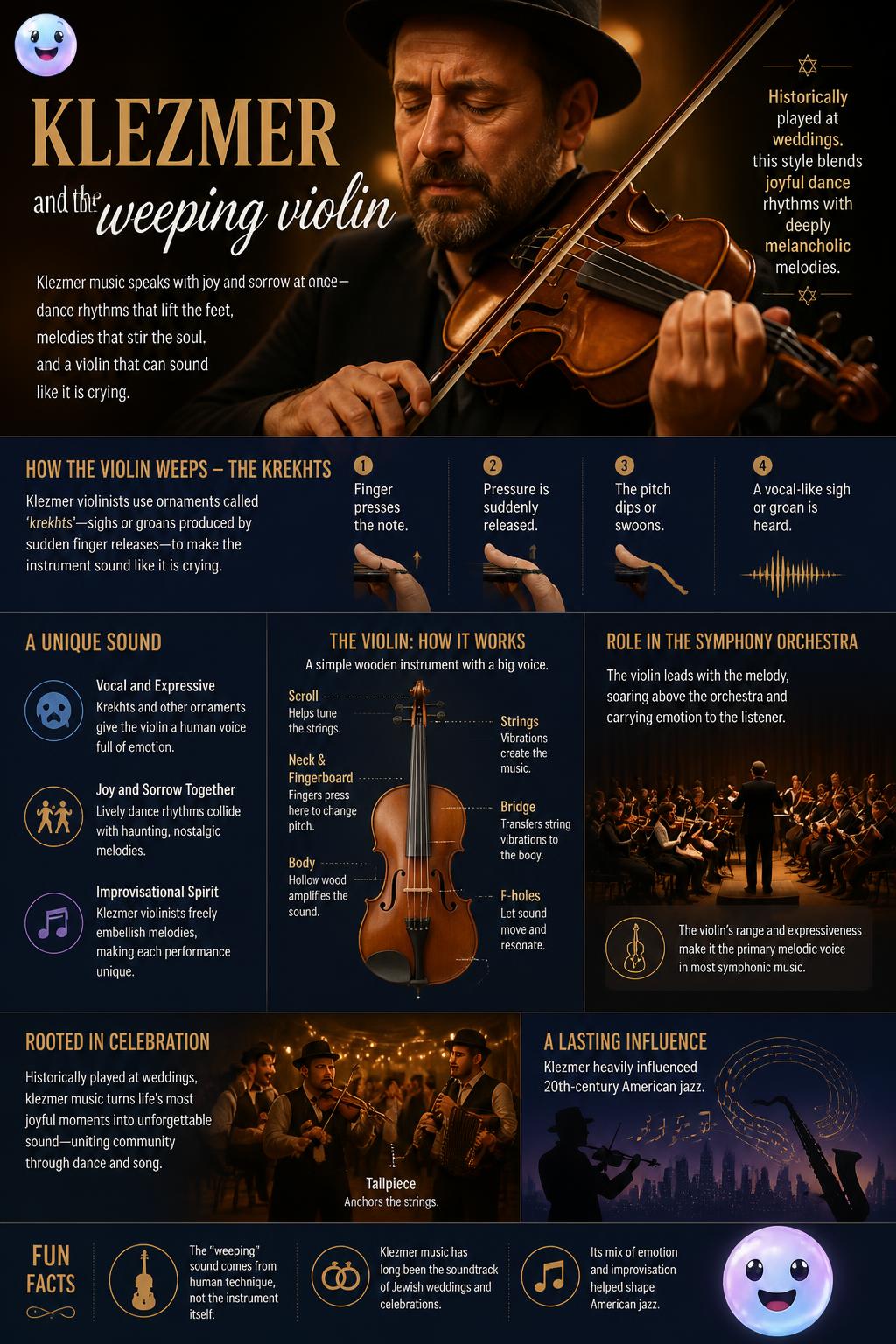
maestro Eastern European Jewish folk music uses the violin to mimic human laughter and tears.
What is the standard number of strings on both a traditional acoustic violin and most electric violins?

maestro Invented in the 1930s, these instruments use special pickups to amplify sound without feedback. Musicians plug their futuristic, solid-body violins into distortion pedals to rival loud electric guitars.
In Irish traditional music, what is the fast, lively dance style most commonly played on the fiddle?
What device does an electric violin use to convert string vibrations into electronic signals?
Indian posture: Carnatic violinists hold the instrument pointing downwards, resting the scroll on their right ankle to keep their left hand completely free.
The process by which something develops international influence or starts operating on an international scale. By the nineteenth century, trade routes accelerated the violin's globalization, introducing the Italian instrument to East Asia.