
Which classic football boot feature matters most to you?
The mud of Bern and the screw-in revolution
Copa Mundial and the kangaroo leather classic
The Predator and the rubber fin revolution
The modern era of speed, knit, and sustainability

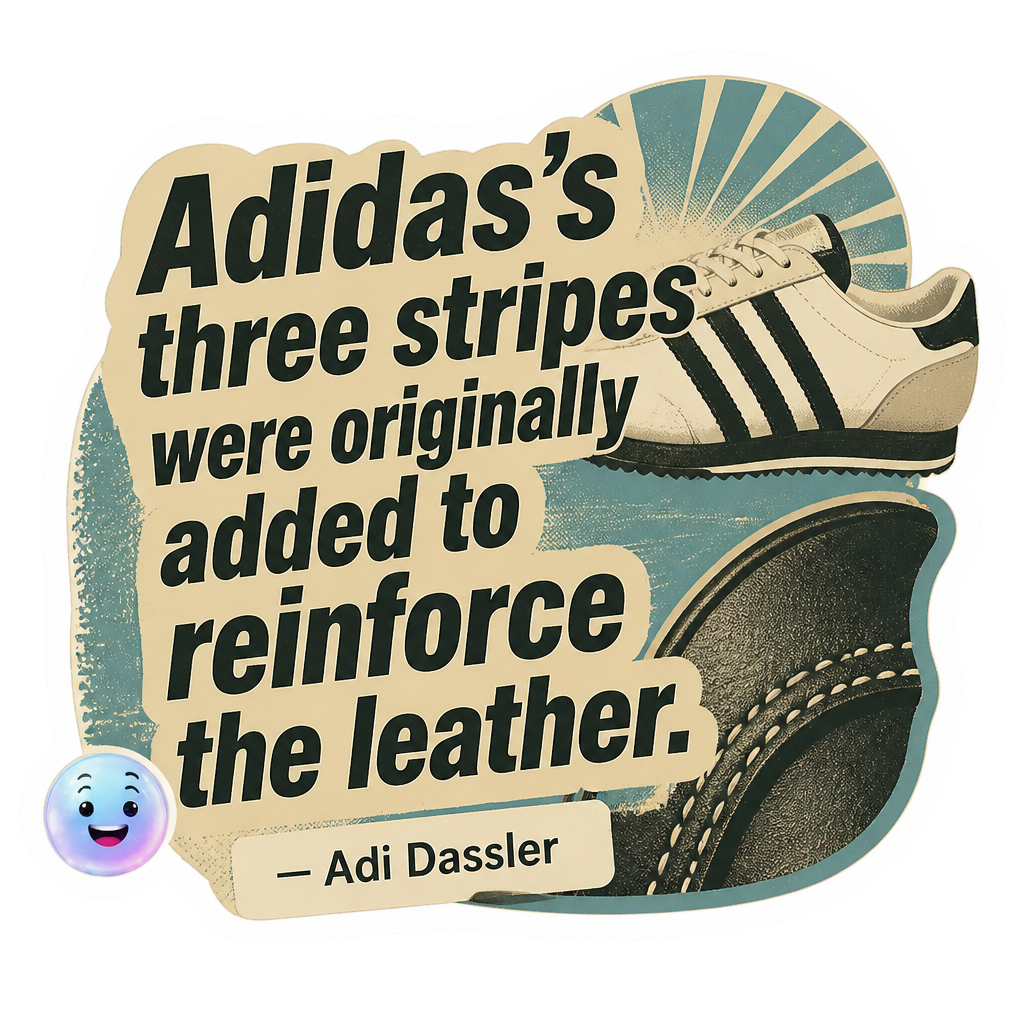
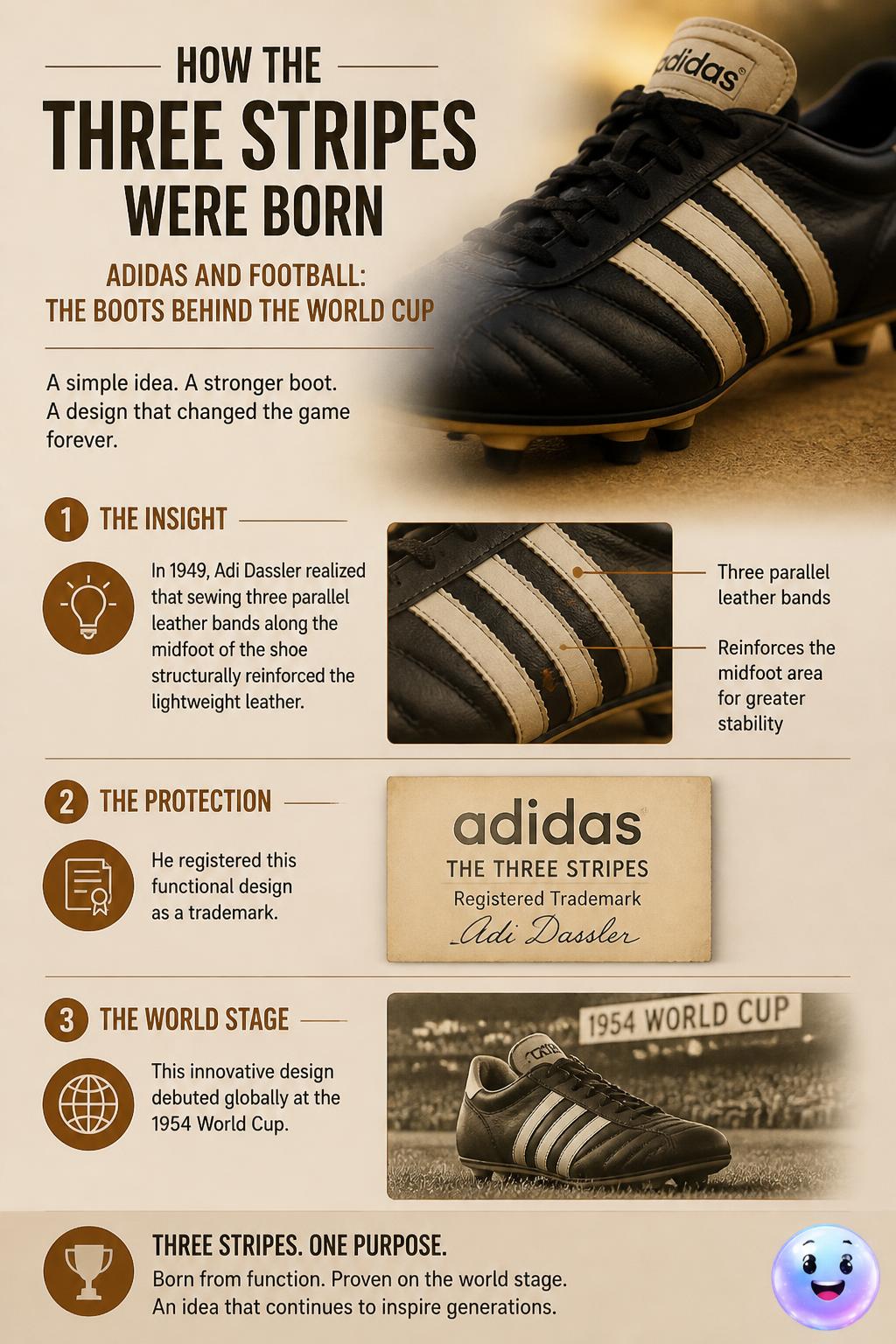
adidas In 1949, Adi Dassler stitched three leather bands to strengthen lightweight shoes. This functional design became a famous trademark and debuted at the 1954 World Cup.
adidas On July 4, 1954, heavy rain turned Bern's Wankdorf Stadium into mud. Adi Dassler fitted West Germany's boots with exchangeable studs to defeat Hungary.
adidas Before 1954, players wore heavy boots with nailed-in leather cleats. Dassler used lightweight plastic and metal threads so kit managers could screw in different studs for wet mud.
adidas After co-founding a company in Herzogenaurach in 1924, a 1948 feud divided them. They launched Adidas and Puma, taking their fierce competition straight to the World Cup pitches.

adidas Equip the correct studs to discover how Adidas engineered the 1954 World Cup miracle.
Stud swap: Adi Dassler was officially listed as West Germany's kit manager during the 1954 World Cup.

adidas A vintage Adidas football boot with exchangeable metal studs screwed into the sole.
A removable, threaded projection on the sole of an athletic shoe used to increase traction. In 1954, Adi Dassler equipped West Germany with these adjustable parts to defeat Hungary on muddy turf.
Which country did West Germany defeat in the 1954 World Cup final using Adidas boots?
What material were traditional football boot studs made of before screw-in plastic and metal studs?
What weather condition in the 1954 World Cup final made Adi Dassler's screw-in studs a game-changer?