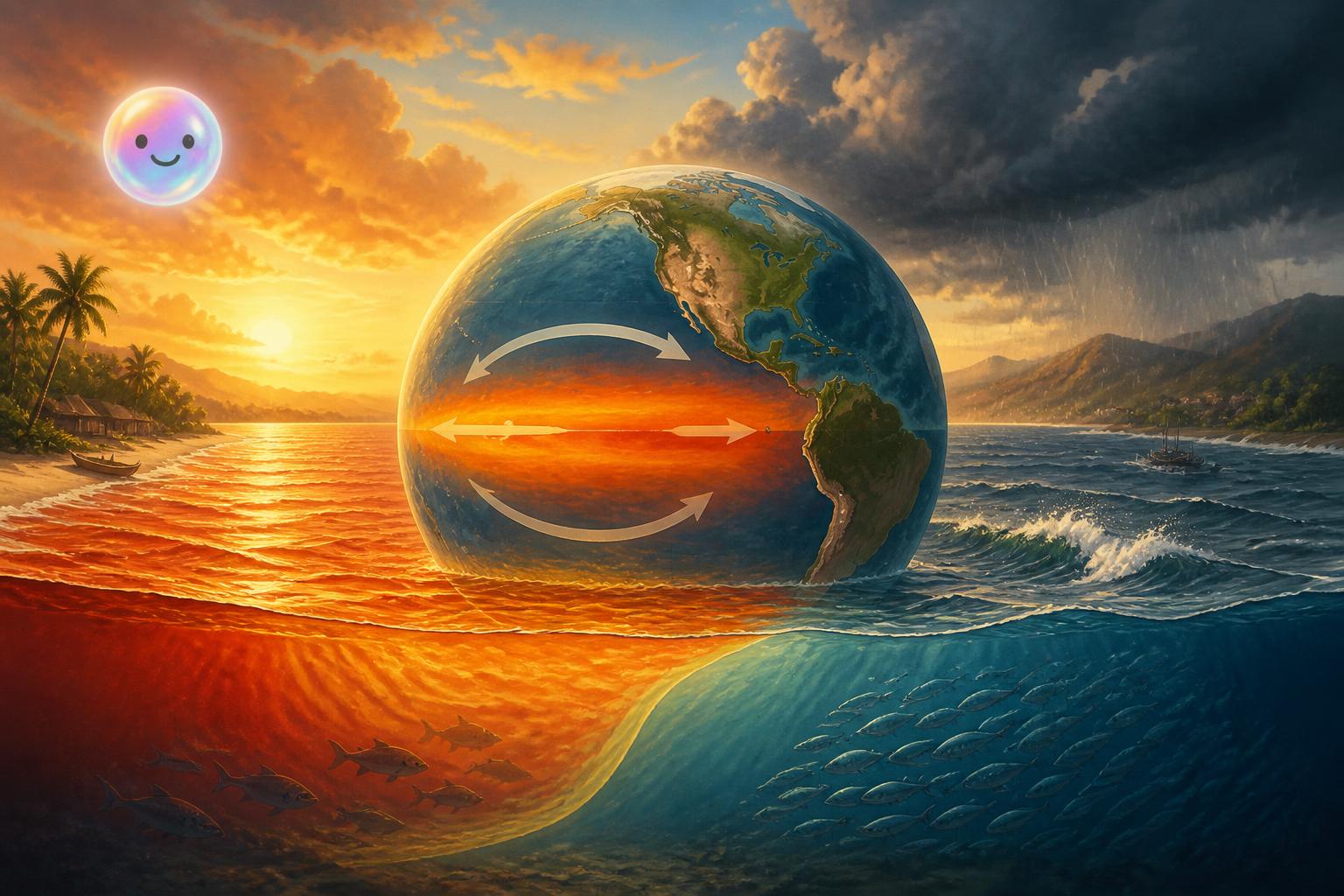
What happens to trade winds during El Niño?
Test your climate science knowledge with this quick quiz about how El Niño events affect Pacific trade wind patterns.
How Peruvian fishermen discovered El Niño
The physical engine of the Pacific
The global domino effect of weather
The cool sibling and the ENSO cycle
Watching the ocean from space and sea

diego Learn how the deep ocean thermocline sinks during El Niño events and its impact on global climate patterns in this educational video.
diego Learn how the collapse of trade winds drives the El Niño climate phenomenon and alters global weather in this quick educational video.
diego Learn about the normal state of the Pacific Ocean and how it relates to the El Niño climate phenomenon in this educational video.
diego El Niño
When the winds quiet down and the warm waters play, the Earth spins slower to stretch out the day.
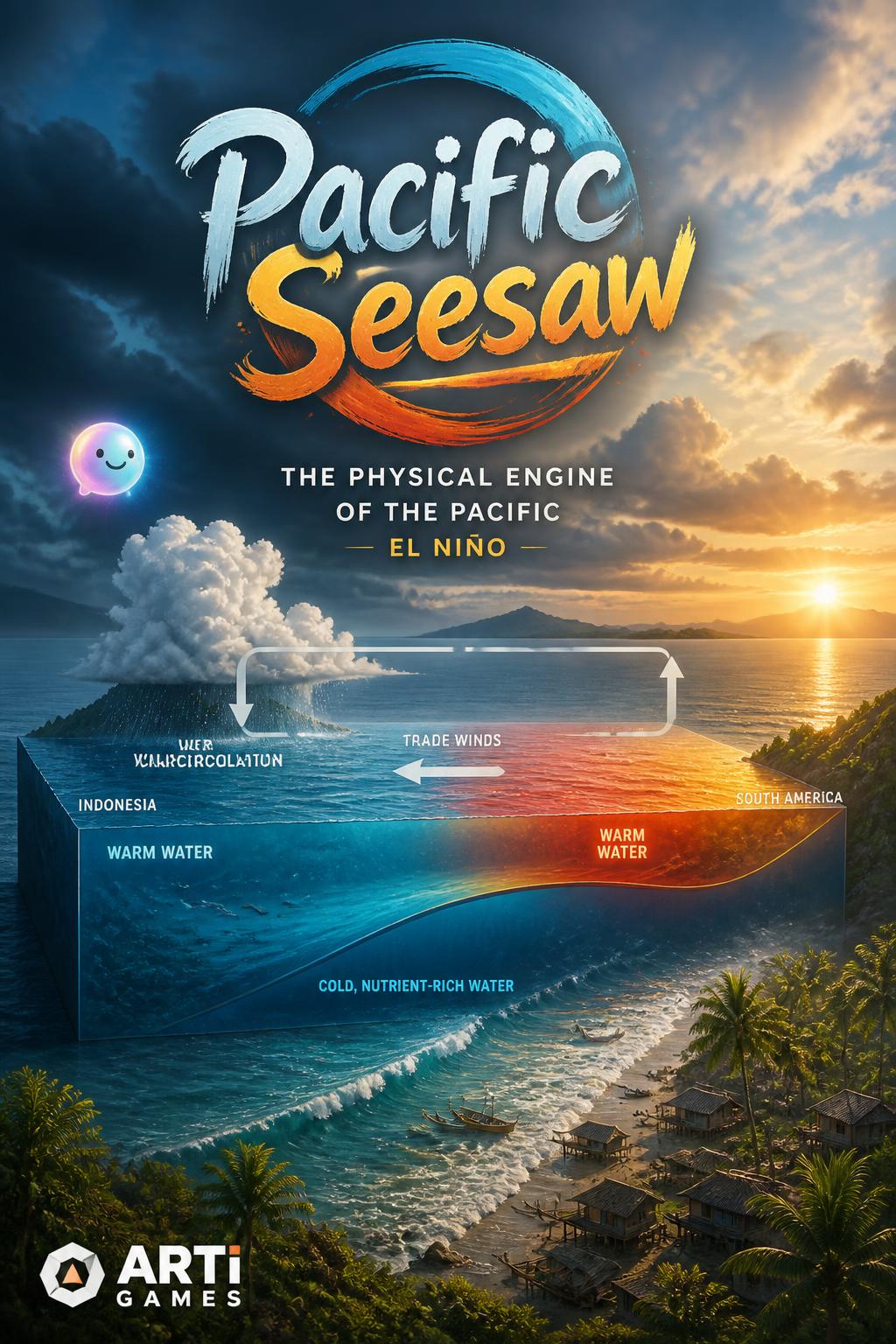
diego Balance the Pacific winds to discover how El Niño flips global weather patterns.
diego Learn how the global Walker Circulation shifts and discover its crucial role in El Niño climate phenomena in this educational video.
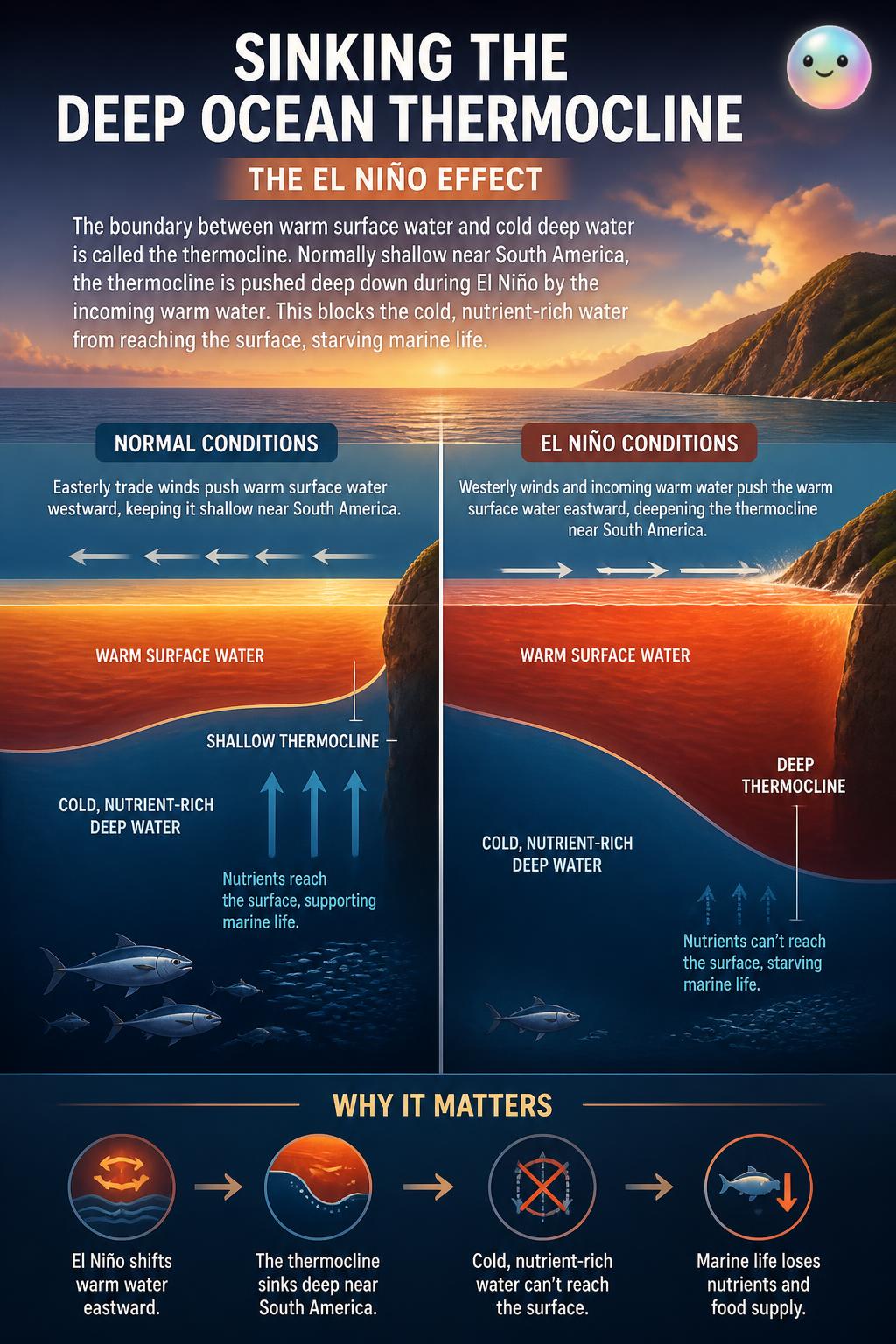
diego The eastward surge of warm water flattens the ocean's temperature boundary, stopping nutrient upwelling.
Sloshing sea levels: During normal years, strong trade winds pile up so much water in the western Pacific that sea level near Indonesia is 1.5 feet higher than in Peru.

diego During El Niño, the trade winds weaken or reverse, letting warm water slosh backward toward South America.
An atmospheric circulation cell in the equatorial Pacific characterized by air rising in the west and sinking in the east. Sir Gilbert Walker discovered this loop in the 1920s while analyzing Indian monsoon data.
What type of ocean wave carries warm water eastward across the Pacific during El Niño?
Which winds normally blow from east to west along the equator, keeping warm water in the western Pacific?
What is the name of the atmospheric loop where air rises in the west Pacific and sinks in the east?
What do we call the sharp boundary layer that separates warm surface water from cold deep ocean water?
What is the scientific term for the rising of cold, nutrient-rich deep ocean water to the surface?