Chapter 1
The print revolution and Nuremberg's superstar
Chapter 2
Painters of the powerful courts
Chapter 3
The dark side of the Northern woods
Chapter 4
The scientific eye and nature's details
YOUR GOAL
Master of How ink, wood, and wild ideas sparked the German Renaissance
Ch 2 · Painters of the powerful courts
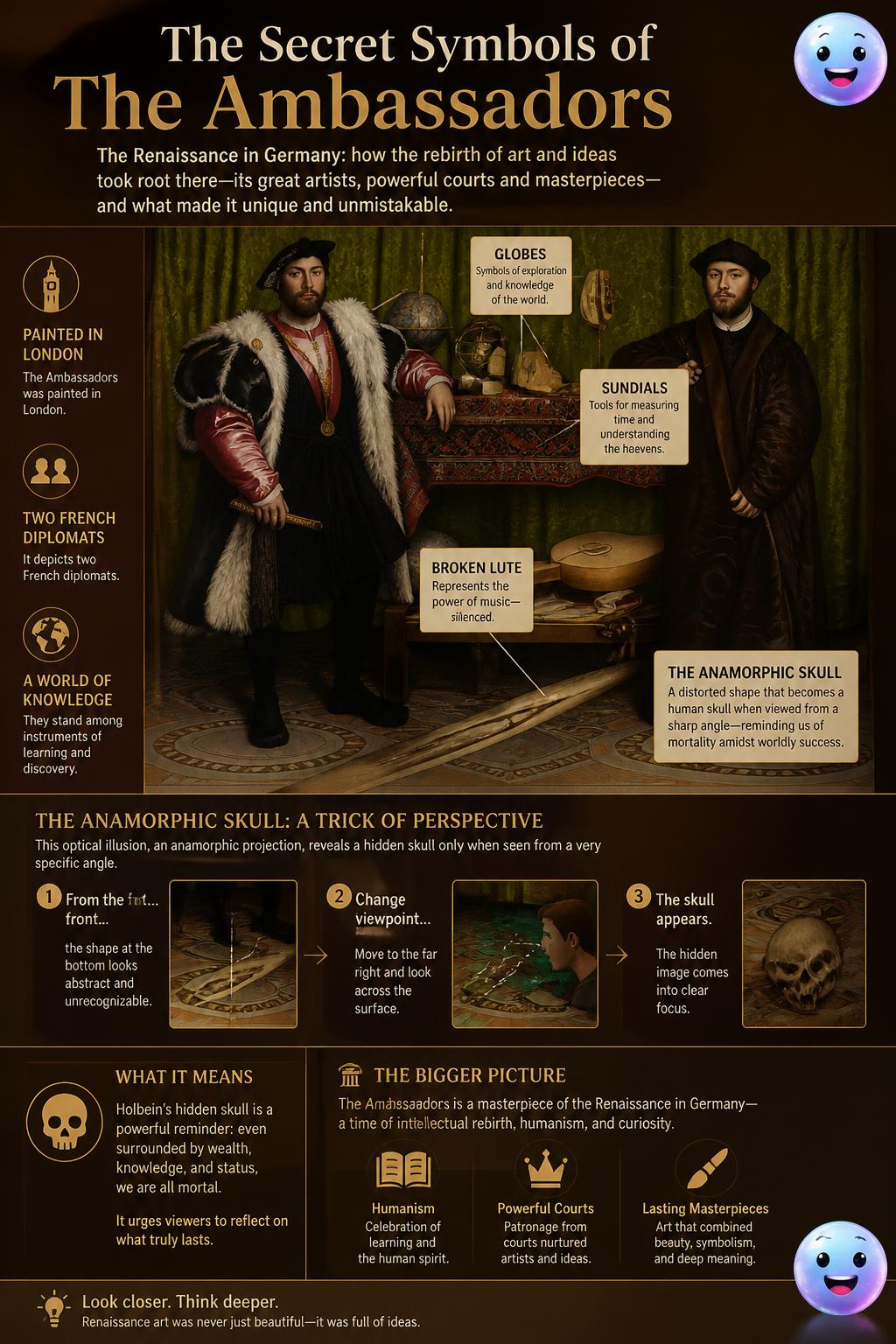
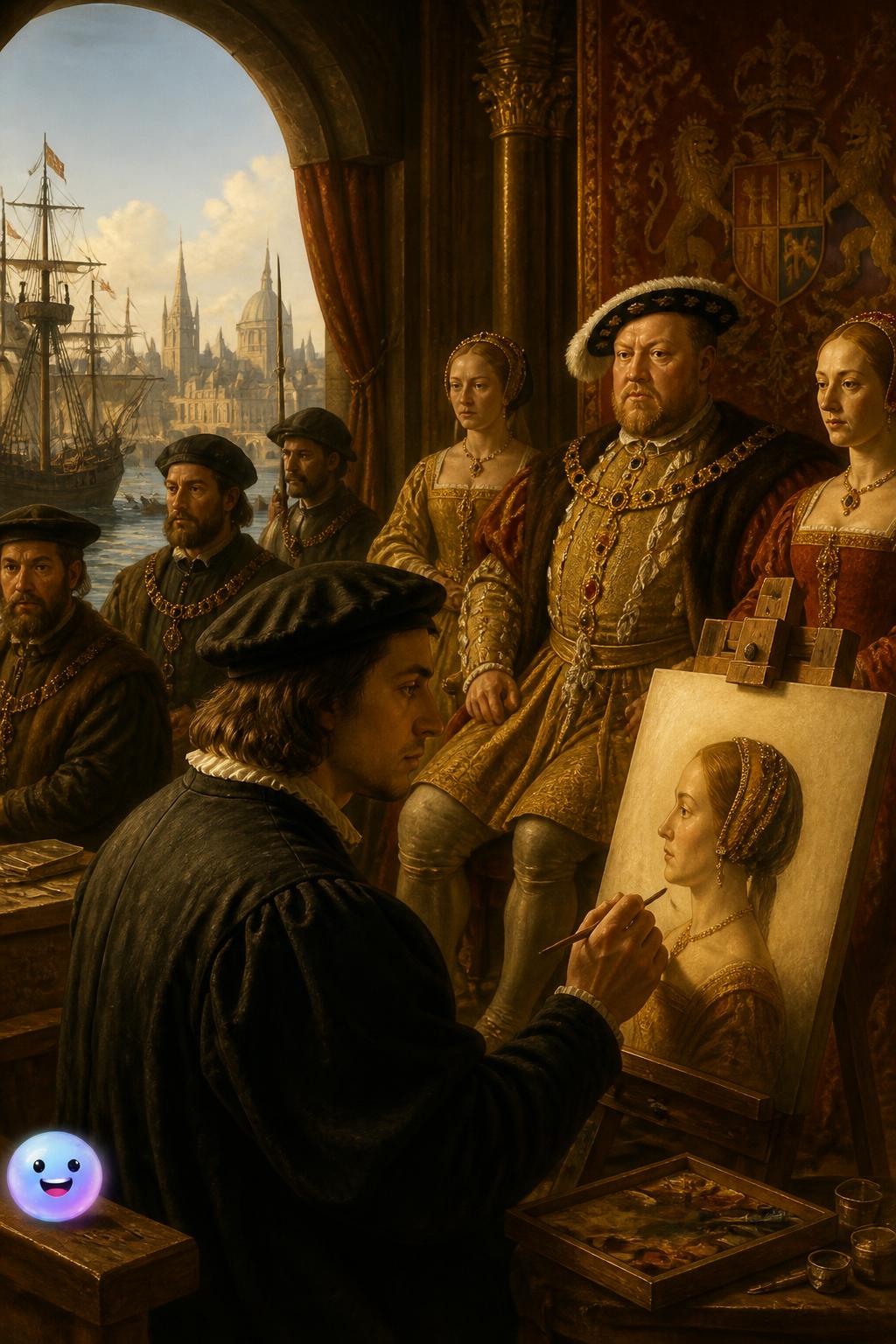
andy Two French diplomats in London stand surrounded by globes, sundials, a broken lute, and a stretched, anamorphic skull.
Fun Fact
Rapid painters: Lucas Cranach the Elder ran a massive workshop in Wittenberg so efficient that contemporaries nicknamed him the 'rapid painter' for his speed.
Glossary
court painter (noun)
An artist commissioned by a sovereign or noble household to produce portraits and other official artworks. In 1505, Lucas Cranach the Elder assumed this role for the electors of Saxony in Wittenberg.
An artist commissioned by a sovereign or noble household to produce portraits and other official artworks. In 1505, Lucas Cranach the Elder assumed this role for the electors of Saxony in Wittenberg.
Quiz
Which German Renaissance portrait did Henry VIII order Hans Holbein to paint for matchmaking purposes?
Quiz
What major 16th-century religious movement in Germany was heavily supported and visually documented by Lucas Cranach's workshop?
Quiz
Hans Holbein the Younger left Switzerland to become the official court painter for which English monarch?
Quiz
What optical illusion is painted at the bottom of Hans Holbein's 1533 masterpiece 'The Ambassadors'?
Quiz
In what German city did Lucas Cranach the Elder run his highly productive workshop and serve as mayor?
Quiz
What secret message is implied by the distorted skull in Holbein's 'The Ambassadors', a concept known as 'memento mori'?