
Aizome and the deep secrets of Japanese indigo
Sashiko and stitching strength from scraps
Furoshiki and the origami of wrapping
Fukuro toji and the art of the bound book
Japanese denim and the vintage obsession
YOUR GOAL
Master of How Japan mends wraps and dyes the world

매운김치 Asanoha Toji Bookbinding
Hemp leaf stitch, hemp leaf stitch, Sewing up the words I write!

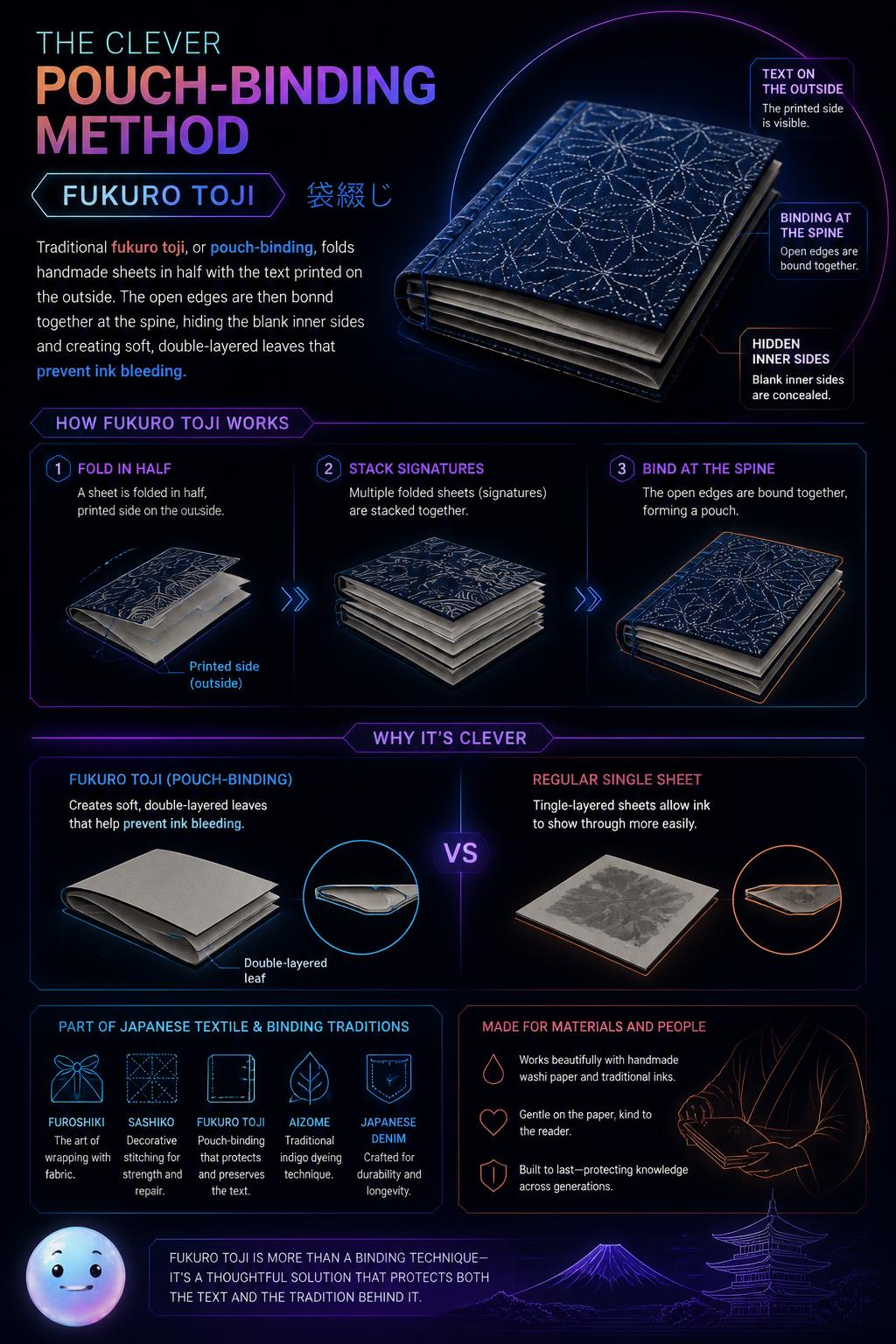
매운김치 Artisans fold handmade sheets with text outside and bind the open edges at the spine, hiding blank inner sides.

매운김치 Stitch the folded pages together to discover the traditional art of Japanese bookbinding.
Title slips: Traditional Japanese books have their title printed on a separate, slim strip of paper pasted onto the upper left corner of the front cover.
A traditional Japanese bookbinding method where single-sided printed sheets are folded in half and sewn along their open edges. The technique became the dominant form of commercial publishing in Japan during the Edo period.
Why are the sheets in a fukuro toji book folded in half with the blank sides facing inward?
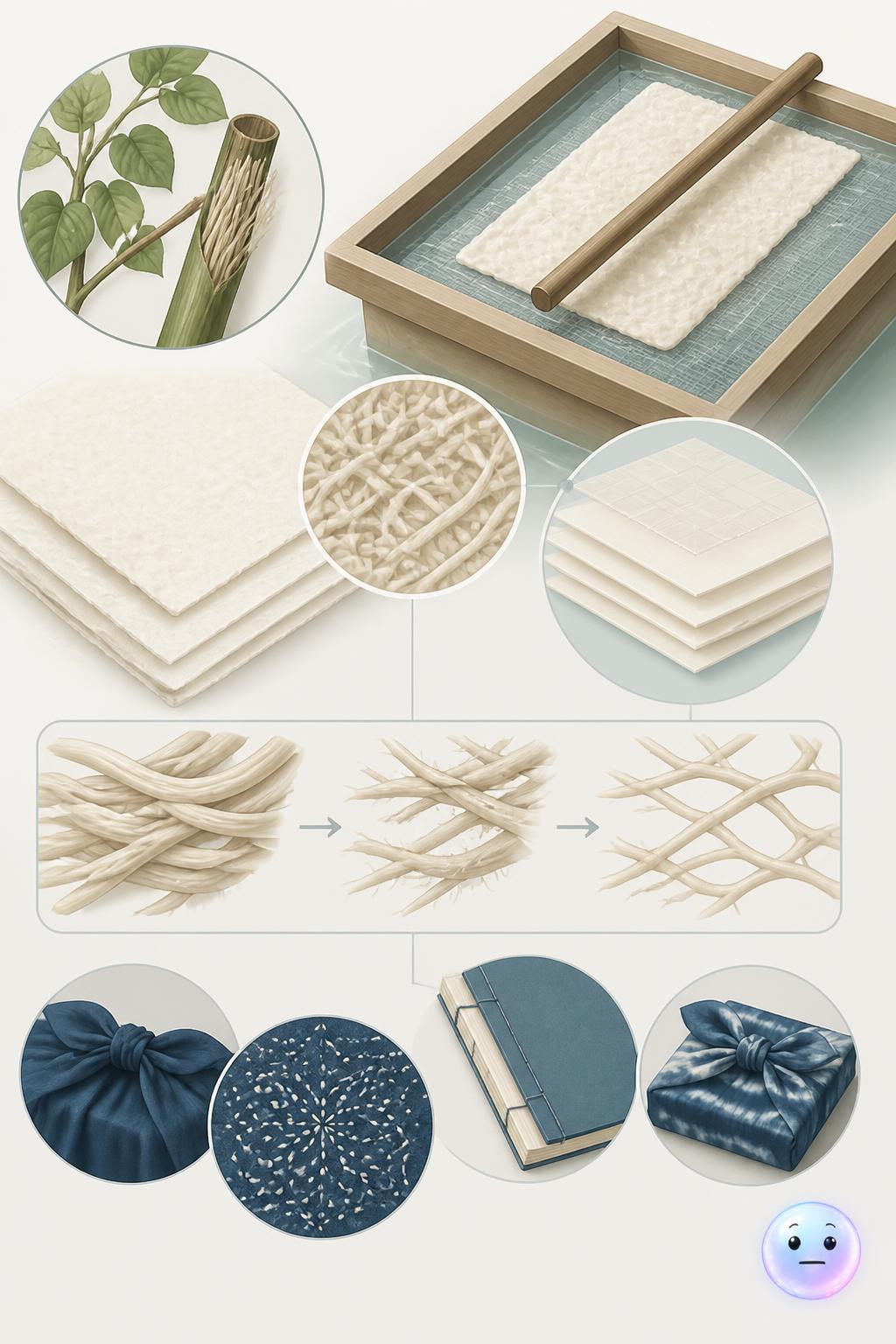
What unique physical property of washi paper allows ancient Japanese books to survive for centuries?
Which plant's bark is most commonly used to make the durable washi paper for fukuro toji books?
What material is traditionally used as the thread to sew the spine of a fukuro toji book?
What is the purpose of the temporary paper string called 'koyori' in the bookbinding process?