
Aizome and the deep secrets of Japanese indigo
Sashiko and stitching strength from scraps
Furoshiki and the origami of wrapping
Fukuro toji and the art of the bound book
Japanese denim and the vintage obsession
YOUR GOAL
Master of How Japan mends wraps and dyes the world
매운김치 Edo Firefighter Sashiko Coats
Sashiko quilted threads, drenched in heavy water, shielding from the flames!
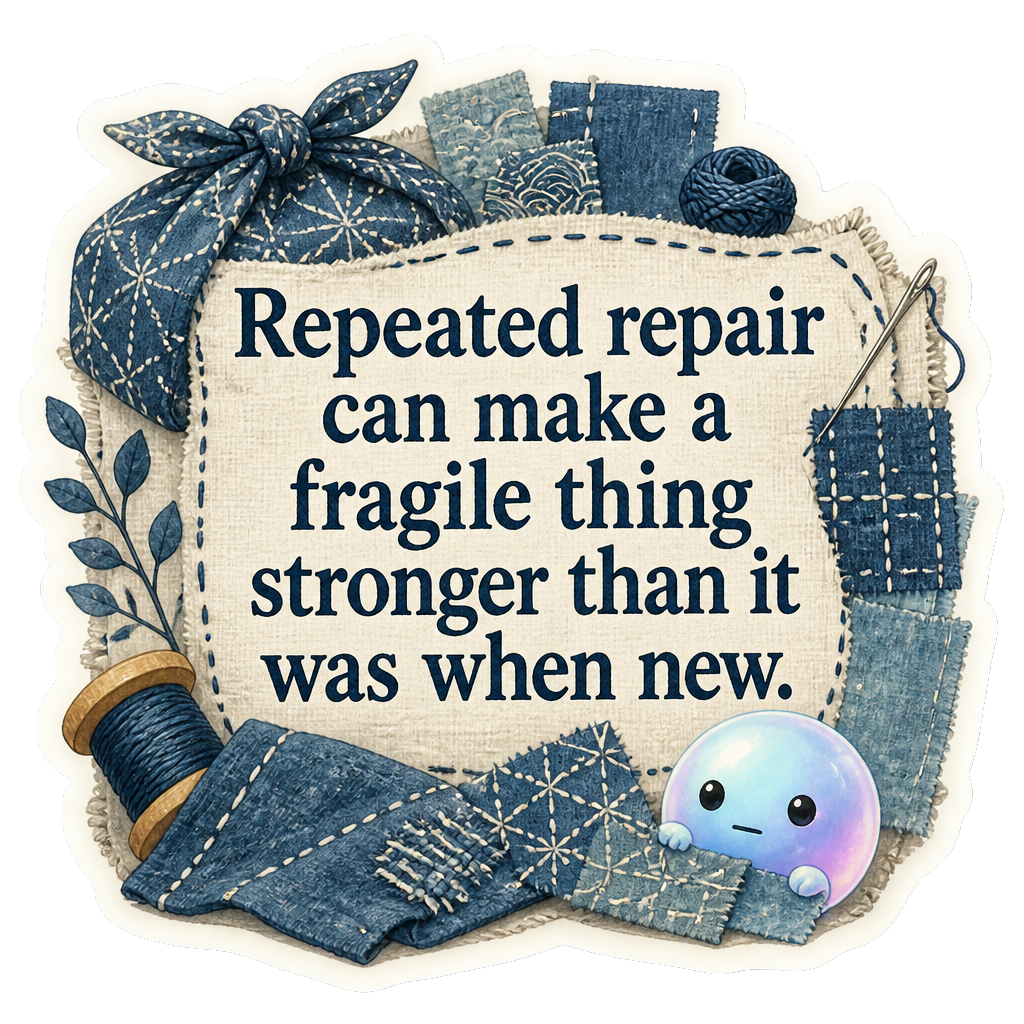
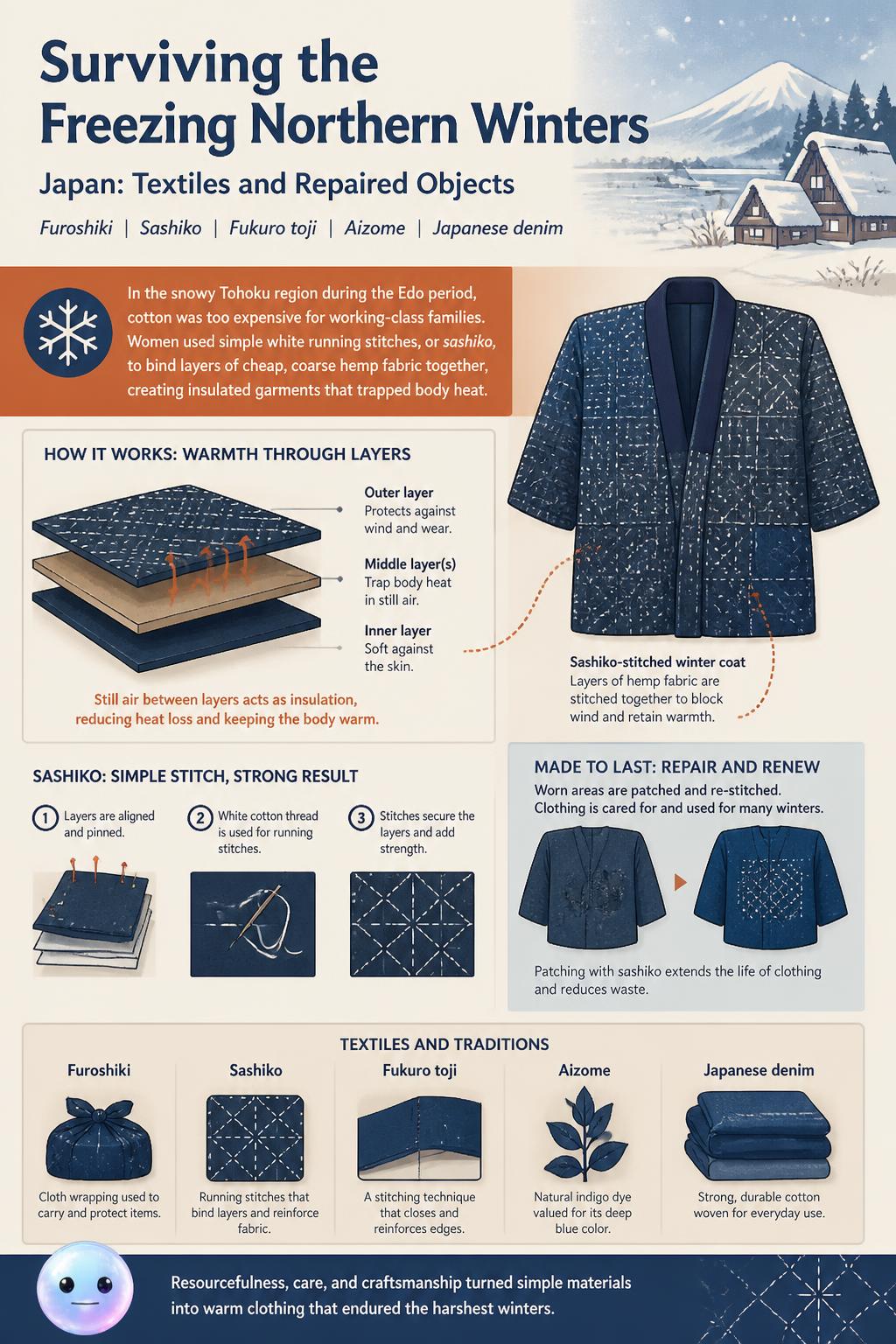
매운김치 Working-class families in the snowy Tohoku region bound layers of cheap, coarse hemp to trap body heat when cotton was too expensive.
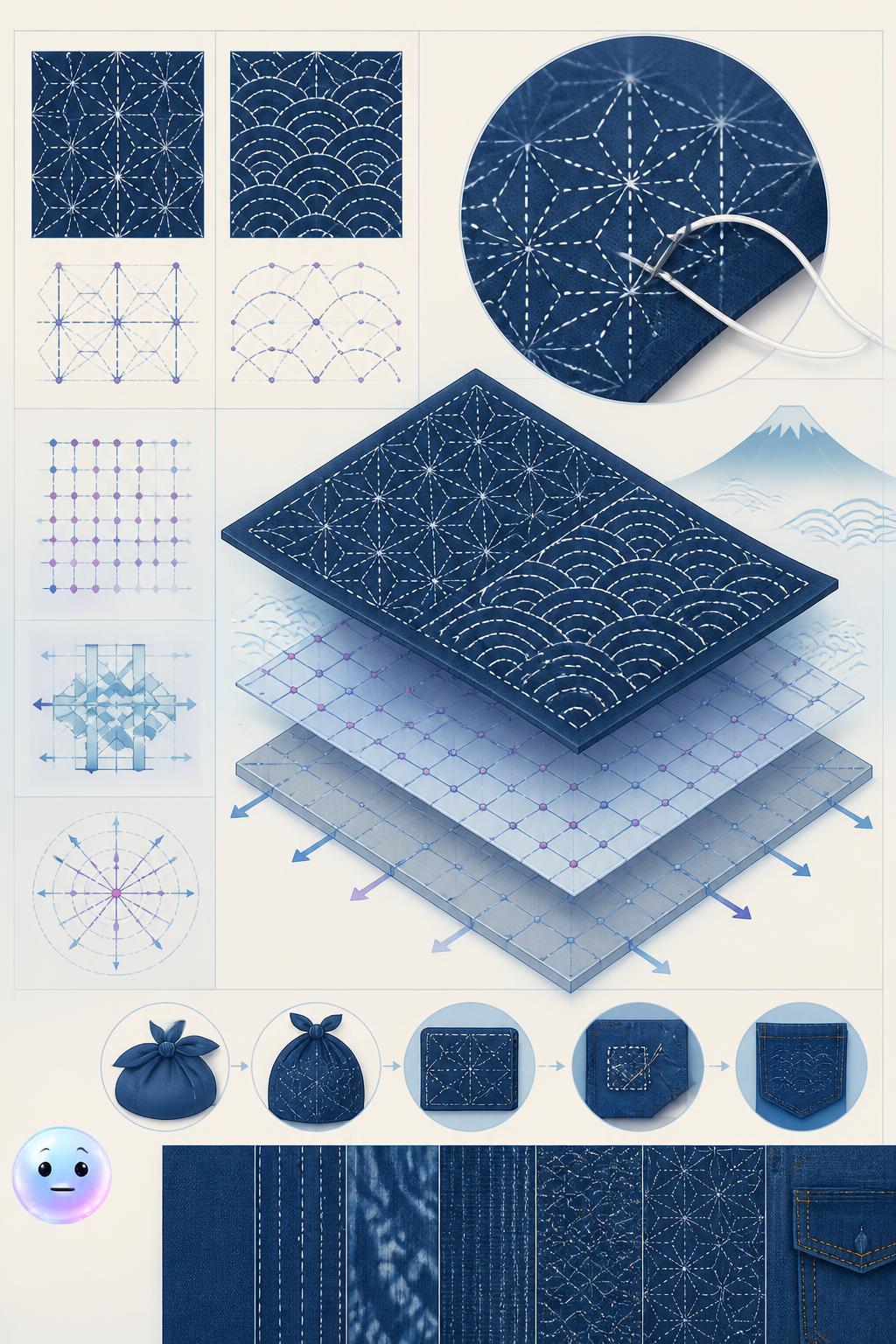
매운김치 Traditional Japanese embroidery patterns like Asanoha provide structural reinforcement to worn textiles.

매운김치 Stitch patterns onto fabric scraps to learn how Sashiko strengthens worn textiles.
Sashiko needles: Traditional sashiko needles are extra-long with large eyes, designed to hold thick cotton thread and stitch multiple layers of fabric at once.
A traditional Japanese style of hand-stitching characterized by running stitches that form geometric patterns. In Edo Japan, rural communities used the craft to strengthen thin clothing using salvaged fabric remnants.
In which snowy region of Japan did sashiko stitching originate as a winter survival technique?
What Japanese term describes heavily patched textiles that have been mended over generations?
Why did historic Japanese firefighters soak their heavy sashiko coats in water before fighting fires?